Showing posts with label savagery. Show all posts

Thursday, January 14, 2016

Praise of Savagery: Read It Because You Want To Learn About An Original Journey (Ethiopia)


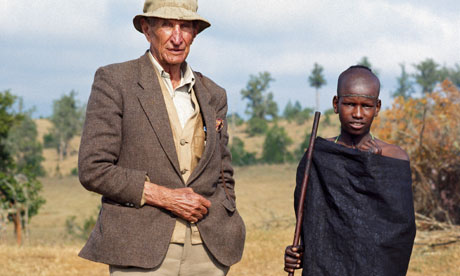
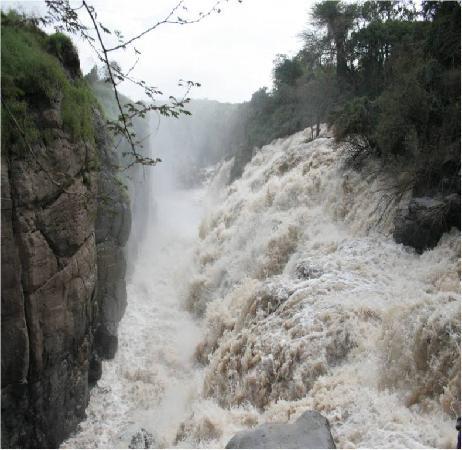
READ IT BECAUSE:  You will learn about the incredible journeys that the original European adventurers made as they explored the previously "undiscovered" interior of Africa.  In Praise of Savagery is the memoir of a young man who befriended the great British explorer Wilfred Thesiger (see his books below).  Eventually, Cairns gets the opportunity to essentially retrace Thesiger's original steps when he first set out to find the origin of the Awash River in Ethiopia.  Cairns interweaves his journey with a retelling of Thesiger's own original journey.   It's frankly quite mind-blowing to consider just how brave/reckless one had to be during that time period to do this type of exploration and survive.  If you've ever been curious of Thesiger and adventurers of his ilk this is a great and accessible starter.




*One of my Reading Around the Continent books--the full list is here.
See our 20162015 and 2014 Reading Lists.

RELATED BOOKS:


KINDLE HIGHLIGHTS:
In Praise of Savagery by Warwick Cairns
Last annotated on January 5, 2016

The river flows on and on through the Danakil lands for mile after mile until there rises, in the distance, a line of purple hills known as the Magenta Mountains.  Read more at location 284

The river flows around Aussa on three sides, looking for a way out into the desert land beyond, where at some further point, before reaching the coast at Djibouti, it disappears.  Read more at location 291

the words of the great American modernist Frank Lloyd Wright, ‘If the roof doesn’t leak, the architect hasn’t been creative enough.’ Or, as he put it, rather more bluntly, to clients who had the temerity  Read more at location 329

A waiter appeared and pulled out a chair so that His Highness Asfa Wossen Tafari, Crown Prince of Abyssinia, eldest son of the Conquering Lion of the Tribe of Judah, King of Kings and Elect of God, and direct lineal descendant, it was said, of King Solomon and the Queen of Sheba, could sit down.  Read more at location 414

The story that Wilfred Thesiger heard of the events at the ruined Adoimara village by the Mullu River on his arrival Afdam Station was, in some ways, a remarkably similar one to the story of the MacDonalds of Glencoe; and yet, at the same time, it was very different indeed, and it revealed much about the culture of the Danakil peoples.  Read more at location 914

But the goat, which the moran led towards us by the horns, had done me no wrong.  Read more at location 1142

I wonder how deep the ancestral ties go. I wonder what it means to arrive, for the first time in your life, in a place where the people all look the way you look.  Read more at location 1247

Your typical pastoralist—your Samburu, your Rendille, your Turkana—he has a thousand hours more free time on his hands than you  Read more at location 1403

The Yanomami of the Amazon, meanwhile, get through their day’s work in even less time: two hours and forty-eight minutes.  Read more at location 1409

We pay dearly for them with our lives and with our freedom.  Read more at location 1425

And for all that, the Asaimara were, as he put it in his diary at the time, ‘A cheerful, happy people despite the incessant killing, and certainly not afflicted by the boredom which weighs so heavily today on our own young urban civilisation.’  Read more at location 1461

But here’s the thing: I had assumed that it was their pleasure so to do, just as it was my pleasure to do otherwise; and that the driving force in all human life, beyond the mere necessity of things, was pleasure. Or, better still, that living, as distinct from merely being alive, was the art of making pleasure out of necessity.  Read more at location 1578

he says, in essence, is that pleasure is the completion or perfection of human life.  Read more at location 1583

But these relentless, sensible, duty-driven people, they unsettle me.  Read more at location 1626

But in that part of the world the sheep and the goats look remarkably similar, to the point of being practically identical, and telling the one from the other was considerably trickier—apart from the sheep, from the back, having slightly fatter, more blubbery tails. But what if you had a scrawny sheep? Or what if you had a goat with a fat backside? Would they still be sheep and goat respectively? Or would they, in fact, become goat and sheep? And how would you know?  Read more at location 1722

While he was gone, Ali explained that the stick the head askari carried was the silver baton of command, which gave the bearer the authority of the Sultan himself,  Read more at location 1763

What they do is they take a water-container—in this case, one of our jerry-cans—and they fill it with water and tie it inside a wet sack. Then they hang it in the hottest place they can find—in a tree in full sunlight, say—and then, when the sack is dry they pour out the water and it is cold, as if it had come from a refrigerator.  Read more at location 1787

Among the Asaimara band, a man was expected to win his bride by organising a game rather like the one that small boys in England know as British Bulldog.  Read more at location 1808

At the ranks of squatting warriors and the small isolated group of my own men, I knew that this moonlight meeting in unknown Africa with a savage potentate who hated Europeans was the realisation of my boyhood dreams. I had come here in search of adventure: the mapping, the collecting of animals and birds were all incidental. The knowledge that somewhere in this neighbourhood three previous expeditions had been exterminated, that we were far beyond any hope of assistance, that even our whereabouts were unknown, I found wholly satisfying.   Read more at location 1970

On the next day they saw, in the distance, the desert’s edge; and beyond it, far off, the blue of the sea. A day later they reached the coast, at Tajura. It was now six full months since the expedition began.   Read more at location 2208

The sort of people, in fact, who at another time might be content to spend their whole lives sorting cheques into account-number order, or else training all hours to be good at a sport that they don’t actually enjoy, because it’s wrong to quit things.   Read more at location 2284

And from there it was not such a big step to the cotton mills. That’s progress for you, though. And that’s civilisation.  Read more at location 2289

There are some that see life as a matter of departures—a process of moving on and leaving behind, of exploration and discovery.  Read more at location 2293

But for him there were more departures still. To Arabia, there to live and travel with the Bedouin. To Iraq, there to spend some seven years, on and off, in the reed longhouses of the Marsh Arabs. And the books he wrote about those years and the photographs he took, and the acclaim that followed. And after, to Kurdistan, to Afghanistan, to the Hindu Kush and the Karakoram, to Morocco. To more fighting, still, on the side of the Royalists and against the communists in the Yemeni civil war. Then four expeditions, through the borderlands of Uganda, the Sudan and Kenya. During which he made a crossing of the deserts of the Northern Frontier District, climbing Mount Kulal and exploring the shores of Lake Turkana.  Read more at location 2307

But do you know how you tell the difference, eh? Between a sheep and a goat? Shall I tell you? Well, if the tail goes up, then it’s a goat. And if it goes down, it’s a sheep. That’s how you tell.  Read more at location 2349

‘Here’s a trick for you,’ he said. ‘It’s something the Bedu taught me. If you have no water, and no prospect of getting any, then you should put a little salt in the palm of your hand, like so, and then you lick it. That will help keep the thirst away.’  Read more at location 2352

In the country where I live there were once wolves in the mountains. There are none there now.   Read more at location 2454

His eyesight, now, had become so bad that his books were of no further use to him, and he gave them all away, so that his flat, once so full of them, now had, instead, row upon row of empty shelves. A short while later he moved from this flat to an old people’s home in Coulsdon in Surrey, run by the Friends of the Elderly, where he was given a room overlooking the lawn. In 2001 he began to be treated for Alzheimer’s as well as Parkinson’s. He began to lose his memory, and the shaking of his hands, which had been kept largely under control through drugs, began to return. He began, also, to dribble. This caused him great distress.  Read more at location 2477


Of someone standing by his bed, he demanded, ‘What is your tribe?’  Read more at location 2504

At another time he cried out, ‘For God’s sake, let me go.’ On Sunday, 24th August 2003, at just after five minutes past four in the afternoon, he died. He was ninety-three years old.  Read more at location 2505

No account of any part of Wilfred Thesiger’s life would be complete without a heartfelt plea to the reader buy, borrow or even steal his two stunningly beautiful master-works, Arabian Sands and The Marsh Arabs.   Read more at location 2537

But the point is this, I think. The point is this. Wilfred Thesiger was a man who made a difference to the world. And for those of us whose lives he touched, things will never be quite the same again.   Read more at location 2550


Sunday, January 10, 2016

2016 Reading List

You can see our lists from 2009, 2010, 2011, 2013, 2014, 2015, 20162017, and 2018.
I've also put a list together or all our #longread articles from 2015 here.


Stories


YOU CAN'T READ IT BECAUSE:
Unfortunately, Armstrong has chosen not to try to publish his striking memoir of short vignettes that span the course of his memorable life. Armstrong has been a reporter, editor, civic leader, and until his retirement in 2008 was the publisher of the Bay Area News group.  He has a newspaper copyboy during JFK's assassination and met Martin Luther King and Pope John Paul II (along with about 100 other notable figures).  He and his wife Sandy have been invited to vacation with Audrey Hepburn; he's been scolded by Kissinger at the height of the Cold War and personally witnessed to by Billy Graham. While these stories are entertaining, the real gravity in the collection comes from the emotional honesty of Armstrong in his self-examination as he deals with growing old, Alzheimers, and memory loss amidst an enduring faithfulness with the love of his life.  The depth of this level of emotional honesty laid bare on the pages are unlike anything I've ever read.
My full incredible life-changing post  is here.


In Praise of Savagery (Ethiopia)


READ IT BECAUSE:  You will learn about the incredible journeys that the original European adventurers made as they explored the previously "undiscovered" interior of Africa. 


 In Praise of Savagery is the memoir of a young man who befriended the great British explorer Wilfred Thesiger (see his books below).  Eventually, Cairns gets the opportunity to essentially retrace Thesiger's original steps when he first set out to find the origin of the Awash River in Ethiopia.  Cairns interweaves his journey with a retelling of Thesiger's own original journey.   It's frankly quite mind-blowing to consider just how brave/reckless one had to be during that time period to do this type of exploration and survive.  If you've ever been curious of Thesiger and adventurers of his ilk this is a great and accessible starter.


*One of my Reading Around the Continent books--the full list is here.

My full post with Kindle highlights is here.


READ IT BECAUSE: You will see the transformation of a dream into the reality of millions of lives changed forever.  Don Stephens' story is an incredible one.  That Mercy Ships is the successful organization that it is today is nothing short of a miracle.  Prior to Africa Mercy's arrival here in Madagascar, I actually had no clue about it so I am guessing most of you don't either. 

Long story short: a man had a dream to one day have a fleet of hospital ships that provide free surgeries to the poorest nations in the world.   Today Mercy Ships has already served millions and is set to serve even more. 


My full post is here.


I Did Not Come to You By Chance. (Nigeria)


READ IT BECAUSE: You'll finally get to know that Nigerian prince who has been emailing you!

*One of my Reading Around the Continent books--the full list is here. 

In her debut novel Nwaubani follows in the footsteps of Adichie (read my review of Americanah here) as she pulls back the curtain on the 419 industry in Nigeria.  For the uninitiated, 419 scams are those oddly written emails that you've probably received before by a Nigerian prince or businessman who has received a multi-million dollar windfall but needs your help to access the funds.  Normally the letter ends with a plea for you to pay a small advance "convenience" or "administrative fee" in order to claim a substantial share of the funds.

With an eye for humor and for heart, Nwaubani crafts a classic tragedy that follows the rise of Kingsley as he ascends a 419 crime syndicate.  The single aspect that best demonstrates the author's deft writing hands is her ability to humanize Kingsley as he becomes more and more adept at swindling gullible mugus.  It's easy to quickly despise 419ers but much harder to explore their (possible) motives in an honest and thoughtful manner.


As I finished this fast-paced novel, my only regret is that she hasn't published any other books since her 2010 debut. For now I will have to satisfy myself with the wealth of essays and articles she has written since then.


*One of my Reading Around the Continent books--the full list is here.


My full post with Kindle highlights is here.


READ IT BECAUSE: PENDING WRITEUP

My full post with Kindle highlights is here (pending).


Salvage the Bones

READ IT BECAUSE: You will be reminded of both the devastating scope and power of Hurricane Katrina but also of the largely forgotten swathes of the American population.

There are some great books that I read and I think to myself: I could write something like this someday (as an aspiring writer).  These storylines and worlds are one which I have lived or could imagine living.  Salvage the Bones is NOT one of those books.  Jesmyn Ward creates a world and captures its dialogue and cultural inner monologue with a level of detail and tenderness that will keep its characters alive in your thoughts long after you've finished the novel.

Ward's artistry is most strikingly displayed in how she somehow manages to humanize a character that dogfights his nursing pitbull.  Don't think that's possible?  I dare you to read the book and disagree! 

Ultimately, Ward pens a timeless tale about family, loss, longing, love and death that stands as a masterpiece for the foreseeable future (i.e., one of those you will read in high school).


My full post with Kindle highlights is here.


The Girl on the Train

READ IT BECAUSE: You can finish it in three days (or in one day at the beach)--it's that fast of a read.  Aside from it being a pretty dark novel this is a perfect beach read.  This story touches upon all the major nerves: falling in love, betrayal, jealousy, depression, murder, delusion...you get it all--the whole gambit.  In particular, Hawkins does a great job masking the outcome from the reader--this is the pull that keeps the pages turning.
My full post with Kindle highlights is here.

Ghana Must Go (Ghana)


READ IT BECAUSE: This is not a novel about Africa, or Ghana, or Nigeria or immigrants (only)--this is one of the classic novels about family, identity, loss, forgiveness (maybe) that follows you around in your idle thoughts long after you are finished. 


In Ghana Must Go, Selasi shares the story of family members seeking to escape--their origins, their countries of birth, their assumed identities, their shame.  Selasi's mastery is most evident as she captures the sights, sounds and people of Ghana and Nigeria.


The element that make this such a timeless story, however, is that it's ultimately about the power and indefatigability of a mother's love and hope.  Because in a world telling everyone to 'go', to leave, it is the mother Fola who draws her children back in--not only to herself and each other--but to a place and idea they all believed had vanished: home.  


*One of my Reading Around the Continent books--the full list is here.


My full post with Kindle highlights is here.


All Our Names (Uganda)


READ IT BECAUSE: It will Break Your Heart.


*One of my Reading Around the Continent books--the full list is here. 
As I read through the final pages of the novel and watched the final paragraphs fade away my heart began to ache and break because I didn’t want to let the characters go.  And then I focused and slowly read through final line.  I won’t ruin it for you but that line—oh that line—it will break your heart. 

All Our Names is a novel that the world should read—it’s the type of story for which all the cliques like “one of the ages,” and a “timeless classic,” are written.  It is befitting of the categorization “The Great African Novel” as Mengestu writes beautiful rich prose capturing spiraling love stories that appear destined for heartbreak. 

Set during the struggle for post-independence power in Uganda, Names follows an Ethiopian transplant seeking an identity in Kampala as a youth and later in the civil rights era midwestern USA. The stories--told in parallel--unravel (or re-ravel) the complex relationship between love, loss, war and forgetting. 


*One of my Reading Around the Continent books--the full list is here.

My full post with Kindle highlights is here.


The Kafir of Khartala (Comoros)


READ IT IF YOU CAN: Unfortunately, there is no published English version of this novel. 


*One of my Reading Around the Continent books--the full list is here.  I was only able to read it because I asked for a copy from the professor who had translated it at the University of Vermont.  He was kind enough to send me a word document with his translation.  I discovered this gem through the amazing blog, Reading the World,--you should check it out.

Published in 2000 amidst one of Comoros' many coups, Toihiri has penned a wry, surprisingly racy novel that satires the much of the politics and culture of his home country.  At the heart of the story is a married doctor's affair with a younger French NGO teacher...oh, and the doctor is dying from cancer.  How's that for some potential drama!


*One of my Reading Around the Continent books--the full list is here.
My full review is here.


They Are Coming (Zimbabwe)

READ IT BECAUSE: You are wanting to read something from Zimbabwe.

Look, this wasn't the best thing I've ever read but it was an important read because it forced me to think of the idea of family outside the normal western version.  In this story's case, a township family struggles as a rebellious daughter joins a local militia before the approaching 2005 parliamentary elections.  So in this case, They are Coming is about the locality of all politics but moreso it's about what it means to grow up amidst uncertainty and violence.

My full review is here.

*One of my Reading Around the Continent books--the full list is here.


The Jive Talker or How to Get a British Passport (Malawi)


LOVED IT BECAUSE Kambalu is a gifted and funny writer who presents his life (and that of his father--the Jive Talker) as an open book (literally).  Technically, this isn't fiction but this Malawian Banda-era coming-of-age tale sure reads like it.  The book recounts the author's up and down journey toward adulthood and some semblance of success (although I doubt he would qualify it in that manner) and love.  In the tale, the 'jive talker' is the author's hustling alcoholic father who was known to riff bombastically on an encyclopedic range of subjects--a trait that obviously wore off on his son.

The book is at its best when the author is in the jive talking zone--whether that be on the former President Banda, American Rock n Roll, or bush wisdom regarding safari animals...or the efficacy of urine in dental hygiene.  Ultimately, there's not a lot written out there on Malawi, fiction or otherwise, count yourself lucky that you have this 'laugh out loud' gem to enrich yourself!


My full review is here.

*One of my Reading Around the Continent books--the full list is here.

The Sympathizer


LOVED IT BECAUSE: You get to view the Vietnam War from a totally different perspective--in this case, that of a South Vietnamese officer who is actually an American educated spy for the communist North. And that's just one view--other themes addressed against the backdrop of the war include: poverty, Hollywood "yellow-washing", torture (it's hard work!), love-making and billiards, confession, forgetting and happiness as a zero-sum game in war. 

LOOK OUT: Whenever I read a great book, I instantly yearn for a movie version.  In this case, however, I am not sure that Vietnam is a war that Hollywood's interested in portraying anymore .  But I could see an adaption of this novel that's set in Iraq instead. 


For further reading: Check out the transcript from a great interview of the author on NPR's Fresh Air right here.

My full review is here.

Parenting with Love and Logic (2006 version)


READ IT BECAUSE: You want to come up with a systematic approach to raise your kids into adults with healthy self-esteem who have the skills to make wise decisions for themselves.  The fundamental goal of this method is to develop children into adults who have understand consequences and have the skills to make wise decisions.  A secondary goal is to develop parents who can maintain their own sanity/happiness, keep their cool, and model wise behavior for their children.  But who really cares about all that right--what you want to know is the 'how.' 

The authors divide your conflict interactions with kids into two broad categories--ones that affect you in some way and those that affect your kids.  Conflict that affects you requires more intervention and that firmer limits be set.  Conflict that affects your children only--that requires a more deft touch where you allow your kids to experience the consequences of a poor decision--WITH EMPATHY.  Those last words are capitalized for a reason--letting a child work through the consequences does not mean that you don't come along side your child in their misery or their discomfort.  Ultimately, these consequences develop an ability in your children to pause and better think through decisions.  As they grow older, the limits that you set for them grow wider and wider. 


My full review is here.


A Bend in the River (DRC)


Loved it Because: This is one of those novels that immerses you into the life of a person and place--in this case an Indian Muslim transplant named Salim who wanders from his 'home' on the east coast (of Africa) to the DRC river town of Kisangani during the colonial independence era. As the week passed and I waded deeper into this tale, I found myself thinking about the characters during idle moments--worried about the fate of Salim and Metty as they rode the ups and downs of Mobuto's rule in the growing town.  It's one of those rare books that spreads its tentacles around you, the reader, and refuses to release you.

My full review is here.

*One of my Reading Around the Continent books--the full list is here.

So Long a Letter (Senegal)


Read It Because you get to peer into the birth of feminism for a Muslim woman in post-independence Senegal.   The country won its independence from France in 1960 and Ba published this story some 20 years later.  It took me a little bit to get into this story--mainly because I'd never read a book whose format was a simple, lengthy meandering letter.  Ultimately, though, Ba won me over with her tender, thoughtful introspective look at the life of a cuckolded, then sister-wifed, then widowed, then independent and finally (maybe) free woman.


My full review is here.

*One of my Reading Around the Continent books--the full list is here.

Through the Eyes of a Lion

 
Read it To Prepare.  This is a book about unspeakable loss but it's also a book that offers you a plan--not only for yourself but also for comforting others.  This is one of those books that you might not really want to read for fear of some type of psychic pain by association but you will be glad you did. 

My full review is here.


Houseboy (Cameroon)


Loved It Because Oyono crafts a beautiful, tragic and damning tale about being a "black Frenchmen" in Cameroon.  Indeed, this question of identity is at the center of this tale of a houseboy named Toundi with hopes of assimilation and upward mobility.  With his near to last dying words being the question:  "What are we blackmen who are called French?" one gets the sense that it's not going to end well for the young man.  

My full review is here.

*One of my Reading Around the Continent books--the full list is here.

Leaving Tangier (Morocco, 2006/2009)


Loved it Because this was a sad, tragic, beautifully written tale about loneliness, despair, hope and home.  In other words, it encompasses the entire range of the human condition that you expect a great novel to cover. Leaving Tangier stands the test of time as I read it ten years after its publication.  It's a timely tale about the harsh reality of immigration and emigration and the depths that desperation drive one to.  And it's Jelloun's eye for tender observation and magical realism that cements the novel as a modern classic.  Indeed the novel's closing lines are a siren call for all immigrants:


He’s the immigrant without a name! This man is who I was, who your father was, who your son will be, and also, very long ago, the man who was the Prophet Mohammed, for we are all called upon to leave our homes, we all hear the siren call of the open sea, the appeal of the deep, the voices from afar that live within us, and we all feel the need to leave our native land, because our country is often not rich enough, or loving enough, or generous enough to keep us at home. So let us leave, let’s sail the seas as long as even the tiniest light still flickers in the soul of a single human being anywhere at all, be it a good soul or some lost soul possessed by evil: we will follow this ultimate flame, however wavering, however faint, for from it will perhaps spring the beauty of this world, the beauty that will bring the world’s pain and sorrow to an end.’  


My full review is here.

*One of my Reading Around the Continent books--the full list is here.

An African In Greenland (Togo)


Loved it Because: It was unlike anything I've ever read.  This is the fantastical post-independence autobiographical tale of a young Togolese boy that leaves his 25 siblings on a whim (basically) and starts a 12-year journey from his native country to the chilly northern reaches of Greenland.  I say 'basically' because it all started after he saw a book on Greenland in a missionary book store in his village. 

My full review is here.

*One of my Reading Around the Continent books--the full list is here.

A Grief Observed by C. S. Lewis


Read It Because: Lewis recounts an honest and open account of one man's reckoning with the loss of his wife.  In Lewis' case, his wife was a woman he only met in the latter years of his life--tragically he only had a few short years with her before she died after a battle with cancer.  

This is one of those books that you hope you never have to be glad you read (you following?).  Certainly no one could ever hope to have to grapple with such depths of despair.  What makes this short book special is Lewis' honesty as his wife's death causes him to question everything that he believes, including his own faith. But Lewis is in good company, channeling much of the open frustration that David expresses in his Psalms as he rails against God. Ultimately, Lewis emerges from his sorrow with a deepened faith.  Even if one is lucky enough to never experience the loss of a spouse, the book offers keen insights for those playing the role of comforter--one gem that I noted was Lewis' commentary that in his grief the proximity of others brought he much comfort--however, he expressly noted that he preferred their presence and activity more than any words they might offer.

*This post contains my full review.

Allah is Not Obliged by Ahmadou Kourouma (Cote d'Ivoire)

Loved it Because: Well it's hard to say that you 'love' a book about child soldiers but Kourouma has crafted a first person narrative that is brutal, funny, and which mentions your 'father's cock' (i.e., faforo) about a hundred times.  Allah is Not Obliged is the tale of a young Ivorian boy named Birahima who becomes a child soldier of misfortune--killing and pontificating his way across West Africa.  

The author is from Cote d'Ivoire but the narrative skips across the porous borders of its neighbors.  This is a decidedly West African novel...less about a country and more about a phenomenon--the rise of the child soldier.  The best portions of the novel are the quasi histories of the different countries--Kourouma boils down the essential tenets of the political and warfield battles in an easy to read and digestible manner. 


My full review is here.
*One of my Reading Around the Continent books--the full list is here.