READ IT BECAUSE: You will learn about the incredible journeys that the original European adventurers made as they explored the previously "
undiscovered" interior of Africa.
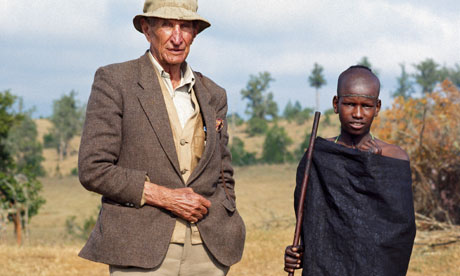
In Praise of Savagery is the memoir of a young man who befriended the great British explorer Wilfred Thesiger (see his books below). Eventually, Cairns gets the opportunity to essentially retrace Thesiger's original steps when he first set out to find the origin of the
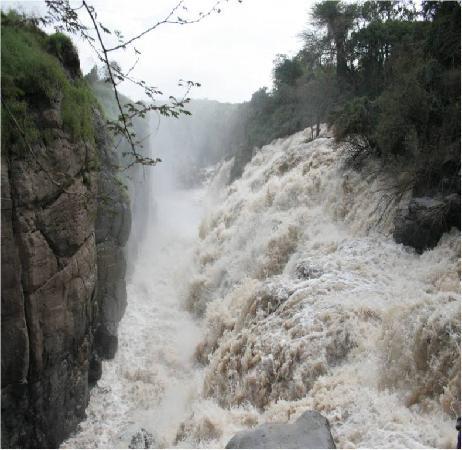
Awash River in Ethiopia. Cairns interweaves his journey with a retelling of Thesiger's own original journey. It's frankly quite mind-blowing to consider just how brave/reckless one had to be during that time period to do this type of exploration and survive. If you've ever been curious of Thesiger and adventurers of his ilk this is a great and accessible starter.
*One of my Reading Around the Continent books--the full list is
here.
See our
2016,
2015 and
2014 Reading Lists.
RELATED BOOKS:


KINDLE HIGHLIGHTS:
In Praise of Savagery by Warwick Cairns
Last annotated on January 5, 2016
The river flows on and on through the Danakil lands for mile after mile until there rises, in the distance, a line of purple hills known as the Magenta Mountains. Read more at location 284
The river flows around Aussa on three sides, looking for a way out into the desert land beyond, where at some further point, before reaching the coast at Djibouti, it disappears. Read more at location 291
the words of the great American modernist Frank Lloyd Wright, ‘If the roof doesn’t leak, the architect hasn’t been creative enough.’ Or, as he put it, rather more bluntly, to clients who had the temerity Read more at location 329
A waiter appeared and pulled out a chair so that His Highness Asfa Wossen Tafari, Crown Prince of Abyssinia, eldest son of the Conquering Lion of the Tribe of Judah, King of Kings and Elect of God, and direct lineal descendant, it was said, of King Solomon and the Queen of Sheba, could sit down. Read more at location 414
The story that Wilfred Thesiger heard of the events at the ruined Adoimara village by the Mullu River on his arrival Afdam Station was, in some ways, a remarkably similar one to the story of the MacDonalds of Glencoe; and yet, at the same time, it was very different indeed, and it revealed much about the culture of the Danakil peoples. Read more at location 914
But the goat, which the moran led towards us by the horns, had done me no wrong. Read more at location 1142
I wonder how deep the ancestral ties go. I wonder what it means to arrive, for the first time in your life, in a place where the people all look the way you look. Read more at location 1247
Your typical pastoralist—your Samburu, your Rendille, your Turkana—he has a thousand hours more free time on his hands than you Read more at location 1403
The Yanomami of the Amazon, meanwhile, get through their day’s work in even less time: two hours and forty-eight minutes. Read more at location 1409
We pay dearly for them with our lives and with our freedom. Read more at location 1425
And for all that, the Asaimara were, as he put it in his diary at the time, ‘A cheerful, happy people despite the incessant killing, and certainly not afflicted by the boredom which weighs so heavily today on our own young urban civilisation.’ Read more at location 1461
But here’s the thing: I had assumed that it was their pleasure so to do, just as it was my pleasure to do otherwise; and that the driving force in all human life, beyond the mere necessity of things, was pleasure. Or, better still, that living, as distinct from merely being alive, was the art of making pleasure out of necessity. Read more at location 1578
he says, in essence, is that pleasure is the completion or perfection of human life. Read more at location 1583
But these relentless, sensible, duty-driven people, they unsettle me. Read more at location 1626
But in that part of the world the sheep and the goats look remarkably similar, to the point of being practically identical, and telling the one from the other was considerably trickier—apart from the sheep, from the back, having slightly fatter, more blubbery tails. But what if you had a scrawny sheep? Or what if you had a goat with a fat backside? Would they still be sheep and goat respectively? Or would they, in fact, become goat and sheep? And how would you know? Read more at location 1722
While he was gone, Ali explained that the stick the head askari carried was the silver baton of command, which gave the bearer the authority of the Sultan himself, Read more at location 1763
What they do is they take a water-container—in this case, one of our jerry-cans—and they fill it with water and tie it inside a wet sack. Then they hang it in the hottest place they can find—in a tree in full sunlight, say—and then, when the sack is dry they pour out the water and it is cold, as if it had come from a refrigerator. Read more at location 1787
Among the Asaimara band, a man was expected to win his bride by organising a game rather like the one that small boys in England know as British Bulldog. Read more at location 1808
At the ranks of squatting warriors and the small isolated group of my own men, I knew that this moonlight meeting in unknown Africa with a savage potentate who hated Europeans was the realisation of my boyhood dreams. I had come here in search of adventure: the mapping, the collecting of animals and birds were all incidental. The knowledge that somewhere in this neighbourhood three previous expeditions had been exterminated, that we were far beyond any hope of assistance, that even our whereabouts were unknown, I found wholly satisfying. Read more at location 1970
On the next day they saw, in the distance, the desert’s edge; and beyond it, far off, the blue of the sea. A day later they reached the coast, at Tajura. It was now six full months since the expedition began. Read more at location 2208
The sort of people, in fact, who at another time might be content to spend their whole lives sorting cheques into account-number order, or else training all hours to be good at a sport that they don’t actually enjoy, because it’s wrong to quit things. Read more at location 2284
And from there it was not such a big step to the cotton mills. That’s progress for you, though. And that’s civilisation. Read more at location 2289
There are some that see life as a matter of departures—a process of moving on and leaving behind, of exploration and discovery. Read more at location 2293
But for him there were more departures still. To Arabia, there to live and travel with the Bedouin. To Iraq, there to spend some seven years, on and off, in the reed longhouses of the Marsh Arabs. And the books he wrote about those years and the photographs he took, and the acclaim that followed. And after, to Kurdistan, to Afghanistan, to the Hindu Kush and the Karakoram, to Morocco. To more fighting, still, on the side of the Royalists and against the communists in the Yemeni civil war. Then four expeditions, through the borderlands of Uganda, the Sudan and Kenya. During which he made a crossing of the deserts of the Northern Frontier District, climbing Mount Kulal and exploring the shores of Lake Turkana. Read more at location 2307
But do you know how you tell the difference, eh? Between a sheep and a goat? Shall I tell you? Well, if the tail goes up, then it’s a goat. And if it goes down, it’s a sheep. That’s how you tell. Read more at location 2349
‘Here’s a trick for you,’ he said. ‘It’s something the Bedu taught me. If you have no water, and no prospect of getting any, then you should put a little salt in the palm of your hand, like so, and then you lick it. That will help keep the thirst away.’ Read more at location 2352
In the country where I live there were once wolves in the mountains. There are none there now. Read more at location 2454
His eyesight, now, had become so bad that his books were of no further use to him, and he gave them all away, so that his flat, once so full of them, now had, instead, row upon row of empty shelves. A short while later he moved from this flat to an old people’s home in Coulsdon in Surrey, run by the Friends of the Elderly, where he was given a room overlooking the lawn. In 2001 he began to be treated for Alzheimer’s as well as Parkinson’s. He began to lose his memory, and the shaking of his hands, which had been kept largely under control through drugs, began to return. He began, also, to dribble. This caused him great distress. Read more at location 2477
Of someone standing by his bed, he demanded, ‘What is your tribe?’ Read more at location 2504
At another time he cried out, ‘For God’s sake, let me go.’ On Sunday, 24th August 2003, at just after five minutes past four in the afternoon, he died. He was ninety-three years old. Read more at location 2505
No account of any part of Wilfred Thesiger’s life would be complete without a heartfelt plea to the reader buy, borrow or even steal his two stunningly beautiful master-works, Arabian Sands and The Marsh Arabs. Read more at location 2537
But the point is this, I think. The point is this. Wilfred Thesiger was a man who made a difference to the world. And for those of us whose lives he touched, things will never be quite the same again. Read more at location 2550


 (Ethiopia)