Adventures in Madagascar, Ethiopia, South Africa, Comoros, Mauritius, France, Italy, Brazil, and Germany. Current and future adventures are now in our periodic Kruzletter. Oh, and lots of book reviews!
Wednesday, November 11, 2020
Kruse's Keys: Read "The Red-Haired Woman" to Explore Father-Son Relationships (Turkey)
Wednesday, August 12, 2020
Kruse's Keys: Read "Death Be Not Proud" to Appreciate the Value of Life"
I came across this book by happenstance as an author mentioned it in an article on memoirs. After finishing it in two days, I struggled as to whether I’d recommend it or not--the writing style does come across as a bit dated and it lacks the emotional punch one would expect of a father losing his son. But ultimately, I believe it’s a worthwhile read because Gunther’s aim was not an emotional “punch” but instead a bestowal of an appreciation of life: “To me, it means loving life more, being more aware of life, of one’s fellow human beings, of the earth.”
Death, be not proud, though some have called thee
Mighty and dreadful, for thou art not so;
For those whom thou think'st thou dost overthrow
Die not, poor Death, nor yet canst thou kill me.
From rest and sleep, which but thy pictures be,
Much pleasure; then from thee much more must flow,
And soonest our best men with thee do go,
Rest of their bones, and soul's delivery.
Thou art slave to fate, chance, kings, and desperate men,
And dost with poison, war, and sickness dwell,
And poppy or charms can make us sleep as well
And better than thy stroke; why swell'st thou then?
One short sleep past, we wake eternally
And death shall be no more; Death, thou shalt die.
Key Quotes:
Johnny was as sinless as a sunset.
Page: 49
Probably it was at this juncture that we first became seriously impressed with what little doctors do know.
Page: 49
Johnny did not lose function. He lived almost a year after this, and he did not die like a vegetable. He died like a man, with perfect dignity.
Page: 78
Cancer is a rebellion—a gangster outbreak of misplaced cells.
Page: 85
Page: 122
Slowly, very slowly, Johnny stepped out of the mass of his fellows and trod by us, carefully keeping in the exact center of the long aisle, looking neither to the left nor the right, but straight ahead, fixedly, with the white bandage flashing in the light through the high windows, his chin up, carefully, not faltering, steady, but slowly, so very slowly. The applause began and then rose and the applause became a storm, as every single person in the old church became whipped up, tight and tense, to see if he would make it. The applause became a thunder, it rose and soared and banged, when Johnny finally reached the pulpit. Mr. Flynt carefully tried to put the diploma in his right hand, as planned. Firmly Johnny took it from right hand to left, as was proper, and while the whole audience rocked now with release from tension, and was still wildly, thunderously applauding, he passed around to the side and, not seeing us, reached his place among his friends.
Page: 136
He never regained consciousness. He died absolutely without fear, and without pain, and without knowing that he was going to die.
Page: 137
for a brief second, and presently, with infinite depth, very slowly and at spaced intervals, three great quivering gasps came out of him. He had regained color just before; he had some final essential spark of animation; he was still fighting. But now these shatteringly deep breaths, arising from something so deep down that his whole body shook and trembled, told us their irrevocable message.
Page: 137
Page: 140
There are other criteria for measuring a life as well as its duration— quality, intensity. But for us there is no compensation, except that we can go to him though he cannot come to us. For others, I would say that it was his spirit, and only his spirit, that kept him invincibly alive against such dreadful obstacles for so long—this is the central pith and substance of what I am trying
Page: 140
Page: 141
“He hath outsoared the shadow of our night”—what a gallant soul, and what an unfulfilled promise! The fact that this was to be expected makes it no easier to bear, and I hope that you and Mrs. Gunther know that you have all my deepest sympathy.
Page: 142
“He had the most brilliant promise of any child I have ever known.”
During 1947 Johnny wrote little. One of the last scribbles I have of his handwriting is a note: “Scientists will save us all.” His last letter to his mother is in the text above.
Page: 187
not even the birth of one’s child, brings one so close to life as his death.
Page: 188
wasn’t just dying, of course. He was living and dying and being reborn all at the same time each day. How we loved each day. “It’s been another wonderful day, Mother!” he’d say, as I knelt to kiss him good night.
Page: 188
when one is alone with God, what is left in one’s heart? Just this: I wish we had loved Johnny more.
Page: 189
Everybody who knew him, his friends and teachers at Lincoln, Riverdale, and Deerfield, our neighbors in the country at Madison, felt the warmth of his goodness and its great vitality in him. Yet a single cell, mutating experimentally, killed him.
Page: 194
All the wonderful things in life are so simple that one is not aware of their wonder until they are beyond touch.
Page: 196
To me, it means loving life more, being more aware of life, of one’s fellow human beings, of the earth.
Saturday, July 25, 2020
Kruse's Keys: Read "Lives Other Than My Own" to Witness the Power of Being "Seen"
In this memoir, French author Emmanuel Carrere takes issue with Fitzgerald's well known assertion that "All life is a process of breaking down" as he peers into the life of Juliette, carefully building a picture of her circling journey from tragedy to love to passion and back to tragedy as her cancer returns to deal its final blow. And while her body was indeed breaking down--she lived her life fully for her children, her husband, and notably for the French people affected by the country's consumer law.
Yes, consumer law. Juliette and her fellow judge devoted their lives to fighting against a French legal system that benefited credit card companies at the expense of the poor working class. Carrere spends much of the memoir exploring the technical aspects of this battle, chronicling Juliette's setbacks and eventual victories.
Perhaps the author's most poignant observations came as he examined his own relationships against the backdrop of cancer and Juliette's battles. He noted the power and necessity of connection, stating: "And that is the worst of fates: never to have been seen, never to have been acknowledged.” The people and couples described in "Lives Other Than My Own" all shared a similar triumph amidst tragedy--having been seen--having been loved.
Key References:
The Scorpion Fish
Plus loin: mais où?
Mars by Fritz Zorn
Key Quotes:
Page: 11 Delphine screamed; Jérôme didn’t. He took Delphine in his arms and hugged her as tightly as he could while she screamed and screamed, and from then on he had only one objective: I can no longer do anything for my daughter, so I will save my wife.
Page: 19 Only yesterday evening they were like us and we like them, but something happened to them and not us, so now we belong to two separate branches of humanity.
Page: 24 To live happily, live hidden, as a French proverb says.
Page: 29 The Scorpion-Fish. I’m reading a chapter that describes Matara as a village of particularly redoubtable sorcerers when I come across this sentence: “If we knew how vulnerable it makes us, we’d never dare to be happy.”
Page: 34 age-spotted hand for my old dick that has served her faithfully for thirty years,
Page: 46 Then do it. You’re in a better position to write it than I am. Philippe looked at me skeptically, but within a year he did do it, and did it well.
Page: 47 It did them good to cry because a man and a woman in love who’d believed each other dead had been reunited. It felt good to see these two look at each other and touch each other with such amazement.
Page: 54 Plus loin: mais où? (Farther Away: But Where?). Leafing through it, I came across a sentence that made me laugh, and I read it aloud to everyone: “A visit always brings pleasure—if not when it begins, then when it ends.”
Page: 68 I remembered Fitzgerald’s famous dictum “All life is a process of breaking down,” and there I had to disagree.
Page: 75 Perhaps, quite simply, the desire to be of help. That’s a motive more mysterious to me than plain perversity.
Page: 78 Juliette and I, we were great judges. * * * That phrase, and the way he said it, caught my attention. In his voice I heard incredible pride, a pride filled with both apprehension and joy. I recognized the uneasiness; I can spot it in others, from the back, in a crowd, in the dark: they are my brothers. But the joy mixed in with it—that took me by surprise. You sensed that the man speaking was anxious, emotional, always straining toward something just out of reach—but that at the same time he already had what he needed, that he was grounded in an unshakable confidence. This confidence sprang not from serenity or wisdom or mastery but from a way of accepting his fear and using it, a way of trembling that made me tremble, too, and understand that something important was happening.
Page: 108 In 1976 a book called Mars, by Fritz Zorn, was published. It made a considerable impression at the time, and I’ve since reread it. Here is how it begins: “I am young, rich, and educated, and I’m unhappy, neurotic, and alone … My upbringing has been middle-class, and my life has been a model of good behavior. Naturally, I also have cancer, which goes without saying if you consider what I just told you.” To Zorn, cancer is both a “disease of the body” that will quite probably soon kill him, although he might also defeat it and survive, and “a disease of the soul,” about which he says simply: “I’m lucky it finally made its move.”
Page: 109 And that is the worst of fates: never to have been seen, never to have been acknowledged.”
Page: 112 The Scorpion-Fish, the Nicolas Bouvier book I was reading in Sri Lanka, ends with another line from Céline: “The worst defeat in everything is to forget, and especially what did you in.”
Page: 159 He didn’t try to make himself look good, or bad, either. He played no role, didn’t care what I thought. He wasn’t proud or ashamed of himself. Consenting to be defenseless gave him great strength.
Page: 171 You’re wrong. You should take more advantage. Don’t fall into that trap, don’t drive yourself crazy playing the cripple who’s pretending not to be handicapped. You need to get clear on this, decide that people owe you these little services, and by the way they do owe them to you, and they’re usually happy to do them, happy because they’re not in your position and because helping you reminds them just how happy they are. You mustn’t resent them for it—if you start that you’ll never see the end of it
Page: 194 I hope you’re not about to die, but if you are, you have work to do. You’ve got to tell yourself this and really believe it: Their lives will not end with me. They can be happy even without me. It’s hard but that’s what you have to do.
Page: 223 what would you say to your girls about Patrice? She was having more and more trouble speaking, but she answered immediately: He was my all. He carried me. She paused, then added, He’s the father I chose for you. You, too: choose in life. You can ask everything of him; he will give you everything you ask for while you’re little, and when you’re grown up, you will choose. She thought a moment, then said, That’s it.
Page: 233 One evening, you remember, the four of us went to the theater in Lyon. Juliette and you, Nathalie and I. We arrived first and were waiting for you in the lobby. We saw you enter downstairs, and you carried her up the grand staircase. She had her arms around your neck, she was smiling, and what was beautiful was that she looked not only happy but proud, incredibly proud, and so did you. Everyone watched you two and stepped aside to let you pass. It really was the knight carrying the princess.
Page: 233 It’s funny, now that you mention it, he said, I’ve always liked that, carrying people … Even as a kid, I carried my younger brother. I’d put the little kids in a wheelbarrow and push them, or I’d hoist them up on my shoulders …
Page: 233 On the train back to Paris, I wondered if there was a formula as simple and right as that—he liked to carry, she had to be carried—to define what bound us together, Hélène and I. I didn’t find one, but thought that one day, perhaps, we would.
Page: 242 I’ve sometimes heard it said that happiness is best understood in retrospect. One thinks: I didn’t realize it at the time, but I was happy. That doesn’t work for me. I was miserable for a long time and quite conscious of it. I love my lot in life now
Monday, April 27, 2020
Kruse's Keys: Read "Blessed Child" to Grapple With Miracles and Sorrow
I'd forgotten about the author Ted Dekker. Some time 10 years ago or so I'd read through 4 or 5 of his books in a row--he's a great suspense/thriller Christian writer admittedly a narrow, strange niche.
"Blessed Child" was in a pile of books that my sister gave us during our evacuation to pass the time while in quarantine. Turns out its partially set in Ethiopia!
The premise is that an American baby named Caleb is given to an Ethiopian monastery after his mother is murdered by invading Eritrean forces. 10 years later his life is in jeopardy and a Peace Corps worker and Red Cross nurse rescue him and take him to the U.S. In the United States, we discover that Caleb can heal people and that senior politicians want him dead. This political thriller unfolds as the central characters grapple with the idea of miracles in the modern age and what is more important: healed hands or healed hearts?
Dekker does a good job in unpacking some difficult questions that many skeptics (and believers) have such as why do some people get healed and other die? Why is there evil if God is all powerful? There's no easy answers to any of this genre of questions but the author provides a solid framework by which we can consider them.
See our 2020, 2019, 2018, 2017, 2016, 2015 and 2014 Reading Lists.
Key Quotes:
Whoever said that a straightened hand was more dramatic than a healed heart anyway?
“Remember, Caleb, words are weak instruments of love. They can do many things, but they do not carry the truth like your hands do. People need to be shown, not told.”
Friday, April 24, 2020
Kruse's Keys: Read "Being Mortal" Now for the Sake of Your Loved Ones
Unfortunately not everyone works through all this thoughtfully for themselves, let alone with aging loved ones (i.e., parents, grandparents etc.) early enough or often enough. “Being Mortal: Medicine and What Matters in the End” seeks to fill that gap with not only a lifetime of applicable medical anecdotes and history but also the wisdom gleaned through the surgeon author’s own personal and professional struggles with aging patients, friends and family members.
With the largest living generation (baby boomers) entering into the later stages of life this book is an essential must-read for nearly everyone. “Being Mortal” is a quick read that will challenge your assumptions and understandings about how the medical community treats (and largely fails to treat) its patients as they work through difficult decisions that will directly affect their own quality of life when it matters most.
Most useful are a series of questions that he recommends that families work through together every few years as loved ones get into their latter years. It's important to revisit these questions since my 50 year-old self might have different answers than my 75 year-old self.
- Do you want to be resuscitated if your heart stops?
- Do you want aggressive treatments such as intubation and mechanical ventilation?
- Do you want antibiotics?
- Do you want tube or intravenous feeding if you can’t eat on your own?
If one’s health is compromised by illness he highlights these questions to consider:
- What do you understand the prognosis to be?
- What are your concerns and hopes about what lies ahead?
- What kinds of tradeoffs are you willing to make?
- If your health worsens, how do you want to spend your time?
- Who do you want to make decisions if you can’t?
- What is the course of action that best serves this overall understanding?
- You sit down
- You make time
- You learn what’s most important to them under the circumstances--you listen
- You don’t talk more than half the time
- You use these key phrases: I wish things were different, I’m worried, If time becomes short, what’s important to you?
See our 2020, 2019, 2018, 2017, 2016, 2015 and 2014 Reading Lists.
Key Quotes:
77 what the goal should be: “how to make life worth living when we’re weak and frail and
can’t fend for ourselves anymore
77 was also the goal of Keren Brown Wilson, one of the originators of the assisted
living concept
99 With limited time what people mainly want is comfort and companionship
103 the big question: how do people age without having to choose between neglect and
institutionalization
105 What’s missing from many nursing homes and assisted living facilities is the complete
ignorance of the staff to what connections and joys matter most to the
occupants/patients --and to figure out how to sustain them.
109 the medical system (particularly nursing homes) are designed for safety “but empty of
anything [its patients] care about.”
112 “I was confusing care with treatment.” mistake of young doctor taking over a nursing
home.
116 the three plagues of nursing life: boredom, loneliness, and helplessness
120 “Culture strangles innovation in the crib.”
122/272 Dr. Thomas wrote about his experience bringing animals into his nursing home:
“A Life Worth Living”
139 Central belief of these great facilities: you don’t need to sacrifice your autonomy just because you need help in your life.
140 “Whatever the limits and travails we face, we want to retain the autonomy--the freedom--to be the authors of our lives.”
142 The Pioneer Network--a club dedicated to the reinvention of Elder Care. https://www.pioneernetwork.net/
155 “How can we build a health care system that will actually help people achieve what’s most important to them at the end of their lives.” Author’s central question.
161 Ordinary medicine vs. hospice care: sacrificing the quality of your existence now for the possibility of gaining time later vs. efforts to have the fullest possible lives right now by focusing on different objectives.
171 Our medical system and culture is built on chasing the long shot--he calls it the “long tail”--the “medical equivalent of lottery tickets”--on treatments that likely won’t work but near nothing on preparing the patients for the certainty that the treatments won’t work.
172 “Hope is not a plan, but it is our plan.”
177 most doctors don’t discuss end of life care with cancer patients (only ⅓). Most of the ⅓ that did, enrolled in hospice care and had a more enjoyable end of life AND their families suffered less cases of depression
178 Cancer patients who saw a palliative care specialist, stopped chemo earlier, entered hospice earlier and lived 25% longer than those who didn’t!
179 4 central questions to ask early and throughout later years--at this time:
Do you want to be resuscitated if your heart stops?
Do you want aggressive treatments such as intubation and mechanical ventilation?
Do you want antibiotics?
Do you want tube or intravenous feeding if you can’t eat on your own?
180 Just having the above discussion brought one hospital’s end of life costs down to half the national average.
182 With terminal illness, most doctors focus on what people want on the treatment and associated options, palliative care specialists help patients to focus on the overall process, their anxieties, their own mortality, and the limits of medicine. There are general rules to do this:
You sit down
You make time
You learn what’s most important to them under the circumstances--you listen
Don’t talk more than half the time
Key Phrases: I wish things were different, I’m worried, If time becomes short, what’s important to you?
Key questions to ask include:
What do you understand the prognosis to be?
What are your concerns about what lies ahead?
What kinds of tradeoffs are you willing to make?
If your health worsens, how do you want to spend your time?
Who do you want to make decisions if you can’t?
187 What’s the actual function of medicine--this is a central question at the heart of all this. At its core it seeks to fight death and disease but death will always win. You want a doctor who knows when to surrender and not fight to an unneeded bitter end.
199 We want doctors who take time to understand what we care about most which is in some cases to leave well enough alone.
201 The best term for what we desire is “shared decision making” or an “interpretive relationship” where the doctor helps us determine what we want. This is almost a counselor role
206 Ask your doctor, what does this information mean to you? Author used the term “I’m worried.”
207 “Ask, tell, ask” when you have bad news to deliver: Ask what they want to hear/know, tell them the information, then ask what they understood.”
208 ODTAA syndrome: one damn thing after another
209 Understanding the finitude, the finality of one’s time can be a gift.
210 Autonomy: “you may not control life’s circumstances but getting to be the author of your life means getting to control what you do with them.”
232 One type of courage with terminal illness is deciding what matters most: one’s fears or one’s hopes.
234 Other good questions:
What are your biggest fears and concerns?
What goals are most important to you?
What tradeoffs are you willing to make?
What tradeoffs won’t you make?
243 In treating the sick and aged, doctors fail to recognize that people have priorities beyond merely being safe and living longer--they want to shape their own story to sustain meaning in life
244 With regard to assisted suicide, there’s a philosphical and real difference between letting people stop the external and/or artificial processes that prolong their lives and giving them the right to stop natural/inherent processes that sustain their lives.
245 “Our ultimate goal is not a good death but a good life to the very end.”
247 the aim of hospice care in theory is to give patients “their best possible day.”
248 the “dying role” is not to be forgotten--the chance for the dying to pass on their memories, wisdom, experiences, and wishes--to establish their legacies.
259 A doctor’s job goes beyond just ensuring health and survival--it must enable well-being--that is, the reasons one wishes to be alive.
When sickness comes, one must ask:
What is your understanding of the situation and its potential outcomes?
What are your fears and what are your hopes?
What are the tradeoffs you’re willing to make?
What is the course of action that best serves this understanding?
Monday, April 13, 2020
Kruse's Keys: Read "Art of Fiction" to Revel in the Master Writer
For any fan of Salter these lectures are essential reading, chocked full of autobiographical details on the author and his views on writing, literature, and life. Below are my three favorite quotes from the book.
“Books mark a period or place, and then gradually they become that place or time.” Salter on the timelessness of certain books that become or qualify as literature.
“There comes a time when you realize that everything is a dream, and only those things preserved in writing have any possibility of being real.”
What happens next” is the central driving point--the “engine” of all literature. This is what good writing, good stories embody.
See our 2020, 2019, 2018, 2017, 2016, 2015 and 2014 Reading Lists.
xiii “No, everything I’ve ever learned, has come from books. I’d be in darkness without them” (from Burning the Days)
xxi “The short story does the work of a novel in 15 pages.” -Peter Taylor (Pullitizer Prize Winning author of A Summons to Memphis
xxx “It happens in an instant. It is all one long day, one endless afternoon, friends leave, we stand on the shore.” (from Light Years)
6 “Books are passwords” this is the idea that among those who are well read--books are a connection, a filial link of brotherhood amongst heretofore strangers.
11 “There was no iron that could pierce the human heart with as much force as a period in just the right place.” Salter quoting author Isaac Babel
12 “Instead I went to France, where you can always feel it’s worthwhile to be a writer and where I had always been able to write.”
15 “A good sentence in prose, should be like a good line in poetry, unchangeable, as rhythmic, as sonorous.” Salter quoting Gustave Flaubert
20 “Style is a preference; a voice is almost genetic, absolutely distinctive.” Salter on the development of a writer who begin by mimicking.
55 “But Monsieur Heller, after Catch 22, you never wrote anything that good again.” A question from a French journalist. Heller’s response: “Who has?”
61 “Books mark a period or place, and then gradually they become that place or time.” Salter on the timelessness of certain books that become or qualify as literature.
77 “There comes a time when you realize that everything is a dream, and only those things preserved in writing have any possibility of being real.”
Key Takeaways:
20 The beginning writer has no voice--instead their writing is a reflection of their influences
30 “What happens next” is the central driving point--the “engine” of all literature. This is what good writing, good stories embody.
32 For Garcia Marquez the most difficult part of writing a novel was the first paragraph. After spending months writing it, he noted that the rest of the story came easy because that first paragraph captured the style and tone of the novel
49-50 Famed and controversial author, Evelyn Waugh, noted how involved the difficult act of writing is--the act being the conglomeration, the sum of one’s experiences being processed and analyzed and polished and ordered.
50 Every writer aims to write a masterpiece (according to famed critic Cyril Connolly) and when someone succeeds it brings sorrow to all other writers who believe there to be a finite number of them in the universe.
50 Famed author John Irving always wrote the last line of his novel first. Then his writing process was just to write toward that line.
58 Never begin a sentence with an adverb--the sentence itself must be the revealer of action.
60-1 In Salter’s books the woman was always stronger. This is notably true in Light Years.
64 The end of Salter’s short story “The Captain’s Wife” (later to become Burning the Days), he offers a glimpse into how many of us imagine the life of famed writers: After dinner the group returns to one of their houses where they drink, makes toasts and read from their favorite books.
Key References (for further study):
https://www.nybooks.com/articles/2013/06/06/james-salter-glory-certain-moments-life/
viii “My First Goose” pivotal formative short story for Salter (by Isaac Babel)
xv Irvin Shaw another key writer for Salter, notably referenced in a chapter called “Forgotten Kings” in his memoir Burning the Days
xviii “Dirt”, “The Cinema”, and “The Destruction of the Goetheanum” three notable short stories from Dusk
xxi: A Summons to Memphis
1 Marguerite Duras The Lover
2 Balzac Old Goriot
5 Junichoro Tanizaki The Makioka Sisters and Miklos Banffy The Transylvanian Trilogy and Hermann Broch’s The Sleepwalkers
7 Robert Phelps The Literary Life
18 Maupassant “Ball of Fat”
22 Jack Kerouac The Town and the City
40 Celine Journey to the End of the Night and Death on the Installment Plan
50 William Kennedy Legs
56 James Jones From Here to Eternity
63 James Salter “The Captain’s Wife” which became Burning the Days
64 Noel Coward Cavalcade and Gerald Edwards Ebenezer le Page and James Joyce “The Dead” and Anna Karenina and Humboldt’s Gift and The Wapshot Chronicle and Robert Service, Stephen King, and Poe
66 Salter’s most important authors: Nabokov, Faulkner, Saul Bellow, and Isaac Singer
Friday, March 6, 2020
Kruse's Keys: Read "Educated" to Witness Grit and Perseverance Amidst Tragedy and Abuse
"Educated" is the story of how one Mormon (ish) girl overcomes a childhood under the reign of an (undiagnosed) bi-polar, off-the-grid father who believed that the "end times" are imminent and enforced his own brand of extremist Mormon values upon his value. To make matters worse, her father ran his scrap business and family with a blatant disregard for the safety and well-being of his children--you'll find yourself reading this book with your mouth agape at the constant danger in which this "man" put his children. Not to mention the author's psychopathic brother Shawn who belongs in jail, not free on the streets.
While Tara's mere physical survival makes this memoir incredible, it's her own grit in persevering to educate herself, eventually getting a PhD from Cambridge that is most stunning. This accomplishment from someone who never stepped foot in a classroom as a child, and whose "homeschooling" experience involved sitting in a room by herself with textbooks. You'll tear (and tear) through this story and be left contemplating both the power of family and the individual.
See our 2020, 2019, 2018, 2017, 2016, 2015 and 2014 Reading Lists.
Wednesday, February 19, 2020
Kruse's Keys: Read "Don't Save Anything" For the Terrific Profile Pieces
Salter’s wife put together a collection of his essays and articles and entitled it “Don’t Save Anything”. The title comes from Salter’s long time advice “don’t save anything”--meaning don’t reserve any writing ideas or details for a later piece, rather pour everything you have into each piece. It’s a fitting title representing some of the best writing from Salter, the authors’ author.
In particular, I was struck by the Salter’s terrific profile pieces in the book--I’ve never read such masterful writing in this genre. Reading them made me wish he’d done biographies. He has this honed skill in placing the subject in a specific setting from which the story naturally flows. He effortlessly places his own observations amidst the history. In his profile on the fall of Clinton, for example, he lays hard into the president’s for his inability to just own his mistake with a “manly confession”; however, he’s finally won over by Clinton’s grit and perseverance commenting that “there is no real beauty without some slight imperfection”.
The most worthwhile gems in the book come when Salter ruminates on the nature of writing as art and calling. He likens the call to write to a prison, “an island from which you will never be released but which is a kind of paradise: the solitude, the thoughts, the incredible joy of putting into words the essence of what you for the moment understand and with your whole heart want to believe.” He also trumpets the ultimate importance of reading both specifically (as in authors) and broadly (as in across genres), noting that “a true education [is] based on being well read.”
Finally, aspiring writers might take stark comfort in Salter’s observation that “you cannot teach someone to write any more than you can teach them to be interesting.” But this speaks to the “magic” of writing for Salter--more a religion really--it was his lifeblood and it showed in his stories and lines.
I must also add that I thoroughly enjoyed the six rules for the ideal houseguest (according to the famed Random House editor Joe Fox):
1. Never arrive too early
Salter's Mentions These Influential Books
- Never arrive too early
- Bring a gift the hostess will love
- Stay to yourself at least three hours a day
- Play all their games
- Don’t sleep in the wrong bed
- Leave on time
Key References for Further Study (to include my reviews of other Salter books):
15 Red Cavalry by Babel
28 Conrad and Henry James, The Man WIthin
29 Jean Rhys
34 Speak, Memory
39 Life of Charlotte Bronte
69 great vignette on a cool head while flying
95 Between Meals
171 The Diamond Hike
194 Team, Team, Team
205 Three
A Sport and a Pastime Kindle Notes (2015)
All That Is Kindle Notes and Highlights (2015)
Kruse's Keys: Read "Light Years" to Witness the Danger of Untended Love
Last Night (Short Story Collection) Kindle Notes and Highlights (2015)
Kruse's Keys: Read "Burning the Days" to Watch the Burning Pursuit of Immortality
Kruse's Keys: Read "Solo Faces" to Cherish the Struggle (2015)
Saturday, January 11, 2020
2020 Reading List
Need book recommendations? Check out all 301 (and counting) books that I've read at Dad's Bookshelf.
2020 Reading List Overview
This year we moved from Addis Ababa to Naples, Italy. We spent our first 65 days upon arrival in Naples living in a two bedroom base apartment while we house hunted out in town. It was a tough transition to say the least and we are only now even starting to get into a rhythm. All that to say I didn't do very well taking notes and doing reviews for each book as I read.
Diamonds, Gold, and War: The British, the Boers, and the Making of South Africa (South Africa) *Audible
This book traces the origin of South Africa and the discovery of gold and diamonds there that sparked off a bloody conflict with Britain that ultimately led to the consolidation and foundation of the apartheid republic that existed until 1994. This detailed history should be mandatory reading for any budding Africanist. The main criticism one might find with Meredith's exhaustive history is its decidedly white-western focus. This likely stems from the challenge in finding primary source material which could help better capture more of the African perspective. My full review is here.
Salter’s wife put together a collection of his essays and articles and entitled it “Don’t Save Anything”. The title comes from Salter’s long time advice “don’t save anything”--meaning don’t reserve any writing ideas or details for a later piece, rather pour everything you have into each piece. It’s a fitting title representing some of the best writing from Salter, the authors’ author. In particular, I was struck by the Salter’s terrific profile pieces in the book--I’ve never read such masterful writing in this genre. Reading them made me wish he’d done biographies. My full review is here.
In his inaugural lecture as a UVA Kapnick Distinguished Writer-in-Residence, Salter offered that “books are passwords”, this is the idea that among those who are well read--books are a connection, a filial link of brotherhood amidst theretofore strangers. Reading Salter's lectures in this slim collection affirms the notions that I (most of us?) have about great and famous writers--about their life experiences and methods. For any fan of Salter these lectures are essential reading, chocked full of autobiographical details on the author and his views on writing, literature, and life. My full review is here.
Educated *Audible
"Educated" is the story of how one Mormon (ish) girl overcomes a childhood under the reign of an (undiagnosed) bi-polar, off-the-grid father who believed that the "end times" are imminent and enforced his own brand of extremist Mormon values upon his value. Not to mention the author's psychopathic brother Shawn who belongs in jail, not free on the streets. While Tara's mere physical survival makes this memoir incredible, it's her own grit in persevering to educate herself, eventually getting a PhD from Cambridge that is most stunning. This accomplishment from someone who never stepped foot in a classroom as a child, and whose "homeschooling" experience involved sitting in a room by herself with textbooks. You'll tear (and tear) through this story and be left contemplating both the power of family and the individual. My full review is here.
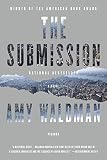
The 2011 American Book Award Winner* "The Submission" is a backwards look at the psyche and soul of an American public that will never stop grieving 9-11. Published a decade after the attacks, author Amy Waldman imagines a world where the design of the 9-11 Ground Zero memorial is open to anonymous submissions (hence the story's name) and the winner turns out to be a *gasp* American Muslim. In this story's case the winning architect is a non-practicing, non-fasting, decidedly lower case muslim (in reality the actual real-life 9-11 architect was an Israeli-American). Waldman has a journalist's eye for detail and speech and has penned an engrossing novel that does the hard work of not offering an easy ending but instead forcing the reader to grapple with their own assumptions, doubts, and memories. My full review is here.
The Insanity of God (Somalia) *Audible
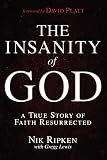
At one point author Nik Ripken's NGO was the ONLY ONE operating in Somalia--his team of 8 was feeding 50,000 refugees a day and running mobile health clinics around the country. Without his efforts countless hundreds of thousands would have starved. When no one else was there--he was--serving and loving the Somali people. It was in his years there that he also learned the costs though of following his calling--he lost a son and hundreds of Somali friends who ended up believing in Jesus. He had this to say about religious persecution: “I’d never met a believer in persecution that wasn’t running for their life,” said Ripken. “In those years in Somalia, we had 150 followers of Jesus in the country. When we left, only four were left alive. They hunted them down like we would hunt animals in rural Kentucky. They killed four of my best friends in one day in Somalia." My full review is here.
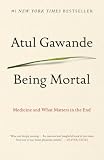
Early on author Atul Gawande captures the decision that we will all make (ideally) before we grow old: “how to make life worth living when we’re weak and frail and can’t fend for ourselves anymore.” More specifically, he seeks to find out “how [can] people age without having to choose between neglect and institutionalization? Most frightening is his conclusion that for the majority of the medical community “hope is not a plan, but it is our plan.” My full review is here.
The premise is that an American baby named Caleb is given to an Ethiopian monastery after his mother is murdered by invading Eritrean forces. 10 years later his life is in jeopardy and a Peace Corps worker and Red Cross nurse rescue him and take him to the U.S. In the United States, we discover that Caleb can heal people and that senior politicians want him dead. This political thriller unfolds as the central characters grapple with the idea of miracles in the modern age and what is more important: healed hands or healed hearts? My full review is here.
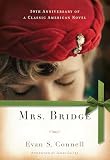
With a careful eye and razor sharp bite, author Connell captures a period in American history for the well-heeled social strata decades before the sexual revolution, feminism, the Vietnam War, the Civil Rights movement. The reader will see the slowly building revolt bubbling beneath the surface in subtle ways. Take for example when Mrs. Bridge spies a book called “Theory of the Leisure Class” in a bookstore: “She experienced a surge of resentment. For a number of seconds she eyed this book with definite hostility, as though it were alive and conscious of her. She went inside and asked to see the book. With her gloves on it was difficult to turn the pages, so she handed it back to the clerk, thanked him, and with a dissatisfied expression continued to Bancroft’s.” My full review is here.
In this memoir, French author Emmanuel Carrere takes issue with Fitzgerald's well known assertion that "All life is a process of breaking down" as he peers into the life of Juliette, carefully building a picture of her circling journey from tragedy to love to passion and back to tragedy as her cancer returns to deal its final blow. And while her body was indeed breaking down--she lived her life fully for her children, her husband, and notably for the French people affected by the country's consumer law. Carrere noted the power and necessity of connection, stating: "And that is the worst of fates: never to have been seen, never to have been acknowledged.” The people and couples described in "Lives Other Than My Own" all shared a similar triumph amidst tragedy--having been seen--having been loved. My full review is here.
She Would Be King (Liberia)
In her debut novel Wayetu Moore channels Philip Hitti's idea of lawful magic (see Hitti's History of Arabs for more background) as she joins magical realist authors like Couto, Martel, and Marquez in her telling of an alternative origin story of the Pepper Coast lands that would become Liberia. In her novel, Moore has decided to focus not on Liberia's historical realities and details but rather on highlighting the people and ideas that would become Liberia. This shift allows the reader to more thoughtfully ponder the roles of justice, religion, and slavery against the backdrop of the most unique colonialist setting on the continent. My full review is here.
By Night the Mountains Burn (Equatorial Guinea)
This novel takes place back during the colonial era on one of Equatorial Guinea's neglected islands--the country itself is run from its capital city Malabo on its largest island called Bioko. A frequent critic of dictator Obiango, the self-exiled author tells a tale in this novel of a marginalized community that survives (sometimes) on the narrowest of margins depending on passing European ships and a strange periodic washing ashore of squids. Life on the island revolves around the ocean and the canoes which the entire community bands together to create and which men are buried in when they die. My full review is here.
The name of this 1949 memoir was taken from the English poet John Donne’s poem of the same title: “Death Be Not Proud.” In it the author and father John Gunther recounts the life and death of his son who passed after a struggle with a malignant brain tumor. Much as Donne pushes back against death’s supposed power, so does Gunther as he celebrates the vitality and beauty of his son Johnny’s life saying that the book’s purpose was for him “to write, as a mournful tribute not only to Johnny but to the power, the wealth, the unconquerable beauty of the human spirit, will, and soul.” My full review is here.
On the surface the novel is about a boy serving as a well apprentice in post-WWII Turkey, two possible murders, one case of possible incest, and late 20th century capitalism in the country. These subject cut quite a wide swath, particularly because Pamuk uses them comment on political exile and the deep cutting power of father-son relationships. My full review is here.
American Spy (Burkina Faso)
This novel is both a fictionalized telling of Burkina's President Sankara’s downfall and a commentary on what it means to be a black woman in both an American and African society. The novel’s protagonist is a black female FBI agent named Marie who is haunted by her sister’s death and stifled by the lack of opportunity in her office. When she gets a chance to become a real spy she dives into it but soon realizes that many of her assumptions may have been wrong. My full review is here.
In the authors' latest novel/future historical fiction, the writing duo tackles a future in which AI, drones and robotics have continued their current development trajectory to the point where they’ve consumed every aspect of American life. Unfortunately, these “developments” have left gaping vulnerabilities within the US infrastructure that are exploited by a group of homegrown terrorists. My full review is here.
Yes, Call Sign Chaos is a biography of one of the Marine Corps’ more storied and legendary generals, but it’s also a primer on leadership, and a first person account of the wars America fought in Iraq and Afghanistan. Here's his leadership philosophy distilled to its essence:
Have a bias for action. Set the tempo for that action and reward those who meet that tempo or exceed it. Speed is king because time can’t be recovered once it’s lost. Reward the initiative of those under you--even when they fail.
My full review is here.
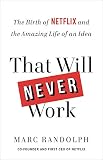
In this book, equal parts origin story, startup manifesto, and leadership manual, author Marc Randolph recounts how Netflix grew from an idea bandied about in a beaten-up Volvo to a $194B global behemoth. Listening to the book on Audible lends an added layer of depth as Randolph does the narration. The listener can experience the story as a conversation, hearing Randolph’s intonations, frustrations, humor, and jubilance as he speaks of the ups and downs of pursuing his passion while also discovering his own limitations.
For military service members and veterans, Randoph’s tale offers three valuable imperatives: create your origin story, embrace the startup manifesto, and lead with self-awareness and vision. DoDReads published my full review on its website here.
Chasing Black Unicorns (Nigeria)
My full review will be here after I complete the interview with the author.
Designing Your Life: A Framework For Building A Life You Can Thrive In
I also purchased the accompanying workbook which is excellent! The authors use design prototype theory to lead readers through a process of self-reflection and self-discovery. This is an ESSENTIAL read for any veteran considering a transition from the military, or for anyone considering a career pivot.
If I Have to Tell You One More Time
Emily said this secular book had a lot of interesting points and useful parenting techniques but there were parts that a Jesus-following parent might need to pair with truths like grace, mercy, and forgiveness to more effectively speak to your children's heart language.
Emily loved hearing the different perspectives of multiple narrative characters and the author's sparse direct writing. In particular, she was struck by the mother's courage, resolve and steadfastness in the novel.
Emily said it's a great book for parents regardless of whether you homeschool or not. Packed with reminders and tips on how to instill a love for learning and reading and curiosity in your children.