Showing posts with label immigrants. Show all posts

Wednesday, April 26, 2017

The Warmth of Other Suns: Mandatory reading for every American (Wilkerson)


There's one episode from Isabel Wilkerson's stunning work "The Warmth of Other Suns" that illustrates the root of why this tome belongs on the reading list of every person that professes to follow Jesus.  Buried in the endnotes is a synopsis from a 1906 Raleigh Evening Times article that describe a courthouse that used a different bible for black and white witness.  The article relates the presiding judge's admonition to the sheriff when the wrong Bible was used to swear someone in--his advice to prevent future gaffes was to have a separate place where the "black" bible is kept to prevent future mixing.

This common practice in the Jim Crow south stunned me--how tragic for the Christian faith to think that the story of a savior that bucked against societal norms and laws--who gave his life for all men and women--who died for "jew and gentile" who broke bread with the dredges of society, who loved and healed the lepers, who ministered to prostitutes and implored his followers that true religion was to love the orphaned and widowed--how tragic that this radical good news was distorted, ruined and reduced to a reference tool to subjugate another race.

All of this reminds me of the Reverend Dr. Lockridge's famous 1976 sermon "That's My King."  In this era of #NOTMYlatestinjustice, Lockridge, who left Texas for San Diego in the early 50's (the final wave of the great migration), gives an affirmative message of who this King was who made ONE bible--ONE message for ALL men.
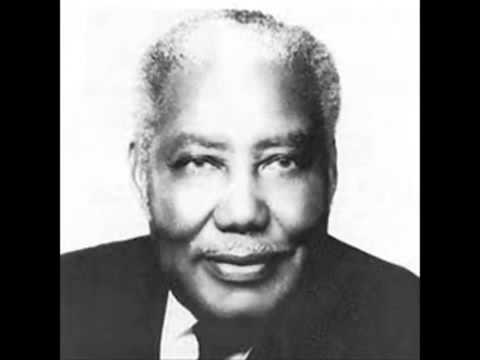

The fact that I can place Dr. Lockridge's move from being a Pastor in Texas to one at Calvary Baptist in San Diego amidst the final wave of the 'great migration' is a simple way that my eyes had been opened after reading only 77 pages of this 500 pages work.  Indeed, Wilkerson makes sure to point out the myriad modern day icons who were products of their parents' or grandparents' brave exodus from the South (e.g., Diana Ross, Tupac, Bill Russell and Huey Newton).

The strength of Warmth is due to the exhaustive research readily apparent in the more than 500 page history of the African-american exodus from Jim Crow south.  Wilkerson's narrative focuses on three people whose stories represent the plight of millions during the "great migration":  Ida May Gladney, a housewife/reluctant cotton picker who fled Mississippi in the 1930s to settle in Chicago; George Starling, a partially college educated orange picker/social justice agitator who hightailed it out of Florida in the 40s for New York; and Robert Foster, a sleighted Army surgeon who left a stifling backwoods Louisiana town in the 1950s for gold in California.  Their narratives emerge as Wilkerson weaves them into the larger history of the millions of African-Americans who gave up everything to begin their lives anew in urban centers across the United States.

Before the publication of Warmth some seven years ago, there had never been a definitive and comprehensive analysis (at least in the ethnographic sense) of these waves of migration that began following the reconstruction era as Jim Crow set in.  Wilkerson's book is significant because of the short historical space between 2017 and the enslavement (through legal means or socio-economic means) of a race of people.  Let the following statement sink in:

Just 77 years ago, in 1/3 of the US, killing blacks was not a crime.

Most of us have relatives at least who were young kids 77 years ago!  It's often far too easy to dismiss a movement today--#blacklivesmatter comes to mind.  Now while I don't agree with ever single tenet of that movement, reading this book opened my eyes to the historical headspace from which its leaders and followers are coming (2020 edit: let me be clear though: All Lives Can't Matter--Until Black Lives Matter--there's much work still to be done to dismantle the structural and social impediments to equality).  While the idea of the de facto legalized murder of a race seems a preposterously distant one to me today, it probably doesn't to many of the African-Americans in this country.  Because they have family members STILL ALIVE who endured it.  They know the history.

Much of the conflict in today's society would at least be softened if both sides took the time to know one another's history--their backstory.  Wilkerson has presented a gift to Americans--she has captured a fundamental piece of our history that before only existed buried in the margins of dusty newspapers and crumbling, fading memories of aging octogenarians.  By weaving the personal with the historic she has brought to life the brave flight of millions who sought a better life only to find roadblocks, but who fought on--hoping to give their children and grandchildren a better chance or at the very least the chance to bloom.


FOOTNOTE:
While were on the subject of dark periods in US history, check out this documentary on a very dark period in the 1930s when an estimated 1 million americans of mexican descent were forcibly removed from their homes and 'repatriated' to Mexico (at least 60% of these men and women were American citizens)! NPR article on "Repatriation"


For further reading:
My review of "Between the World and Me" by Ta-Nehisi Coates
 New Yorker Review of "The Warmth of Other Suns" 
 Author's Page
The Lynching of Claude Neal


My notes:


1915-1970
5 invisible language
7 hyphens
10 people who might not have been
11 first step without asking
21 lighter skin = better economic prospects
22  like all things beautiful
31  Colored parking spaces into the 1950s
33  Case system =a prison for all
37  reconstruction effects with sharecropping contrast
38  Plessy v. Ferguson
38  Stripping away of liberties following reconstruction era
39  Every four days someone was hanged or burned alive
40  Jim Crow laws
41  great quote on anti Jim Crow
43  both hostility and migration was driven by a new generation that didn't know slavery
45-6  beautiful writing on accents
45  white and colored bibles
48  divisive nature of Jim Crow
50  unfair childhood as preparation for caste system of Jim Crow
54  share cropping just another form of slavery--no transparency
58  Florida was one of the most repressive states
59  FL, TX, MS were the first to put in the caste system
61  FDR fails America with lack of intervention in Neal Mariana case
85  historical source of white/black wealth disparity
96  Link between sharecropping and northern business interests
117 'sometimes you have to stoop to conquer'
120 Clement-Dubois conflict at Atlanta University
131 1943 Detroit riots start of the shift to the use of the riot as an urban resistance tool
135 the taste of freedom in the North changes people
139 War make Florida black labor indispensable
152 prevalence of debt peonage into the 1940s
157 killing blacks was not a crime 76 years ago
160-1 WWI served as a trigger for the Great Migration, whose trickle started with 1890's Jim Crow
163  3 methods that the South used stem GM: economic blockages (tariffs), suppression of the information flow, perversion of the legal/justice system
175  to stay or go and 'let Jim Crow win'
179  Southern blacks as refugees--traversing long distances
186  3 celebs from Monroe who were part of GM
191  Civil war railway laid the foundation for the GM
200-4 unofficial travel guides: lack of safe stops traveling across country served as an impediment to movement
233 two LA 44 original settlers were black (in 1781)
240 slaves worked away for 2.5 years in Texas after the Emanciptation Proclamation was over, not realizing that they were free (Juneteenth day)
243  sister cities part in the GM
247  slaves 1st arrived in NY in the 1600s with the Dutch West India Company
248  Civil war draft riots help drive blacks toward Harlem utnil it became majority black
255  with integration, the rejection of black businesses by blacks who can use white businesses now instead
266  Jesse Owens: couldn't shake hands with Hitler but couldn't with US president either
269  Chicago settled by a black fur trader in 1779: Jean Baptiste Point du Sable
273  For most of US history, riots were actually carried out by disaffected white groups
277  blacks paid more in rent than whites, so they more people living in their apartments--they also had 'rent parties'
290  Northern blacks were hard on migrant blacks--in many cases harder than whites.  These migrant blacks might not know how to act 'appropriately' but 'their children will'
304  1st time voting in Chicago, blacks were courted by the democrats
320  Florida was the most violent state in the South
324-6  Early NAACP work
330  Robert was friends with Ray Charles--who himself was also a product of the GM
333  'slave market' for domestic help in the 1940s.  Lowest economic rung gathering on corners for white women to drive by and select
348  one of Ray charles' kids was named after Robert
375  Ciero riots
376  Neighborhoods didn't fail because blacks moved in but were already failing
387  King's northern campaign was a reaction to the GM
389  King reveals very hardcore but veiled racism in the North
398  hyper segregation
417  difference between immigrant whites and southern blacks


Ida Mae

Dr. Robert Foster


George Starling
G


Saturday, March 12, 2016

All Our Names--Read It Because It Will Break Your Heart and because It's the Great African Novel (Uganda)

All Our Names (Uganda)

READ IT BECAUSE: It will Break Your Heart.  And it's the Great African Novel.


As I read through the final pages of the novel and watched the final paragraphs fade away my heart began to ache and break because I didn’t want to let the characters go.  And then I focused and slowly read through the final line.  I won’t ruin it for you but that line—oh that line—it will break your heart. 

All Our Names is a novel that the world should read—it’s the type of story for which all the cliches like “one for the ages,” and a “timeless classic,” are written.  It is befitting of the categorization “The Great African Novel” as Mengestu writes beautiful rich prose capturing spiraling love stories that appear destined for heartbreak. 

Set during the struggle for post-independence power in Uganda, Names follows an Ethiopian transplant seeking an identity in Kampala as a youth and later in the civil rights era midwestern USA. The stories--told in parallel--unravel (or re-ravel) the complex relationship between love, loss, war and forgetting. Throughout it all one has the pleasure of reading Mengestu's insightful descriptions--the following concerning the nature of colonial influence is particularly apt:

‘When will you people learn?’ he said. ‘Do you enjoy killing each other?’ “I admit I had had the same thought before. I saw many people killed, as if it were nothing. I thought at times that our lives were worthless, but, hearing Henry, I knew that we were both wrong. No one needs to learn how to kill, but it took the foreigners who came to Africa to show us that it meant nothing to do so. Henry’s friend Joseph had many people killed before he died. I think now he had only done what the British had taught him.

These types of novels are the texture that makes the historical books and political science articles stick in one's memory--they add a depth of insight and of humanity that is all too often missing from the classroom.


*One of my Reading Around the Continent books--the full list is here.
See our 2016, 2015 and 2014 Reading Lists.

Further Reading:
NPR Dinaw Mengestu Embraces The Vastness Of Love And War (includes podcast)
WaPo Book review: ‘All Our Names,’ by Dinaw Mengestu
NYT Cultural Exchange ‘All Our Names,’ by Dinaw Mengestu


All Our Names by Dinaw Mengestu
You have 28 highlighted passages

His family was from the north, one of the tall, darker tribes that a man in Cambridge had decided were more warrior-like than their smaller cousins to the south. Had the British stayed, he would have done well.Read more at location 87
Isaac and I became friends the way two stray dogs find themselves linked by treading the same path every day in search of food and companionship.Read more at location 94
“Did you know,” which was his equivalent of “Once upon a time.”Read more at location 130
“This is Africa,” he said. “There’s only one thing to study.” He waited for me to respond. After several dramatic seconds he sighed and said, “Politics.Read more at location 154
Isaac had none of the good or the bad that came with living in such close, sustained contact with your past. If there was anything I pitied him for, it was the special loneliness that came with having nothing that was truly yours. Being occasionally called “boy” or “nigger,” as he was, didn’t compare to having no one who knew him before he had come here, who could remind him, simply by being there, that he was someone else entirely.Read more at location 318
African socialist republic—“a beacon of freedom and equality where all men are brothers” was how he phrased it in the radio announcement given after he staged the country’s first coup. Millions believed him. He spoke the right language, grand, pompous, and humble merged into the same breath. He was from the military, but he claimed he wasn’t an army man, just a poor farmer who had picked up the gun to liberate his people, first from the British and then, after independence, from the corrupt bureaucrats who followed. It was rumored that he had a photographic memory, was a champion chess player, and every weekend returned to his farm to tend to his cattle and crops. Whatever people wanted in a leader and dreamed of for themselves, they found in him. The newspapers ran daily photographs of the president in various guises: the president as father, with a dozen children gathered around him; the president as village leader in a bright red-and-blue costume, using a walking stick, and the president as the intellectual statesman in a three-piece suit that tamed his massive girth and lent an air of sophistication to his bull-sized head.Read more at location 324
They were from Rhodesia—independence was still years away. No one on campus had a more powerful cause, which took the form of a single white banner unfurled each morning that read: AFRICA IS NOT FREE UNTIL WE ALL ARE.Read more at location 380
said. That first flier listed four. It is a Crime Against the Country to fail to report any Crimes committed Against the Country. It is a Crime Against the Country not to know what is a Crime Against the Country. It is a Crime Against the Country to ask what is a Crime Against the Country. It is a Crime Against the Country to think or say there are too many Crimes Against the Country.  It is a Crime Against the Country to read this.Read more at location 415
“Now you know. This is how they break you, slowly, in pieces.”Read more at location 552
Before Isaac, I had always been content to cast myself as the outsider, because only by such measures, I thought, could you break from the grips of the family and tribe around which you were supposed to order your life. I had ventured far away from home to live up to that idea without understanding that, inevitably, something had to be paid for it. Every day following Isaac’s absence, I was reminded that without him I made an impact on no one. I was seen, and perhaps occasionally heard, strictly by strangers, and always in passing. I was a much poorer man for this than I had ever thought.Read more at location 617
Even before they separated, the only thing my parents had that resembled a relationship was the fact that they slept in the same bed. I remembered trying to sleep with them as a child and finding that I felt more alone lying between them than I did in my own room.Read more at location 722
left Isaac’s apartment knowing that we were sleeping with each other not to draw closer but to try and rid ourselves of a desire we both thought we would be better off without.Read more at location 731
Most of us didn’t know one another’s names or ages or reasons for being there, and that was fine, because silence isn’t the same when it’s shared.Read more at location 782
No bureaucracy in the country until then had ever worked properly. Years could be lost in search of a birth certificate, driver’s license, or passport. It was easy to be invisible in a city that had clearly stretched its limits and was bursting at its seams. The daily records of names, entries, and departures signaled the end of that.Read more at location 865
The party had gone on long enough for them, and what they sought wasn’t a renewal of their convictions, but a quick and, they hoped, painless exit from them.Read more at location 1077
“Africa is where America sends its crazy people” was the common refrain among us,Read more at location 1138
Rescue—that is the true heart behind romance and fairy tale; the spontaneous love that frees us from the tower, hospital bed, or broken world is always only the means to that end.Read more at location 1414
What was worse was being alone in public and, for reasons you were reluctant to admit, feeling frightened because your lover held your arm.Read more at location 1462
thought I had lost the heart to take on that type of work, but I hadn’t. I had simply let the muscles go slack. What I didn’t know until then was that loving someone and feeling loved in return was the best exercise for the heart, the strength training needed to do more than simply make it through life.Read more at location 1974
‘When will you people learn?’ he said. ‘Do you enjoy killing each other?’ “I admit I had had the same thought before. I saw many people killed, as if it were nothing. I thought at times that our lives were worthless, but, hearing Henry, I knew that we were both wrong. No one needs to learn how to kill, but it took the foreigners who came to Africa to show us that it meant nothing to do so. Henry’s friend Joseph had many people killed before he died. I think now he had only done what the British had taught him.Read more at location 2271
When I was born, I had thirteen names. Each name was from a different generation, beginning with my father and going back from him. I was the first one in our village to have thirteen names. Our family was considered blessed to have such a history.Read more at location 2297
Another man came over and kicked me playfully in the back and in the ribs. I didn’t mind that, either. For once, I thought, someone was speaking to me honestly.Read more at location 2412
I didn’t stay long enough to hear them tell the story. The women and children began to drag the bodies into the forest. As they did so, I tried to write down what had happened. I thought of counting the dead, but I was too far away to do so. I tried next to describe one of the bodies, but all I could see was death—no eyes, no face, just a blank emptiness I didn’t have the stomach to look at closely. When that failed, I tried to describe a woman dragging what looked to be an old man through the grass, but before I knew what to write, she was gone and then walking back, empty-handed. By the time I finally turned away from her, it was almost over. The bodies were hidden in the forest, which would swallow the remains before anyone knew to look for them. I had no names, not even of the village, which was too small to have existed on any map. And so I did the only thing I could think of. I waited until no one was watching me, and then left. As I walked back to Joseph’s village, I drew a map of the route. I recorded every bend in the road, and the few forks that I came upon, along with sketches of a few long-abandoned thatch-roofed homes barely visible from the path. It was far from poetry, less than a journal, and worthless as history.Read more at location 2840
“It’s not fair,” Isaac said. “What?” He pointed out the window to the lake. “You have oceans even in the middle of the country.” “It’s not an ocean,” I said. “I know,” he said. “Your lakes are my ocean. My forest is your jungle. America is a world, not a nation.”Read more at location 2884
“Don’t worry,” I told him, “part of my job is to save you from drowning.”Read more at location 3043
No one will have ever loved each other more than we did.Read more at location 3285