Showing posts with label christian. Show all posts

Saturday, January 19, 2019

Kruse's Keys: Read "The Furious Longing of God" to Realign Your Perspective on Religion

My brother Patrick gave this quick read me. You can get through the 136 pages in one sitting if you’d like but I think it’s a book that’s best consumed in spurts with time to mull over Brennan Manning’s meditation on God’s love for us. Truthfully, the author’s writing style isn’t my favorite--it’s flowery and over the top at times--but despite my purely personal opinion the book has heft and a message that’s powerful in its simplicity: God loves you in a very personal way that’s filled with madness, desire, and joy. In particular, I appreciated his exposition on Zephaniah 3:17:


The Lord your God is in your midst, a mighty one who will save; he will rejoice over you with gladness; he will quiet you by his love;
he will exult over you with loud singing.

A pastor and friend shared that verse with me after Emily and I had gone through two miscarriages and we found out we were pregnant again (with a baby who would turn out to be Betty). During that year (2012), we found out we’d been chosen to adopt a newborn baby (Macee) and 7 months later Betty was born. This verse crushed me. Emily and I had been through such a dark valley with losing two babies and had questioned so much and then God broke through with such extravagance and abundance, such prodigal love. Such a special verse for me.

This book likely has a message for any reader, most importantly this:  “Our religion never begins with what we do for God. It always starts with what God has done for us.”


See our 20192018201720162015 and 2014 Reading Lists.

Key Quotes:

21 “I am my beloved’s, and his desire is for me.” Song of Solomon 7:10 (good verse to pray every day)

31 “Abba, I belong to you.” Prayer of meditation and repetition.

46 “The love of God is madness” (or folly) chanted during French Easter services as “L’amour de Dieu est folie.”

76 “Christians find it easier to believe that God exists than that God loves them.” -Basil Hume

77 “In human beings, love is a quality, a high-prized virtue; in God, love is an identity.” thus--God is love.

126 “Our religion never begins with what we do for God. It always starts with what God has done for us.”


For further study:

23 Zephaniah 3:17 God dances for joy because of you. The Lord your God is with you, the Mighty Warrior who saves. He will take great delight in you; in his love he will no longer rebuke you,but will rejoice over you with singing.” (NIV) The Lord your God is in your midst, a mighty one who will save; he will rejoice over you with gladness; he will quiet you by his love;
he will exult over you with loud singing. (ESV)

64 Thomas Brodie commentary on Gospel of John https://www.amazon.com/Gospel-According-John-Theological-Commentary/dp/0195118111


Key Takeaways:

22 The author’s hope for you is that you shift from a “I should pray” mentality to a “I must pray mentality.”

29 the idea of fury with regard God’s love and longing is that of intense energy

38 The foundation of God’s furious longing is love

51 Song of Solomon 2:10-14 is what a French scholar believes God said to Jesus as he was dying on the cross:

My beloved speaks and says to me:
“Arise, my love, my beautiful one,
and come away,
11 for behold, the winter is past;
the rain is over and gone.
12 The flowers appear on the earth,
the time of singing[d] has come,
and the voice of the turtledove
is heard in our land.
13 The fig tree ripens its figs,
and the vines are in blossom;
they give forth fragrance.
Arise, my love, my beautiful one,
and come away.
14 O my dove, in the clefts of the rock,
in the crannies of the cliff,
let me see your face,
let me hear your voice,
for your voice is sweet,
and your face is lovely.


56 When a leprous illiterate woman heard the voice of God as she lay dying, she told Manning that God said this to her:

Come now, my love. My lovely one, come.

For you, the winter has passed, the

Snows are over and gone, the flowers

Appear in the land, the season of

Joyful songs has come.

The cooing of the turtledove

Is heard in our land.

Come now, my love. My Yolanda, come.

Let me see your face. And let me hear

Your voice, for your voice is sweet

And your face is beautiful.

Come now, my love, my lovely one,

Come.


62 Manning makes the point/conclusion that there is no division of God’s love--he loves us just as much as he loves Jesus! This is a powerful truth that must shift our outlook in life and with regard to our own self-worth and value. (John 17:22-25)

68 God doesn’t want a relationship with us. He wants UNION--he wants oneness!

88 Manning argues that Jesus’ entire message can be summed up in Galatians 5:6: “the only thing that matters is the faith that expresses itself in love.” Being Christlike, being most like God means “loving the most.”

93 Beautiful example in the book of a boy named Larry Malaney, whose father modeling Christ’ furious love, loved him so publicly and overwhelmingly that it changed the whole direction of his life.

Thursday, August 17, 2017

Kruse's Keys: Prodigal God: Read It Because "Prodigal" Doesn't Mean What You Think (Keller)

I first read this book in 2013 and it made such an impression that I placed it on my Yearly Re-Reading list.  So I read it again this year and it keeps getting better.

The Bible's tale of the prodigal son is best understood by looking at the two ends of the spectrum for the definition of the word prodigal.  On one end it describes someone who spends recklessly (i.e., the son) and on the other end it describes someone who gives recklessly (i.e., the sons' father).  So in this story what you really have is a parable about two lost sons and a reckless (with his love) father. Keller's reorientation of the story from its traditional focus on the wayward son gives one more accurate insight into just who this tale was for.  In context, Jesus' main audience was the "older brothers" listening to him.  These were the self-righteous pharisees who sought to control their own salvation through rigorous adherence to the law (and putting down others) instead of pursuing salvation through a relationship with Jesus.

At different times in my own life, I've been both sons and in both cases found myself rutted by an inward focus on me, me, me, me.  One of best parts of Prodigal God is that it turns the reader outward showing that recognition of the God's costly grace should spur his followers to serve the poor, to love the orphans and widows in society today.  This is the lavish and extravagant call of the Father to sons and daughters of all types--to join him in the banquet--in the community of believers--in order to love and draw in even more to the celebration.

KEY QUOTES:
  • "It is impossible to forgive someone if you feel superior to him or her." -Keller
  • "Religion is the default mode of the human heart." -Martin Luther
  • "The targets of the [prodigal son story] are not wayward sinners but religious people who do everything the Bible requires." -Keller
KEY TAKEWAYS:
  • Definition of prodigal:  spending recklessly; giving on a lavish scale
  • Jesus' target in the parable is the older brothers, not the wayward sons--his focus is on the religious people.  The New Testament is chock full of Jesus hanging out with younger brothers--does your church seem more full of younger or older brothers?
  • "Religion" is the default mode of the human heart--we have to constantly fight against it.
  • You can't forgive someone if you feel superior to them (the biggest obstacle for the older brother in the story)
  • Elder brothers seek to control their environment rather than to seek a relationship--it was likely the attitude of the elder brother that drove away the younger brother in the first place
  • The Bible tells the story of exiles over and over again.  That's really what the bible is about:  a bunch of exiles trying to get home just like the younger son
  • A sign that you recognize costly grace is that you serve the poor:  younger brothers are too selfish and older ones too self-righteous...eventually serving the poor is a matter of integrity for Christians

KEY REFERENCES:

NOTES:


XV:  The father calls his older son to join in the welcome--that is to join the community
XVII:  The parable of the two lost sons and the reckless father
5: The father sees the younger sons and IS FILLED WITH COMPASSION
7:  The older son is too busy working to realize that everything the father has is already his
12:  The target of the Jesus' parable is not wayward sons but is instead religious people...i.e., older brothers because he's talking to the pharisees
16:  Christianity started as a non-religion--a gathering of believers without a temple
19:  The new testament shows time and time again, Jesus and his teachings attracting younger brothers...does our church attract that same segment?
23:  The father still loves his younger son amidst the agony of him collecting his inheritance and leaving him
28:  The father runs out to his son and embraces him and accepts him back before the younger son actually repents and shows that he's changed his life
30:  Accepting the younger son back means that the inheritance is once again divided between everyone.   God's wealth, however, is infinite
39:  The approaches to life of both son's is wrong
40 the elder brother refuse to enter the feast because:  "I've never disobeyed you" except, however, when it counts most--when Jesus asks him to enter the feast!
41:  really the older brother wanted his father's stuff--NOT his father himself
43:  God wants your heart your heart your heart
52:  Everyone is wrong and everyone is loved.  Admit this and change
63:  You can't forgive someone if you feel superior to them
65:  Anger as a prison
74:  Elder brothers seek to control their environment rather than to seek a relationship--it was likely the attitude of the elder brother that drove away the younger brother in the first place
83:  The father doesn't love BECAUSE of repentance but rather his LOVE drives repentance
86:  Elder brother's problem is self-righteousness
87: Truly becoming a christian requires also repenting of the reason for doing right things
94:  Forgiveness always COSTS the one doing the forgiving
96:  Three Seasons film reference
104:  German Word sehnsucht: profound homesickness and longing
109:  The Bible tells the story of exiles over and over again.  That's really what the bible is about:  a bunch of exiles trying to get home just like the younger son
126:  A sign that you recognize costly grace is that you serve the poor:  younger brothers are too selfish and older ones too self-righteous...eventually serving the poor is a matter of integrity for Christians
128:  Luther's assertion that "religion" is the default setting of the human heart--you must repeatedly fight against that
136:  God's free love means that we were bought with a price
137:  Bonhoeffer's definition of "cheap grace"means that you are all about the free grace but not about the living it out//the cost of following Jesus pales in comparison to the cost he paid for us
142:  You can only get to know Jesus the individual through the community (i.e. the church)

Tuesday, August 15, 2017

"Deep Work" for the Christian Life (Newport)

NOTE:  I've also put together a general writeup on Deep Work here.

You are sitting at the kitchen table in the early morning intending to spend some time praying.  A minute later you hear a buzz and can’t help but to glance at the notifications on your phone.  Back praying once more, your mind wanders and you find yourself thinking about a meeting at work later that day.  This prayer time is going nowhere.  Why can’t I focus?  Why is prayer so difficult?

Sunday morning you are sitting in church listening to Pat preach.  You’re jotting down his points in Evernote on your phone.  Then a notification pops up.  Then you’re checking an alert on Facebook.  Back to writing some notes.  And back and forth.  As you drive home, your wife asks what you thought about the sermon--you draw a blank.  How can I not remember anything from 30 minutes ago?

You arrive early at the office and open your inbox.  Opening up your Chrome browser, you get a few tabs going: Facebook, Twitter, The Washington Post, your Gmail.  As you answer a few emails, you swing back and forth between your inbox and Facebook feed, then you read a bit of a news article.  Then back to looking up some information for a report that’s due later that day.  You blink and the day is over and you’re driving home wondering:
Where did my day go?  What did I even accomplish today?  

You are waiting in the line at the post office.  The overworked clerk is fighting a losing battle with the outdated shipping software and you resign yourself to losing the next 30 minutes of your life.  So you spend it swiping.  Swiping through Instagram, Facebook, LinkedIn, reading some news, sending a text, reading an email, deleting some old ones.  Getting things done.  The thing is, you leave the post office, feeling unfocused and tired.
Why does my mind race around?  Why do I feel so distracted?

At your Missional Community everyone is going around the room sharing prayer requests.  After two couples have shared you realize you have no idea what they said.  You had glanced a few times at your phone--really just to check a few irrelevant “breaking” news alerts that buzzed in your pocket and then found myself thinking about a multi-meter that you needed to return to Lowes.  You made it through listening to another couple’s prayer request and then your mind was meandering again thinking about how to phrase your own prayer request.
Why is it so hard to listen?  Why am I listening but not really hearing?

Can you relate to any of these scenarios?  
Do you desire to have a closer relationship with Jesus?  
Do you want to learn more of the bible?  
Do you want to have a better prayer life?  
Do you want a quieter, quiet time?

If so, then Cal Newport’s Deep Work: Rules For Focused Success in a Distracted World is for you.  While the intended audience of Deep Work is clearly a secular business one, the lessons that he lays out are ones that can benefit anyone that desires to “be better.”  For the follower of Jesus, his call to limit distraction and to focus on the priorities in your life (and to figure out what those priorities are) should be a convicting one.  For the Christian reader, Newport’s thesis that learning hard things quickly and efficiently requires intense distraction-free focus (i.e., deep work) should ring true because these very principles are affirmed in scripture.  

Take for example, one of David’s songs (Psalms 46).  He ends it by echoing God’s call to each of us.

Be still.  And know that I am God.

God isn’t calling us necessarily to a physical stillness, of course, but instead he wants us to quiet our minds. He calls us to a focused meditation on his very nature.  After spending several verses extolling the virtue and might of God, David beckons the listener into a denouement—a  time to reflect and direct one’s thoughts to the nature of our Creator.  In Deep Work, Newport examines the biological process of myelination—the science of which affirms the idea that the very type of continual, undistracted, focused reflection that David calls us to can build a deeper understanding and relationship with God.

But what does biology have to do with your relationship with God you ask?  Well, myelin is a layer of fatty lipids and proteins that grow around your nerve cells.  The more myelin that builds up, the faster these nerve cells fire off.  The buildup of myelin (i.e., myelination) comes when you focus solely on a specific task or skill.  The specific ‘circuit’ associated with that task fires off repetitively as you work which triggers cells to produce and envelope your nerves with myelin.  This process then creates a ‘permanent’ skill or knowledge base.   Where learning and myelin buildup go awry is when one tries to multitask.  Multi-tasking fires off multiple circuits at once and doesn’t allow your body to isolate the specific circuit in order to learn a new language or write that term paper--thus no myelin is produced when you are distracted.

This God-designed biological process is important because it confirms Newport’s thesis: “learning is an act of deep work” and if you want to do it quickly and efficiently, you need to maintain an intense focus on the subject at hand.   If you want to get better—in your marriage, your academic studies, your relationship with God—you have to do the (deep) work.  Newport offers a useful equation for the reader:  

High Quality Work Produced = (time spent) x (intensity of focus).  


The deep work of prayer

Prayer (i.e., the time we spend talking to God), is perhaps the foundational element of our relationship with Him.  Looking to the Gospels we see Jesus modeling both time spent in prayer and a focused and undistracted intensity in His prayer life.  The gospel writers repeatedly describe Jesus’ concerted efforts to seek out the “deep work” of building his relationship with God as He withdraws and spends undistracted time in prayer and communion.  Some key examples include:
  • Shortly after beginning his ministry, Jesus withdraws to pray in solitude early in the morning (Mark 1:35),
  • After hearing the news of John the Baptist’s beheading, Jesus goes off by himself to pray (Matthew 14:13)
  • Before naming his disciples, Jesus prays to God all night (Luke 6:12),
  • Before and after feeding the five thousand, Jesus prays in solitude(Matthew 14:23; Mark 6:31; John 6:15)
  • At Gethsemane, Jesus enters into three different prayer periods (Matthew 26:36; Mark 14)
  • With his dying breath on the cross, Jesus’ prays the words of King David’s own song of trust in God amidst feelings of abandonment (Luke 23:46; Psalm 31:5)
Jesus’ lifelong focus on prayer is best captured in Luke’s wry observation that “Jesus often withdrew to pray” (Luke 5:10).  In other words, prayer was a focused habit for Jesus.  The question for followers of Jesus then is how do we advance toward that same place.  Following Newport’s template for producing high quality work (in this case, a deepening relationship with Jesus), we can focus on spending focused and intentional time with God.  Using themes from Deep Work, I’ve created a month long challenge geared to help retrain and refocus our thoughts from distraction toward myelination in our relationship and prayer life with Jesus.

Take the 30 Day Deep Work Challenge

  1. Find rest on your Sundays.  Turn off social media on Sundays.  Disable internet connectivity on your phone as soon as you leave for church until you get home (or at least turn off those pop up notifications on your phone).  Use this time to do the deep work of growing as a Christian.  Orient your heart and focus your thoughts.   The “attention residue” from even a quick glance at an email during the sermon degrades your ability to re-focus on learning and internalizing the message.  Focusing takes practice.
  2. Wake up and put first things first.  Resist the urge to check social media/email when you first awake.  Spend those first moments actively focusing your thoughts on Jesus.  Thank him for three things in your life.  Spend time reading or listening to the Bible and thinking about its application to your own life.  Get up 15 minutes early if you need to.
  3. Schedule your nights and weekends and create value.  Be proactive—not reactive.  During the week, set aside blocks of time for important tasks/projects/papers.  During these time blocks, disable internet connectivity.  For your nights and weekends, write down three spiritual and/or personal goals/projects.  This could be anything from learning about the theology of baptism, to memorizing a Psalm, to making a long-term tithing plan, to serving your community as a family, to being a better dad or husband, to reading with your kids, to playing catch with daughter, to doing a puzzle with your son, or to starting a missional community.  Set aside an undistracted hour during the weekend to make progress on those goals.  
  4. Embrace boredom and leave your phone in your pocket.  At least once a day, resist the urge to check your phone while stopped at a light, while at the post office, or while waiting in line at the Safeway.  This addiction for on-demand distraction is literally short-circuiting your brain so that when you want to concentrate on deep work, you won’t be able to.  
  5. Tell Someone.  It’s easier to stay accountable if you know someone’s going to ask you how it’s going.  


Wednesday, April 26, 2017

The Warmth of Other Suns: Mandatory reading for every American (Wilkerson)


There's one episode from Isabel Wilkerson's stunning work "The Warmth of Other Suns" that illustrates the root of why this tome belongs on the reading list of every person that professes to follow Jesus.  Buried in the endnotes is a synopsis from a 1906 Raleigh Evening Times article that describe a courthouse that used a different bible for black and white witness.  The article relates the presiding judge's admonition to the sheriff when the wrong Bible was used to swear someone in--his advice to prevent future gaffes was to have a separate place where the "black" bible is kept to prevent future mixing.

This common practice in the Jim Crow south stunned me--how tragic for the Christian faith to think that the story of a savior that bucked against societal norms and laws--who gave his life for all men and women--who died for "jew and gentile" who broke bread with the dredges of society, who loved and healed the lepers, who ministered to prostitutes and implored his followers that true religion was to love the orphaned and widowed--how tragic that this radical good news was distorted, ruined and reduced to a reference tool to subjugate another race.

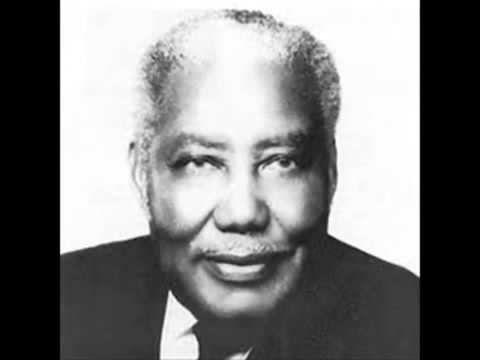
All of this reminds me of the Reverend Dr. Lockridge's famous 1976 sermon "That's My King."  In this era of #NOTMYlatestinjustice, Lockridge, who left Texas for San Diego in the early 50's (the final wave of the great migration), gives an affirmative message of who this King was who made ONE bible--ONE message for ALL men.


The fact that I can place Dr. Lockridge's move from being a Pastor in Texas to one at Calvary Baptist in San Diego amidst the final wave of the 'great migration' is a simple way that my eyes had been opened after reading only 77 pages of this 500 pages work.  Indeed, Wilkerson makes sure to point out the myriad modern day icons who were products of their parents' or grandparents' brave exodus from the South (e.g., Diana Ross, Tupac, Bill Russell and Huey Newton).

The strength of Warmth is due to the exhaustive research readily apparent in the more than 500 page history of the African-american exodus from Jim Crow south.  Wilkerson's narrative focuses on three people whose stories represent the plight of millions during the "great migration":  Ida May Gladney, a housewife/reluctant cotton picker who fled Mississippi in the 1930s to settle in Chicago; George Starling, a partially college educated orange picker/social justice agitator who hightailed it out of Florida in the 40s for New York; and Robert Foster, a sleighted Army surgeon who left a stifling backwoods Louisiana town in the 1950s for gold in California.  Their narratives emerge as Wilkerson weaves them into the larger history of the millions of African-Americans who gave up everything to begin their lives anew in urban centers across the United States.

Before the publication of Warmth some seven years ago, there had never been a definitive and comprehensive analysis (at least in the ethnographic sense) of these waves of migration that began following the reconstruction era as Jim Crow set in.  Wilkerson's book is significant because of the short historical space between 2017 and the enslavement (through legal means or socio-economic means) of a race of people.  Let the following statement sink in:

Just 77 years ago, in 1/3 of the US, killing blacks was not a crime.

Most of us have relatives at least who were young kids 77 years ago!  It's often far too easy to dismiss a movement today--#blacklivesmatter comes to mind.  Now while I don't agree with ever single tenet of that movement, reading this book opened my eyes to the historical headspace from which its leaders and followers are coming (2020 edit: let me be clear though: All Lives Can't Matter--Until Black Lives Matter--there's much work still to be done to dismantle the structural and social impediments to equality).  While the idea of the de facto legalized murder of a race seems a preposterously distant one to me today, it probably doesn't to many of the African-Americans in this country.  Because they have family members STILL ALIVE who endured it.  They know the history.

Much of the conflict in today's society would at least be softened if both sides took the time to know one another's history--their backstory.  Wilkerson has presented a gift to Americans--she has captured a fundamental piece of our history that before only existed buried in the margins of dusty newspapers and crumbling, fading memories of aging octogenarians.  By weaving the personal with the historic she has brought to life the brave flight of millions who sought a better life only to find roadblocks, but who fought on--hoping to give their children and grandchildren a better chance or at the very least the chance to bloom.


FOOTNOTE:
While were on the subject of dark periods in US history, check out this documentary on a very dark period in the 1930s when an estimated 1 million americans of mexican descent were forcibly removed from their homes and 'repatriated' to Mexico (at least 60% of these men and women were American citizens)! NPR article on "Repatriation"


For further reading:
My review of "Between the World and Me" by Ta-Nehisi Coates
 New Yorker Review of "The Warmth of Other Suns" 
 Author's Page
The Lynching of Claude Neal


My notes:


1915-1970
5 invisible language
7 hyphens
10 people who might not have been
11 first step without asking
21 lighter skin = better economic prospects
22  like all things beautiful
31  Colored parking spaces into the 1950s
33  Case system =a prison for all
37  reconstruction effects with sharecropping contrast
38  Plessy v. Ferguson
38  Stripping away of liberties following reconstruction era
39  Every four days someone was hanged or burned alive
40  Jim Crow laws
41  great quote on anti Jim Crow
43  both hostility and migration was driven by a new generation that didn't know slavery
45-6  beautiful writing on accents
45  white and colored bibles
48  divisive nature of Jim Crow
50  unfair childhood as preparation for caste system of Jim Crow
54  share cropping just another form of slavery--no transparency
58  Florida was one of the most repressive states
59  FL, TX, MS were the first to put in the caste system
61  FDR fails America with lack of intervention in Neal Mariana case
85  historical source of white/black wealth disparity
96  Link between sharecropping and northern business interests
117 'sometimes you have to stoop to conquer'
120 Clement-Dubois conflict at Atlanta University
131 1943 Detroit riots start of the shift to the use of the riot as an urban resistance tool
135 the taste of freedom in the North changes people
139 War make Florida black labor indispensable
152 prevalence of debt peonage into the 1940s
157 killing blacks was not a crime 76 years ago
160-1 WWI served as a trigger for the Great Migration, whose trickle started with 1890's Jim Crow
163  3 methods that the South used stem GM: economic blockages (tariffs), suppression of the information flow, perversion of the legal/justice system
175  to stay or go and 'let Jim Crow win'
179  Southern blacks as refugees--traversing long distances
186  3 celebs from Monroe who were part of GM
191  Civil war railway laid the foundation for the GM
200-4 unofficial travel guides: lack of safe stops traveling across country served as an impediment to movement
233 two LA 44 original settlers were black (in 1781)
240 slaves worked away for 2.5 years in Texas after the Emanciptation Proclamation was over, not realizing that they were free (Juneteenth day)
243  sister cities part in the GM
247  slaves 1st arrived in NY in the 1600s with the Dutch West India Company
248  Civil war draft riots help drive blacks toward Harlem utnil it became majority black
255  with integration, the rejection of black businesses by blacks who can use white businesses now instead
266  Jesse Owens: couldn't shake hands with Hitler but couldn't with US president either
269  Chicago settled by a black fur trader in 1779: Jean Baptiste Point du Sable
273  For most of US history, riots were actually carried out by disaffected white groups
277  blacks paid more in rent than whites, so they more people living in their apartments--they also had 'rent parties'
290  Northern blacks were hard on migrant blacks--in many cases harder than whites.  These migrant blacks might not know how to act 'appropriately' but 'their children will'
304  1st time voting in Chicago, blacks were courted by the democrats
320  Florida was the most violent state in the South
324-6  Early NAACP work
330  Robert was friends with Ray Charles--who himself was also a product of the GM
333  'slave market' for domestic help in the 1940s.  Lowest economic rung gathering on corners for white women to drive by and select
348  one of Ray charles' kids was named after Robert
375  Ciero riots
376  Neighborhoods didn't fail because blacks moved in but were already failing
387  King's northern campaign was a reaction to the GM
389  King reveals very hardcore but veiled racism in the North
398  hyper segregation
417  difference between immigrant whites and southern blacks


Ida Mae

Dr. Robert Foster


George Starling
G


Saturday, September 3, 2016

Through the Eyes of the Lion: Read It To Prepare (Lusko)

Through the Eyes of the Lion: Facing Impossible Pain, Finding Incredible Power

Read it To Prepare.  This is a book about unspeakable loss but it's also a book that offers you a plan--not only for yourself but also for comforting others.  This is one of those books that you might not really want to read for fear of some type of psychic pain by association but you will be glad you did.

Lusko is a youthful pastor and it shows in writing chocked full of pop-culture references that serve to reinforce his biblical approach to pain, grief and loss.  I thought his chapter on loss to be particularly useful. When we hear about someone losing a loved one it's often difficult to know what to say or do.  Lusko argues persuasively that the most powerful thing you can do as a friend/loved one is to NOT speak and just be present.  Mourn with them. don't put on a happy face--grieve with them.  DON'T say you know how they feel or that their loved one is in a better place--don't--just be present.  Lusko also analyzes Jesus' own reaction to the death with the passing of his friend Lazarus (hint: he bellows with rage and sorrow).

Particularly apt, as well, was the Apostle Paul's description of sorrow being compared to the chaos of successive crashing waves (p. 56-7).  He relates his own experience with sorrow and the randomness and unpredictability of it where you sometimes just when you think you have a grip on it, it crashes over you and swallows you whole.

Perhaps the most counter-intuitive notion for which Lusko argues is the idea that when you are in the midst of pain is when you have the loudest 'microphone.'  For him that meant that he had to use his deep and dehabilitating pain to speak truth and share the story of Jesus with those around him.  It also meant that he had to get out of his valleys of pain to reach out to those suffering in similar circumstances.

Ultimately, this is a book that you hope you can finish and then let gather dust on your bookshelf...forever. But let's face it--none of us can go through life without losing people and suffering--this book offers hope..and a plan.

**See our 20162015 and 2014 Reading Lists.