My 2015 Reading List here.
City of Lies: Love, Sex, Death, and the Search for Truth in Tehran

You will learn about an Iran that you never knew existed--trust me--you will be surprised. And what's more, it is dangerous and ignorant to fetishize the depravity of any enemy without ever taking the time to learn about its people and culture.
Navai pens an expansive love song to the city of Tehran, specifically to its at times majestic at times suffocating at times murderous and at other times lecherous central artery Vali Asr. The author has recrafted and recreated 8 character studies representing different segments/characteristics of Iranian culture. I've put a brief summary of each person below--I kept it short so as not to give too much away.
Dariush: an MEK (Mujahedeen-e-Khalq) member's roller coast journey. MEK was once classified as a terrorist group and now comes across as more of a feminist/socialist eclectic resistance group.
Somayeh: a sorrowful Tehran love story follows one woman's hope for love and happiness.
Amir: a resistance blogger discovers the man who signed off on his parents' execution. The discovery may just destroy him.
Bijan: Did you know that there is a whole segment of Iranians criminals that were 'gangsterized' through decades of work for the yakuza? You will now
Leyla: A girls journey for prostitution to porn to the gallows.
Morteza: Here's a tidbit for you. Certain powerful Shia mullahs have declared it religiously acceptable (i.e., fatwas) for gay men to become women...rather than remain gay men. This has driven the rise of a growing transgender segment in Tehran.
Asghar: an aging gangster tries to make good in love and life.
Farideh: a wealthy widow comes to grip with the inescapable gravity of her country.
In pulling back the Persian curtain, Navai gives the reader the (quasi) guilty pleasure of a behind the scenes tour of what it is to live, die, love, smoke meth and get nose jobs in Iran.
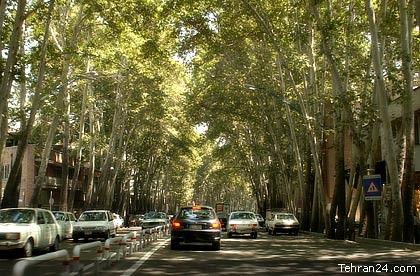
Vali Asr Boulevard
You have 76 Kindle highlighted passages
When the truth is shared in Tehran, it is an act of extreme trust or absolute desperation. Lying for survival in Iranian culture goes back a long way; in the early years of the Islamic conquest,Read more at location 60
for how do you stay true to yourself in a system in which you are forced to lie to ensure survival? The lies are, above all, a consequence of surviving in an oppressive regime, of being ruled by a government that believes it should be able to interfere in even the most intimate affairs of its citizens.Read more at location 75
Vali Asr Street. It was to be the envy of the Middle East; magnificent and aweinducing, with the refinement and beauty of French tree-lined boulevards and the majesty of a great, big Roman road. Reza Shah personally oversaw the planting of about 18,000 sycamore trees. He named the road after himself: Pahlavi. Khomeini commanded the road be called Vali Asr, after the revered Imam Mahdi, also known as Imam Zaman, the last of the twelve Shia imams and the man who many Shias believe will be the Last Saviour of the world.Read more at location 123
Ah, the Great Satan, what I’d give to go and live with that devil.Read more at location 210
There is only one driving speed in Tehran: the fastest your machine will go.Read more at location 215
To outsiders, the Mojahedin-e Khalq is an enigma. Their largest base is in Paris, where they work under the banner of their political wing, the National Resistance Council of Iran. Even some members struggle clearly to define the Group’s principles and politics: a mixture of Marxism, Islam and nationalism. It has been led by Maryam Rajavi ever since her husband, Massoud, mysteriously disappeared out of public view in 2003.Read more at location 363
perfectly plucked eyebrows – a prerequisite for any respectable Iranian female regardless of attempts at modestyRead more at location 367
including one of his favourites, Marxism and Other Western Fallacies: An Islamic Critique by Ali Shariati.Read more at location 396
referred to as a bazaari, which usually meant a merchant with strong traditional values. Bazaaris vote according to their personal interests and are never seen as any higher than middle-class, no matter how much money they make.Read more at location 551
Shia shrines are not usually peaceful havens of reflection and meditation. Each shrine marks the spot on the trail of Arab caliphs, sheiks and horse-backed fighters as they journeyed towards war and death; they are monuments to murder, betrayal and sacrifice. Tragedies to be mourned. Lucky, then, that Iranians make excellent mourners. We embrace sorrow like no one else, wailing on demand, tapping into the vats of love and loss that simmer in the cauldrons of our hearts.Read more at location 697
His trips accumulated spiritual chips, the only currency in Iran that never devalued,Read more at location 721
Talk of politics allows people to feel they have a stake in their future, that they are not powerless spectators.Read more at location 735
Many religious and working-class families flourished after the revolution, including those in Meydan-e Khorasan.Read more at location 740
Most had never been very political, but this integration provoked passionate support for the regime. It worked both ways. Their godliness proved useful, especially when the absolute rule of a spiritual leader was enshrined in the law, after Khomeini introduced the concept of velayat-e-faqih, rule of the Islamic jurist, a concept that gave him ultimate and unchallenged political authority over his subjects. With a God-ordained regime on their side, many in the Meydan had no need to question its authority.Read more at location 749
Opium has been part of the culture for centuries. It is a classless drug smoked the length and breadth of Vali Asr and beyond, a panacea for everything from aches to boredom to joblessness.Read more at location 795
You get the nose you pay for. Many of the residents in the Meydan could not afford the city’s certified plastic surgeons and had to make do with local dentists with a sideline in crude cosmetic surgery.Read more at location 830
Marriage between cousins was considered lucky and heaven-sent, a strengthening of families that brought unity. Prized above all was the marriage between children of brothers; there was even an expression for it, declaring it was written in the stars.Read more at location 843
la-paee, ‘between the legs’ thigh sex.Read more at location 859
La-paee sex was the most popular form of sex among teenagers and girls in their early twenties from sonati and religious families; these were girls who did not have the same strength and devotion to God as Somayeh.Read more at location 860
but it was nearly always anal sex so the girl’s hymen would remain untouched and she would still be a virgin for her wedding night.Read more at location 862
At weekends, Thursday and Friday nights, they smoked pot and sheesheh, crystal meth.Read more at location 883
‘Amir-Ali wants to come round for khastegari.’ Khastegari is the first step of a marriage proposal, when the suitor visits the bride’s house with his family.Read more at location 898
Moments like this called for Islamic divination and Mullah Ahmad was Fatemeh’s go-to mullah for estekhareh, Koranic divination. All personal conundrums were resolved, usually via telephone and in under four minutes.Read more at location 907
In her wedding photographs Somayeh looked like an alien: her eyes had been Photoshopped blue, her skin digitally retouched and she had been given a new nose, pinched and thin – the Tehranis’ style of choice. Somayeh was delighted.Read more at location 1039
They drank aragh sagee, ‘dog sweat’ booze, the slang name for home-brewed vodka made of raisins,Read more at location 1058
Over the last ten years, divorces have tripled in Iran, with one out of every five marriages ending – the number is even higher in Tehran. From thinking it was a shameful act, even Fatemeh had consideredRead more at location 1125
that he had been unfaithful, even though the latter would be hard to prove as four (Muslim) male witnesses would be required.Read more at location 1244
The local girls were also out in full force, known as the Beesto-Panj-e Shahrivar girls,Read more at location 1285
But there is nothing ordinary about the way they look. They wear enough make-up to make a drag queen recoil. Eyebrows are usually pencilled or tattooed at fierce ninety-degree angles in the style of Mr Spock. Hair is shades of blonde, stacked menacingly high, like eighteenth-century French aristocrats. A network of scaffolding keeps it aloft,Read more at location 1288
hidden underneath wisps of headscarf, delicately draped across their heads in a thin strip designed to show as much highlighted hair as possible. Noses are rarely real. Shoes are rarely below four inches. It’s a look that has spread all over Tehran, but the Beesto-Panj-e Shahrivar girls are the experts.Read more at location 1290
The cyberpolice, known as FATA, the cyber crime unit of the police force,Read more at location 1334
Children are never banished in Iranian households when grown-ups play,Read more at location 1432
owned by the son of a Pole, one of over 100,000 starving Poles released from Soviet captivity and granted sanctuary in Iran during the Second World War.Read more at location 149
but once a year he would sell some of his uncle’s delicious home-made wine. Making it was not risky for them, as being Armenian they are Christians, and so are allowed to produce alcohol for their own consumption.Read more at location 1688
Ayatollah Khazali had the exalted honour of being a member of the Assembly of Experts, a group of clerics charged with monitoring the Supreme Leader, and with the authority to dismiss him.Read more at location 1711
Mana updated the group on another round of arrests of Baha’is, a religious minority in Iran that the state considers heretics. Despite the government declaring that Baha’is are not discriminated against, they are excluded from much of public life, including not being able to go to university, to have government jobs or be involved in politics.Read more at location 1714
The noise had been deafening and there were dozens of complaints. It would have been half tolerable if the muezzin did not sound like a cat being skinned alive. For someone with such a bad voice, he delivered his off-key shrieks with more confidence than Pavarotti.Read more at location 2028
After the war with Iraq, thousands of Iranians travelled to Japan, and it was there that Bijan and the Chief really got to know each other, in their early twenties. They had both returned from the front lines to a jobless country shattered by war. Visa restrictions for Iranians had been lifted by Japan in the early 1970s following the world oil crisis. Japan’s economy had been almost entirely dependent on imported oil and was hit hard; it needed to ingratiate itself with Middle Eastern nations and distance itself from American foreign policy.Read more at location 2052
to provide cheap manual labour. They did the work the Japanese were not willing to do, known as the ‘3K’ jobs, because they were kitanai (dirty), kitsui (difficult) and kurushii (painful).Read more at location 2056
In Iran, sheesheh has become the most popular drug after opium, heroin coming in a close third, not least because sheesheh is cheap – a gram costs about five US dollars.Read more at location 2084
Tehran’s pollution seems to worsen every year. Not only are there too many cars, but the sloping valley with mountains on each side is a perfect trap for the fumes and smoke.Read more at location 2125
When dealing with the police, the boys had one rule: the No Rule. In Iran, the ‘no’ gesture is a backward tilt of the head. With the No Rule, you had to imagine the tip of a sword was touching your chin as you were being questioned. If you said yes, your head would fall on the sword.Read more at location 2166
In Tehran complaining is a way of life. And Tehranis make excellent complainers. The rich complain about Western policies affecting their businesses, the poor complain about the rising price of food, drug addicts complain of the wildly fluctuating purity of smack that could end their lives with a single hit. And everyone complains about the traffic, pollution, parking spaces, queue-jumping, inflation and politics. Every year there is more to complain about, more to be miserable about. Complaining ambushes conversations – a constant reminder of all that is rotten. Read more at location 2349
It is impossible to escape sex in Tehran. Everybody knows that the streets are full of working girls.Read more at location 2401
The regime valiantly goes into battle against sex. It is obsessed by how its people are having it and whom they are having it with. Lawmakers and scholars devote hours to discussing sex, philosophizing sex, condemning sex, sentencing sex. Mullahs issue countless fatwas on it; some have become the stuff of legend.Read more at location 2405
The girls were armed with their own means of protection. When bribery did not work, some would produce folded sigheh papers from their handbags. Sigheh is a temporary marriage approved by both God and the state, between a man (who can already be married) and a woman (who cannot), and can be as short as a few minutes or as long as ninety-nine years. It is Shia pragmatism at its vital best, ensuring that even a quickie can be given an Islamic seal of approval and sanctified in the eyes of the Lord.Read more at location 2467
But she was not in prison long. It was a beautiful spring dawn when Leyla was hanged.Read more at location 2813
It was Ashura, the ten-day festival in the Islamic holy month of Muharram that commemorates the martyrdom of the Prophet’s grandson, Imam Hossein, who was killed with seventy-two others at the battle of Karbala in 680. But this was a secret Ashura,Read more at location 2834
hidden from view ever since the state banned bloodletting during the ceremonies, deeming it barbarous and fanatical. A hard-core minority ignored the edict, believing that some things are strictly between a man and his God and none of the state’s business. Violent self-flagellation where blood is a sign of love for Hossein was part of their culture,Read more at location 2836
They had always been deeply religious and not just because they were seyeds, the honorific title used to identify direct descendants of the Prophet.Read more at location 2868
killing dozens of the enemy with no more than an AK-47 in their hands, Allah Akbar on their tongues and Khomeini in their hearts. They were war heroes.Read more at location 2902
Haji Ahmadi had been one of the first to join the Basij in 1980, when Khomeini had envisioned a magnificent people’s militia that was twenty million strong. In the early days they were simply volunteers used as a security force to help the Revolutionary Guards; they were also sent to fight Baluchi, Kurdish and Turkmen separatists. When war broke out, they were herded to the front lines.Read more at location 2951
Haji Ahmadi was disappointed at what the Basij had become – more youth centre than fighting force. He would give his life to the Supreme Leader and he expected his sons to do the same.Read more at location 2956
She had persuaded Mehran to join the Basij for the same reason that Ebbie and at least half the group had joined: the perks. The Basij laid on extracurricular activities that few families in the neighbourhood could afford. The boys would have free access to the local swimming pool, free use of a football pitch, day trips out of the city to tourism hot spots and even the possibility of a stay in a summer camp. They would also get occasional free meals, low-interest loans, preferential treatment by government organizations and – thanks to a specially designated quota of forty per cent for Basij students that overlooked poor grades – a vastly increased chance of getting into university. Time spent serving in the Basij would also be knocked off compulsory military service. For these boys, the Basij was part Islamic Boy Scouts club and part Freemasons. If they showed devotion and hard work, they could even hope for a regular wage. Few underprivileged families would miss the opportunity of joining the Basij.Read more at location 2970
The black turban perched on his head was his ace of spades, marking him out as a descendant of the Prophet.Read more at location 3082
One of his brothers had married a dancing girl; he had simply taken her for tobeh, Shia baptism, to be cleansed of her sins by a mullah.Read more at location 3469
Asghar was a jahel, from the Arabic word for ‘ignorant’. Jahels are hoodlums-cum-gangsters, bred from pure working-class south Tehrani stock.Read more at location 3514
Jahels had their own way of dressing: a black fedora hat tipped to the side, crisp white shirt, black jacket and trousers and black shoes that they had transformed into slip-ons by standing on the backs. Sometimes they wrapped a red scarf round the palm of one hand, or they would drape it over one shoulder. Jahels even had their own way of dancing, holding up a white handkerchief and spinning around.Read more at location 3521
Then the revolution happened.Read more at location 3571
None of them could have imagined there would be no place for them in the new Islamic order. The jahels’ liberal interpretation of their religion was not what the Islamists had in mind for their citizens. In fact, the jahels’ version of Islam could get them imprisoned or worse.Read more at location 3573
Asghar knew from his own neighbourhood that addiction was everywhere. An official had said there are ten million drug addicts in the country, two million of which are chronic addicts; all the statistics showed that Iran has one of the highest rates of drug addiction in the world.Read more at location 3596
Farideh dreaded her brushes with the city. Despite all the years, it was impossible not to feel stabs of longing when she drove through the streets for the Tehran she had loved, full of miniskirts, discos and pool halls; juice bars and vodka bars, donkey carts and new cars; the triumph of colours and music on the streets; the thrill and buzz of a new epoch; milkshakes and cigarettes and wine and song. She remembered one of her boyfriends coming back from a trip to London and announcing how the English were so uptight. How London was so backward. He told her British border police had never seen a watermelon, and insisted on slicing it open in case he was smuggling something inside it. He told her the food was terrible, you could not even buy garlic! And he had been threatened with arrest for indecent exposure because he had taken his top off on a scorching day. How they had laughed at swinging London.Read more at location 3745
Farideh often wondered if she should have left after the revolution.Read more at location 3766
In time they monopolized block after block of Brentwood and Westwood, until Los Angeles became their TehrangelesRead more at location 3773
This was new Tehran, where tradition and class are blended together and trumped by money. Some of the upper-crust families kept away from these events, wanting to distance themselves from distasteful displays of wealth. It was a hugeRead more at location 3806
The boys mostly met dates on the Internet. The Internet is the lifeblood of the gay scene in Tehran, specifically a gay social networking website called Manjam. Men all take risks – from webcam sex to picking up boys in Park-e Daneshjoo, cruising south Tehran and screwing in cars and alleys and public baths. The law on same-sex sodomy, which had just been amended, reflected the state’s twisted attitude towards homosexuality: if the sex is consensual and the man playing the active role is not married and a Muslim, he will be flogged 100 times, whereas the man who plays the passive role will be put to death (unless he is a kafir having sex with a Muslim, in which case they will both be killed). It is better to bugger than to be buggered.Read more at location 3995
Farideh’s first week in London was heavenly; Marjaneh took her to galleries, museums and restaurants, showing her everything she had been missing. Farideh was overcome with guilt that she had made her husband and her child endure Tehran when they could have had this: real freedom and all that came with it. But as the weeks wore on, she began to feel strangely disconnected from this new society around her. Life was more disparate and impersonal here. The gatherings and dinner parties were cold affairs, lacking in intensity. The bonds between Marjaneh and her friends were looser too; people had their own families and jobs to care about. Everyone watched the pennies. Cabs were extortionate. People were aggressive; they shouted and swore at each other in the streets, even in Marjaneh’s high-class area, something that rarely happened in north Tehran. When Farideh began to house-hunt, she realized how little her rials and tomans would buy her. Even if she sold everything and used up all her savings, she would only be able to buy a minuscule, dingy, one-bedroom apartment in Marjaneh’s neighbourhood. Otherwise she would have to live in suburban hell, rows and rows of identical houses with crude gas boilers and tiny, sorry splodges of grass as gardens. And the weather never changed; one cold, grey, wet, drizzly day morphed into another. After just two months, Farideh was surprised to discover that all she really wanted was to go back home. To Tehran.Read more at location 4015
wrapped in Tehran’s mountains, protected under her startling blue sky and warmed by her sun, enveloped by her trees, licked by her breeze, bursts of umber, russet and ochre now bleeding out of the leaves. They drove past the fruit stalls filled with the autumnal yellows and oranges of lemons, quinces and persimmons, the jumble and the chaos and the clamour, the smoky smell of lamb on hot coals which rubbed against her cheeks, the mulberry trees and the jasmine, the layers of dust, the splutter of vans, the man selling puppies at the side of the road, the swarms of motorbikes criss-crossing between beautiful girls in defiant clothes, the juice stands, the gold shops, the ancient bazaars and tunnelled walk-ways, the chipped blue tiles on magnificent, crumbling manor houses and the hidden gardens. Farideh closed her eyes to savour the moment.Read more at location 4037
‘That’s the end of the city as we know it. He won’t survive without her,’ says an old man in fingerless gloves as the doors of the van slam shut. He has taken a break from selling polyester socks on the corner of Vali Asr and Rah Ahan so he can pay his respects to the wife of Asghar the Brave, the toughest and most chivalrous jahel to have walked the streets of Tehran.Read more at location 4057
but Vali Asr will remain, a constant, unchanged by wars, dictators and revolutions. With or without its sycamore trees.Read more at location 4074
As she was from a religious family, the catalyst that really encouraged Morteza to embrace her transsexuality and act upon it was a fatwa given by Ayatollah Khomeini himself, condoning sex changes. In 1984, a hermaphrodite called Fereydoon sought counsel from Khomeini, describing his mental and emotional state and explaining he was a woman trapped in a man’s body. Fereydoon asked Khomeini for permission to change his sexuality; Khomeini agreed. A number of mojtaheds, high-ranking clerics who are able to issue fatwas, also accepted transsexuality, including the Supreme Leader Ali Khamenei. Since then, thousands of gender-reassignment surgeries have taken place in Iran, but there have been many reports of botched operations. Dozens of male-to-female transsexuals have filed complaints of being left unable to have sex after surgery, their sexual organs having been butchered or built the wrong size (www2.ohchr.org/English/bodies/cescr/docs/ngos/JointHeartlandAlliance_IRQO_IHRC_Iran_CESCR50.pdf). Even though the Iranian health service claims to have allocated a budget of 350,000,000 tomans for gender-reassignment surgery throughout the country (ISNA, 21 November 2012), operations are still expensive, costing at least 3,000 US dollars – nearly double someone like Morteza’s yearly family income. Several cases have been reported of gay men who have been forced into having sex-change operations by their families, as being transgender is more acceptable than being gay. Many people from the transgender community have spoken of daily abuse and persecution.Read more at location 4324