Sunday, April 21, 2019

Kruse's Keys: Read "Beacon 23" to Learn How to Prevent an Alien Invasion

(Audible)
Hugh Howey never disappoints--his books are a welcome respite from much of the drier reading that I do related to my work as an Africanist and Foreign Area Officer.

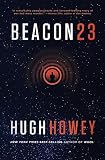
In "Beacon 23", Hugh Howey takes us for a ride with a PTSD'd out alien-fighting grunt turned (interstellar) lighthouse keeper.  Yes, Howey imagines a future in which "lighthouse beacons" are placed amidst warp speed preventing asteroid belts.  The lighthouse keepers control a device that, when activated, allows ships to pass through the asteroid belts without collision.  Without that device activated, any passing ship will obliterated.  Couple this setting with a pending alien invasion and a possible love interest and you've got "Beacon 23"--a great story you'l devour.

See our 2019, 2018, 2017, 2016, 2015 and 2014 Reading Lists.

Related Fiction:
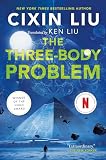
If you're looking to branch out on the sci-fi front, check out "The Three-Body Problem" by Cixiun Liu who is pretty much the most famous sci-fighter writer in China.


Saturday, March 2, 2019

2019 Reading List: Southern Lit, Mil-Pop, Science Fiction and More

Need book recommendations? Check out all 301 (and counting) books that I've read at Dad's Bookshelf.

2019 Book Stack Overview

My initial 2019 reading list is a combination of Christmas and birthday gifts (mostly from my embarrassingly lengthy Amazon wish list), books I never got to last year, and one oldie that I don't think I ever read (i.e., East of Eden).

The stack to the right doesn't include everything that I hope to read, or that I started in 2018 and am still working my way through (ahem, the 26 hours long audiobook on the Ethiopian fight against Italy), or other audiobooks that are in my queue.

December 2019 update: So my actual reading list this year veered a bit from the picture on the right but it was a good year in reading.

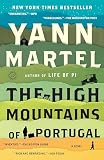
The High Mountains of Portugal

The High Mountains of Portugal

Man Booker prize winning author Yann Martel has crafted a trio of related novellas that lay bare the trauma (sometimes literally) of loss and its psychic weight that can echo across generations like a deep curse. In “High Mountains” we join the journey of three characters: a bereaved widower on a mission to find a lost African crucifix; a grieving, delusional pathologist obsessed with Agatha Christie; and an aging widower/politician who buys a chimpanzee and retreats with the animal to his family’s ancestral village. It’s in this village—in the high (non) mountains of Portugal that all three stories intersect.

Martel has created a world and tale that falls into the realm of magic realism—if you’ve read or seen his other story, “The Life of Pi”, you will have a good idea of what to expect. My jaw definitely dropped numerous times at the action that unfolded but the author tells the story with such skill that the ridiculousness of the situation only draws you in further. My full review is here.

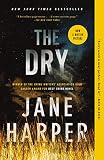
Dry

Dry

In a dying Australian farm town, tinkering on the edge of collapse due to droughts, a family is found dead in an apparent murder-suicide. An exiled man-turned-white-collar cop returns for the funeral and finds out his childhood best friend is the assumed killer of his own wife and kids.

Did his friend do it? What secrets is the cop hiding? What secrets has the town buried?
This was a page turner that kept me guessing till the end. A great quick read. My full review is here.

Beacon 23

Beacon 23

In "Beacon 23", Hugh Howey takes us for a ride with a PTSD'd alien-fighting grunt turned (interstellar) lighthouse keeper. Yes, Howey imagines a future in which "lighthouse beacons" are placed amidst warp speed preventing asteroid belts. The lighthouse keepers control a device that, when activated, allows ships to pass through the asteroid belts without collision. Without that device activated, any passing ship will obliterated. Couple this setting with a pending alien invasion and a possible love interest and you've got "Beacon 23"—a great story you'l devour. My full review is here.

The Three-Body Problem

The Three-Body Problem

This is a trippy novel that's not easily summarized and it's easy to get lost in the more technical aspects that Cixin explores in depth (i.e., nanotechnology, AI, metaphysics, quantum mechanics etc.), particularly when listening to it in 45 minutes blocks on Audible in D.C. traffic over a month's time). The basic premise, though, is that a technologically superior alien civilization has decided to colonize earth. The story, however, unfolds amidst a narrative that jumps from the 1960's Chinese cultural revolution, to present day China, to an online VR world/game that the aliens may be using as a communication mechanism. This is a book that requires mental engagement but one which rewards the reader with a gripping story that readers will grapple with long after they've finished the novel's last pages. My full review will be here.

Ghost Fleet

Ghost Fleet

The premise of the novel is that sometime in the near future China (partnered with Russia) conducts a cyber/space/electronic warfare attack that gives them dominance across the warfare spectrum. Our fleet and air assets are near completely destroyed (with those remaining rendered useless as they are chocked full of compromised Chinese chips). With all our U.S. satellites destroyed, the United States no longer has freedom of movement on land/air/sea.

The heart of the story is how the U.S. fights back—this being a combination of insurgency (in the occupied Hawaiian island), a reconstitution of mothballed ships and aircraft, a private-public wartime industrial partnership, and a murky collaboration with Anonymous hackers. Oh, and with the rail gun—lots of focus on the rail gun. The story moves quickly and I burned through the pages as authors Singer and Cole keep the narrative moving with quick dialogue, myriad Sun-Tzu quotes, and sympathetic characters. My full review is here.

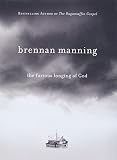
The Furious Longing of God

The Furious Longing of God

You can get through the 136 pages in one sitting if you’d like but I think it’s a book that’s best consumed in spurts with time to mull over Brennan Manning’s meditation on God’s love for us. This book likely has a message for any reader, most importantly this: “Our religion never begins with what we do for God. It always starts with what God has done for us.” My full review is here.

Strong Fathers, Strong Daughters

Strong Fathers, Strong Daughters: 10 Secrets Every Father Should Know

I first read this book back in 2015 and wrote about it here in a post. It's so important to fathers out there that I put in my yearly re-reading list (although it took me four years to read it again)!

In my second reading of this book, it proved to be just as powerful, profound and insightful. The bottom line is that you can't underestimate the role of a father in his daughters' lives. You have to fight for her, engage with her, and continually draw her close to you throughout her life (particularly during those teen years). Don't worry about what other parents do—you worry about your daughter. I'm putting a calendar reminder this summer to give this book another read! My full review is here.

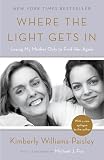
Where the Light Gets In

Where the Light Gets In: Losing My Mother Only To Find Her Again

A candid, emotional memoir of a daughter's struggles, hopes, triumphs, and losses as she copes with her mother's primary progressive aphasia (a rare form of dementia). The story is about more than the disease itself but about the bond between daughters and their mothers.

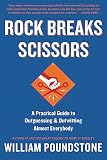
Rock Breaks Scissors

Rock Breaks Scissors

The main point I took away from this novel was that people are crummy at trying to be “random.” All of this book’s applications are founded on one simple idea. When people make arbitrary, random, or strategic choices, they fall into unconscious patterns that you can predict.

While entertaining to read, I’d say most of his writing is only useful for specific circumstances like taking multiple choice tests, office pools, rock, scissors, paper (RSP), catching fraud, and buying a home. For those circumstances it’s worthwhile to keep a copy of this book around. My full review is here.

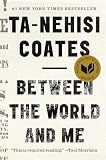
Between the World and Me

Between the World and Me

“Between the World and Me” is a love letter from a father to a son written with the urgency of a man who knows he may perish at any moment. Coates writes beautifully as he recalls his youth and experiences as a father. His memoir reflects serious inner self-examination as he seeks to create a blueprint for his son to survive and possibly even thrive in a world that Coates argues is stacked against him from a historical, institutional, and psycho-cultural perspective.

As Coates warns his son to keep his guard up, he adds, “Never forget that we were enslaved in this country longer than we have been free.” This observation reminded me of Isabel Wilkerson’s “The Warmth of Other Suns” which I wrote about it here. My full review is here.

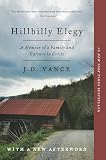
Hillbilly Elegy

Hillbilly Elegy

I read J.D. Vance's 2016 memoir "of a family and culture in crisis" in less than two days. Vance is just a flatout great writer as he tells the story of his life growing up between the Ohio and Kentucky along the redneck Rt. 23.

His basic argument is that one of the major issues plaguing Appalachian America is the people there feel hopeless and disenfranchised (and not just politically but in all facets of life). In short, they feel like their choices don't matter.

In Vance's case the only way he was able to rise above these circumstances was due to the reliable and persistent presence of a family member throughout his immediate family's tumultuous arc. Oh, that and a stint in the Marine Corps. My full review is here.

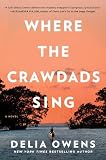
Where the Crawdads Sing

Where the Crawdads Sing

I read this beautiful lyrical book in two days—no exaggeration.

"Where the Crawdads Sing" is equal parts murder mystery, searing social indictment, love letter to naturalism, and soaring poetry. It's amazing that this is author Delia Owens first work of fiction! She writers with grace and beauty and crafts a narrative that immediately draws in the reader and keeps them turning the pages.

About the narrative—this is the story of a young girl (Kya) abandoned in the swampy wild marshes of North Carolina who not only survives, but thrives despite these dire circumstances. Along the way she falls in love more than a few times and eventually finds herself facing a set of murder charges. I'm hesitant to share much more than that as far as the story goes because it's just that good! My full review is here.

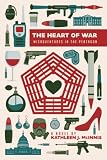
The Heart of War

The Heart of War: Misadventures in the Pentagon

All that to say, Mcinnis’ razor sharp, satirical story of a young, idealist, peacenik PhD’s foray into the Pentagon brought me back to my days inside the 5-sided torture chamber! “The Heart of War: Misadventures in the Pentagon” is a novel about one woman’s evolution? from skeptic to true (ish) believer as she discovers that life inside is nothing like she expected. One of the story’s strengths is that despite the building’s bureaucratic bloviations, the narrator Dr. Heather Reilly’s outlook never devolves into the jaded despair that seems to envelope many an officer stuck there for a three year tour. This narrative framing keeps the novel light and entertaining instead of the sad and frustrating tale it might be if a depressed, worn down, wizened colonel authored it. I’ve thought about the emotions this book made me feel for a few days now, and I think one of the strongest ones is that of exhilaration—author Kathleen Mcinnis has given a voice to the experiences, frustrations, battles, and victories to thousands of staff officers in a way that none of us on active duty are able to. My full review is here.

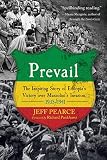
Prevail

Prevail: The Inspiring Story of Ethiopia's Victory Over Mussolini's Invasion (Ethiopia)

I can’t imagine there’s a more well-researched book out there on Ethiopia’s decades long resistance and eventual defeat of an overeager, over confident, overreaching wanna-be colonial power (i.e., Italy). Canadian author Jeff Pearce’s work is strongest as he brings to life the myriad actors, antagonists, and heroes of the saga. It’s worth noting that Pearce is a bit of a Selassie apologist but given the complicated history of Ras Tafari (yup that’s where that term came from) Makkonen’s reign, I imagine this can fall either way. My full review is here.

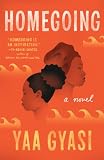
Homegoing

Homegoing (Ghana)

This masterpiece of historical fiction follows the lives of two separated half-sisters (and their six generations of descendants) beginning in the mid-1700 area of West Africa today known as Ghana. Gyasi uses their two very different paths to highlight not only the horrors of the slave trade but also the bravery and determination of the many who persevered and survived across the span of time. Ultimately, in “Homegoing”, the 25 year-old (I mean wow!) author accomplishes a breath-taking feat in creating a compelling history of slavery told through 14 sequential short stories that you likely ever forget. My full review is here.

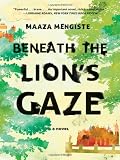
Beneath the Lion's Gaze

Beneath the Lion's Gaze (Ethiopia)

One of the only African nations to never have been colonized (the five year occupation by Italy is generally not categorized as colonization), one of its darkest periods came during the 13-year socialist-Leninist-Marxist rule of the Derg. This military junta overthrew an increasingly oblivious Haile Selassie (ending a succession of “solomonic rule” dating back to the 1200s) and set about consolidating power (aka the “Red Terror”) under the leadership of despot Mengistu Mariam. Beneath the Lion’s Gaze is a retelling of this time period through the eyes of one Ethiopian family.

The family’s patriarch is a renowned doctor named Hailu who is ordered to keep the victim of a barely-alive Derg torture victim alive—ostensibly so that she can be tortured further. As he struggles with this dilemma, his son Dawit becomes a freedom fighter who becomes known as “Mekonnen Killer of Soldiers.” Author Maaza Mengiste uses the arc of this one family’s struggles to bring to life the experience of Ethiopians who starved under Selassie, only to be persecuted and killed under the Derg and starved again under its leader Mengistu’s reign.

While Mengistu was eventually toppled, like all civil war tales, no one is left unscathed in "Beneath the Lion’s Gaze". All resistance, no matter how passive—or how righteous, bears a cost. Hailu in particular at the story’s conclusion, is broken so thoroughly by torture that he carries the “appearance of a man dragging death with him through life.” And it is this notion of the inseparable presence of death within everyday life that Mengiste best captures the reality for generations of Ethiopians. My full review is here.

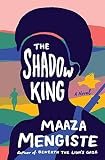
Shadow King

Shadow King (Ethiopia)

Following the conclusion of World War II, Mussolini (as the Ethiopians derisively referred to him) concocted a plan to give himself a slice of the colonial pie while simultaneously avenging his country’s late 19th century embarrassment at the Battle of Adua.

Kidane, the military leader in “The Shadow King” remarks to his men that the Italians “have come to rewrite history, to alter memory, to resurrect their dead and refashion them as heroes.”

At exiled Emperor Haile Selassie’s behest, Kidane assembles a local militia to fight against the invading forces. His wife Aster leads the women who trail the fighters, supplying them with food, bullets, and equipment. As Kidane’s forces suffer battlefield losses, Aster eventually convinces him to let her women fight. A character equal parts cruel and inspirational, Aster implores her fellow women to take their place in history and fight. Her servant, and narrator, Hirut describes Aster’s fervor: “She is one woman. She is many women. She is all the sound that exists in the world.” My full review is here.

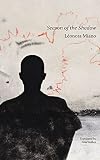
Season of the Shadow

Season of the Shadow (Cameroon)

Miana's story begins as the inhabitants of a tribal village tucked away in the interior of modern day Cameroon awaken to its huts ablaze and find that 12 of its men have vanished. This mysterious disappearance sets off a chain of events that, as one might guess, ends in tragedy. This tale's power comes as the reader is placed in the middle of a people group who's whole order and existence is thrown into havoc. Even as the reader is keenly aware as to what happened, the kidnapping is so out of place with centuries of accepted conduct and cultural norms that its tribal members can't fathom who the perpetrators might be. My full review is here.

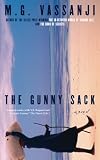
The Gunny Sack

The Gunny Sack (Tanzania)

Most of the African fiction that I’ve read has focused on the “native” experience (outside of V.S. Naipaul), so I found the “The Gunny Sack” to be an important novel as it focuses exclusively on the experience of four generations of an Indian family in Tanzania and wider East Africa beginning in the late 1800s. Vassanji relates this in-depth experience across the span of Tanzania’s colonization and eventual independence through the backward lens of the narrator Kala who parses through the contents of a gunny sack bequeathed to him by his great grandmother Ji Bai. My full review is here.

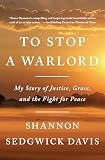
To Stop a Warlord

To Stop a Warlord: My Story of Justice, Grace, and the Fight for Peace (Uganda)

This book is the story of how one woman created a new paradigm in how NGOs/charitable organizations should/could/can confront atrocity and evil by partnering with the military. Shannon Davis is the CEO of Bridgeway Foundation and she decided to do something about Joseph Kony and his reign of terror.

The short story is that Bridgeway partnered with a private military contractor to train a special Ugandan military unit to hunt down Joseph Kony and his band of murderous, child-soldier recruiting, rape and pillaging, terrorist men. My full review is here.

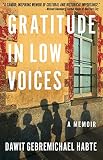
Gratitude in Low Voices

Gratitude in Low Voices (Eritrea)

Equal parts memoir, history and adventure novel, Dawit Habte’s “Gratitude in Low Voices” is the story of not only his country’s 91 year struggle for independence but also his own incredible journey from a countryside village in Eritrea to the offices of Bloomberg as a software engineer. As with many refugee stories that have come out of Africa, the western reader will be floored by the tenacity, resilience and grit that the author displays at such a young age as he smuggles himself out of Ethiopia, and finally gets refugee status to start his life over continue his life in the United States. One thing that struck me was Habte’s commentary on the dehumanizing nature of seeking asylum—where you are assumed to be starting anew on a better life despite having a family, people, and country that you call home half a world away. My full review is here.

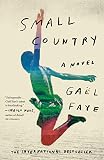
Small Country

Small Country (Burundi)

Reading Gael Faye’s “Small Country”, I was reminded of the writing of other writers such as Teju Cole, Dinaw Mengestu, Maaza Mengiste, NoViolet Bulawayo, and poets like Frank Chipasula, Atukwei Okai, and K'naan. Faye writes with a musician’s flair (and indeed he was a well known rapper/musician before becoming an author), penning lines like: “And when he laughed, happiness washed over the walls of Mamie’s small living room like a fresh lick of paint.” My full review is here.

At the end of the book, Gabriel reflects that “I used to think I was exiled from my country. But, in retracing the steps of my past, I have understood that I was exiled from my childhood. Which seems so much crueler.” This summarizes well the crux of the story, Gabriel is Rwandan-French but spends his entire childhood in neighboring Burundi until the effects of the 1994 Rwanda genocide push him even further away to France. It’s there that he considers what exactly he’s lost and finally finds the courage to return and makes a heart-breaking discovery. My full review is here.

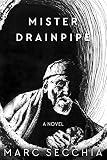
Mister Drainpipe

Mister Drainpipe (Ethiopia)

Author Marc Secchia took a hiatus from his slew of successful fantasy novels to pen this heartfelt love letter to the homeless of Addis Ababa. I tore through this book in less than two days and I’ll warn you that this story will pierce even the hardest heart and (hopefully) change the way you think and interact with the homeless and “least” in your daily life. My full review is here.

Sunday, January 20, 2019

Kruse's Keys: Read "Rocks Breaks Scissors" to Give Yourself That Edge


I don’t remember how I came across this book but it was a welcome respite from some of the heavier ones that I’ve been reading lately. The main point I took away from this novel was that people are crummy at trying to be “random.” Specifically author Poundstone points out in his prologue that


all of this book’s applications are founded on one simple idea. When people make arbitrary, random, or strategic choices, they fall into unconscious patterns that you can predict.

While entertaining to read, I’d say most of his writing is only useful for specific circumstances like taking multiple choice tests, office pools, rock, scissors, paper (RSP), catching fraud, and buying a home. For those circumstances it’s worthwhile to keep a copy of this book around.


See our 2019, 2018, 2017, 2016, 2015 and 2014 Reading Lists.

Key Takeaways:


  • For a one-shot RSP match, always choose paper. Tell the other player what you are going to throw and do it. Statistically, most people won’t believe you are telling the truth.
  • For Multiple Choices Tests where you don’t know the answer:
    • “True” answers are most common
    • Four answers: “B” is most often correct;  Five answers: E is most often correct
    • “None of the above” and “All of the above” are most often correct
    • It’s not as likely that there will be two D’s (or A’s e.g.) in a row
    • On the SAT, eliminate the answer that’s not like the others (i.e., the outliers)
    • When in doubt, guess the one that sounds familiar
  • When to buy a home--he’s got a nifty little formula that can be used to determine if the market is favorable for a home purchase
  • For presentations: the last slide or last point is what gets remembered. Make sure you leave a lasting impression

Saturday, January 19, 2019

Kruse's Keys: Read "The High Mountains of Portugal" to Learn About Loss and a Path Home


First, hat tip to my mother in law for passing along this terrific read to me over the holidays...I tore through it in a matter of days!

Man Booker prize winning author Yann Martel has crafted a trio of related novellas that lay bare the trauma (sometimes literally) of loss and its psychic weight that can echo across generations like a deep curse. In “High Mountains” we join the journey of three characters: a bereaved widower on a mission to find a lost african crucifix; a grieving, delusional pathologist obsessed with Agatha Christie; and an aging widower/politician who buys a chimpanzee and retreats with the animal to his family’s ancestral village. It’s in this village--in the high (non) mountains of Portugal that all three stories intersect.

Martel has created a world and tale that falls into the realm of magic realism--if you’ve read or seen his other story, “The Life of Pi”, you will have a good idea of what to expect. My jaw definitely dropped numerous times at the action that unfolded but the author tells the story with such skill that the ridiculousness of the situation only draws you in further.

See our 2019, 2018, 2017, 2016, 2015 and 2014 Reading Lists.

Key Quotes:

What his uncle does not understand is that in walking backwards, his back to the world, his back to God, he is not grieving. He is objecting. Because when everything cherished by you in life has been taken away, what else is there to do but object (12).

And now, how do I dare love anything? (202)

We loved our son like the sea loves and island, always surrounding him with our arms, always touching him and crashing upon his shore with our care and concern (200).

Grief is a disease (201).

Kruse's Keys: Read "The Furious Longing of God" to Realign Your Perspective on Religion

My brother Patrick gave this quick read me. You can get through the 136 pages in one sitting if you’d like but I think it’s a book that’s best consumed in spurts with time to mull over Brennan Manning’s meditation on God’s love for us. Truthfully, the author’s writing style isn’t my favorite--it’s flowery and over the top at times--but despite my purely personal opinion the book has heft and a message that’s powerful in its simplicity: God loves you in a very personal way that’s filled with madness, desire, and joy. In particular, I appreciated his exposition on Zephaniah 3:17:


The Lord your God is in your midst, a mighty one who will save; he will rejoice over you with gladness; he will quiet you by his love;
he will exult over you with loud singing.

A pastor and friend shared that verse with me after Emily and I had gone through two miscarriages and we found out we were pregnant again (with a baby who would turn out to be Betty). During that year (2012), we found out we’d been chosen to adopt a newborn baby (Macee) and 7 months later Betty was born. This verse crushed me. Emily and I had been through such a dark valley with losing two babies and had questioned so much and then God broke through with such extravagance and abundance, such prodigal love. Such a special verse for me.

This book likely has a message for any reader, most importantly this:  “Our religion never begins with what we do for God. It always starts with what God has done for us.”


See our 2019, 2018, 2017, 2016, 2015 and 2014 Reading Lists.

Key Quotes:

21 “I am my beloved’s, and his desire is for me.” Song of Solomon 7:10 (good verse to pray every day)

31 “Abba, I belong to you.” Prayer of meditation and repetition.

46 “The love of God is madness” (or folly) chanted during French Easter services as “L’amour de Dieu est folie.”

76 “Christians find it easier to believe that God exists than that God loves them.” -Basil Hume

77 “In human beings, love is a quality, a high-prized virtue; in God, love is an identity.” thus--God is love.

126 “Our religion never begins with what we do for God. It always starts with what God has done for us.”


For further study:

23 Zephaniah 3:17 God dances for joy because of you. The Lord your God is with you, the Mighty Warrior who saves. He will take great delight in you; in his love he will no longer rebuke you,but will rejoice over you with singing.” (NIV) The Lord your God is in your midst, a mighty one who will save; he will rejoice over you with gladness; he will quiet you by his love;
he will exult over you with loud singing. (ESV)

64 Thomas Brodie commentary on Gospel of John https://www.amazon.com/Gospel-According-John-Theological-Commentary/dp/0195118111


Key Takeaways:

22 The author’s hope for you is that you shift from a “I should pray” mentality to a “I must pray mentality.”

29 the idea of fury with regard God’s love and longing is that of intense energy

38 The foundation of God’s furious longing is love

51 Song of Solomon 2:10-14 is what a French scholar believes God said to Jesus as he was dying on the cross:

My beloved speaks and says to me:
“Arise, my love, my beautiful one,
and come away,
11 for behold, the winter is past;
the rain is over and gone.
12 The flowers appear on the earth,
the time of singing[d] has come,
and the voice of the turtledove
is heard in our land.
13 The fig tree ripens its figs,
and the vines are in blossom;
they give forth fragrance.
Arise, my love, my beautiful one,
and come away.
14 O my dove, in the clefts of the rock,
in the crannies of the cliff,
let me see your face,
let me hear your voice,
for your voice is sweet,
and your face is lovely.


56 When a leprous illiterate woman heard the voice of God as she lay dying, she told Manning that God said this to her:

Come now, my love. My lovely one, come.

For you, the winter has passed, the

Snows are over and gone, the flowers

Appear in the land, the season of

Joyful songs has come.

The cooing of the turtledove

Is heard in our land.

Come now, my love. My Yolanda, come.

Let me see your face. And let me hear

Your voice, for your voice is sweet

And your face is beautiful.

Come now, my love, my lovely one,

Come.


62 Manning makes the point/conclusion that there is no division of God’s love--he loves us just as much as he loves Jesus! This is a powerful truth that must shift our outlook in life and with regard to our own self-worth and value. (John 17:22-25)

68 God doesn’t want a relationship with us. He wants UNION--he wants oneness!

88 Manning argues that Jesus’ entire message can be summed up in Galatians 5:6: “the only thing that matters is the faith that expresses itself in love.” Being Christlike, being most like God means “loving the most.”

93 Beautiful example in the book of a boy named Larry Malaney, whose father modeling Christ’ furious love, loved him so publicly and overwhelmingly that it changed the whole direction of his life.

Sunday, August 12, 2018

Kruses Keys: Read “American War: A Novel” to Imagine an America that Says on its Current Trajectory

Egyptian-Canadian (by way of Qatar) journalist-turned-author Omar El Akkad has penned a tale of what I’d call “future-historical fiction(ish).” We are dropped into a world 40 years in the future where America has erupted into a chaotic conflict over the federal government’s outlawing of fossil fuels. This north-south split is aggravated by accelerated global warming and rising ocean levels that are swallowing up coastlines everywhere. 10 years ago this type of novel might have seem far-fetched but a casual perusal of today’s headlines place in squarely in the realm of scary-enough-it-just-could-happen-maybe?
California bill would ban new fossil fuel vehicles from 2040
A legendary Silicon Valley investor wants to split California into 3 states, and his proposal just qualified for the November ballot
A Second American Civil War: Trump's "war on the deep state" could have frightening implications
Is America Headed for a New Kind of Civil War?
IS A SECOND CIVIL WAR LIKELY? ONE THIRD OF AMERICANS THINK SO

Amidst these cataclysmic events, we witness the tragic arc of Sarat, a young girl whose life is quickly thrown into chaos as the violence of war encroaches and overwhelms her family’s life. Sarat quickly becomes a hardened women-turned sniper-turned prisoner of war-turned mass murderer.

The staying power of this novel comes from Akkad’s mastering in capturing the ways that media and political rhetoric can distort reality and inflame the populace. It’s also a good lesson on why it’s important for students to learn to evaluate events (past and present) from a diversity of viewpoints and sources.

To bring this lesson home for me as a AFRICOM foreign area officer, it’s of limited utility for me to study an African nation by reading only histories, political analysis and journal articles written by white western authors. It’s important to seek out indigenous sources and contrary viewpoints. It’s one of the reasons that I regularly read the blog “Africa is a Country” which has a decidedly anti-American, anti-colonial (for good reason), anti-white bent. I may not agree with much of their analysis but I surely wouldn’t be challenging myself intellectually by insulating myself against such contrasting viewpoints.

See our 2019, 2018, 2017, 2016, 2015 and 2014 Reading Lists.

Key References: 
2017 NPR: American War Explores the Universality of Revenge
2017 Guardian Review of "American War"

Thursday, April 5, 2018

Kruse's Keys: Read "Every Good Endeavor" to Understand that Changing the World Starts With One Cubicle: Yours


“Cheer up: you’re a worse sinner than you ever dared imagine, and you’re more loved that you ever dared hope.” -Jack Miller

Pastor Tim Keller’s Every Good Endeavor: Connecting Your Work to God’s Work is not a beach read. It’s a hunker-down-with-a-highlighter-and-pen-philosophically-deep examination of what work means to God and what it should mean to anyone following God. Against a backdrop of much dense and completely thorough analysis, Keller seeks to lay out the Bible’s answer to three central questions:
  1. Why do you want to work?
  2. Why is it so hard to work? 
  3. How can the story of Jesus’ life lead us to find satisfaction in our work? 
It’s in Keller’s examination of this last question that the reader will find the utility of this book. It’s evident from reading the New Testament that Jesus lived a life devoted to changing the culture he was in (i.e., one obsessed with a showy, outward following the letter of the law) through service and love. So in the example of his life’s “work” we see a template for how Christians must also approach work. And indeed, regardless of our station in life, we must seek out how we can serve others in our workplace.

This is obviously easier said than done but it’s a lot easier when we have a true appreciation for God’s love. You see, God made us because he loved us and he even more importantly, he made us for eternal love. In the Bible we have the Trinity as an example of eternal love: that is, three persons who have loved one another from all eternity. We are created to share love and joy. Practically, understanding the magnitude of this should lead us to not discard work’s importance for that of our personal relationships and leisure, but instead it should drive us to make the most of our time at work.  While at work it should cause us to pour ourselves into pursuits that help people give and receive more love.

Ultimately, Keller points out that how we approach work from a non-religious socio-cultural aspect can model the Bible’s version of of these things. That is, how we handle adversity, how we handle difficult decisions, how we incorporate our family, how we incorporate colleagues into our own family where possible, can point our coworkers towards Jesus’ examples. More than any marches, protests, online petitions, or Facebook rantings, our work is our greatest opportunity to shape culture. It’s Keller’s hope that readers of Every Good Endeavor will leave it understanding that “We must think persistently and deeply about the shape of work in our field and whether (in biblical terms) it accords as well as possible with human well-being and with justice.”

Here's a cheat sheet of questions you can use in your job if you want to start approaching your work differently:
  • What’s the story line of the culture in which I live and the field where I work? Who are the protagonists and antagonists?
  • What are the underlying assumptions about meaning, morality, origin and destiny?
  • What are the idols? The hopes? The fears?
  • How does my particular profession retell this story line, and what part does the profession itself play in the story?
  • What parts of the dominant worldviews are basically in line with the gospel, so that I can agree with and align with them?
  • What parts of the dominant worldviews are irresolvable without Christ? How can Christ complete the story in a different way?
  • How do these stories affect both the form and the content of my work personally? How can I work not just with excellence but also with Christian distinctiveness in my work?
  • What opportunities are there in my profession for serving individual people, society at large, my field of work, modeling competence and excellence, and witness to Christ? (182)
EXTRA NOTE: I’d be remiss not to make note of a chapter in the book that addresses something called “common grace.” The idea of it is something that I’ve sensed in my own Christian faith but which I’d never heard defined as Keller does. Evidently common grace is a doctrine that John Calvin came up with (or at least popularized) which is widely held in the “Reformed” denominations. This book is a worthwhile read if for nothing more than Keller’s cogent explanation of common grace in the context of how Christians should view and appreciate work across the spectrum of humanity. The basic takeaway of common grace though is that every good thing in the world comes from God and He (luckily) hands out grace in an unmerited fashion--gifting believers and non-believers indiscriminately with the ability to create beautiful things in the world. This should lead believers to a winsome but discerning appreciation all the beauty that exists outside “Christian” culture, whether that be music, art, film, literature, fashion, etc. An understanding of common grace should also lead Christians to a place of humility in our understanding of work--there is no tiered dignity in work--all work is worthy. Jesus was a carpenter, God was a gardener--no one is better because they are a Pastor or a CEO.

EXTRA EXTRA NOTE: The album liner notes from John Coltrane's seminal "A Love Supreme" inspired the "every good endeavor" title of the book.  Coltrane was able to tap into the genius of this album in an epiphany of sorts that he had in his faith with God. 

Check Out My 2018 Reading List Here.


Key Quotes:
  • “Cheer up: you’re a worse sinner than you ever dared imagine, and you’re more loved that you ever dared hope.” -Jack Miller (xix)
  • “My father is always at his work to this very day, and I too am working” Jesus in the Book of John (23)
  • “What is the Christian understanding of work? It is that work is not, primarily, a thing one does to live, but the thing one lives to do. It is, or it should be, the full expression of the worker’s faculties...the medium in which he offers himself to God.” -Dorothy Sayers (25)
  • “This album is a humble offering to Him. An attempt to say “THANK YOU GOD” through our work, even as we do in our hearts and with our tongues. May he help and strengthen all men in every good endeavor.” -John Coltrane, in A Love Supreme liner notes. (71)
  • “Things fall apart; the centre cannot hold; Mere anarchy is loosed upon the world.” -W.B. Yeats (77)
  • “An idol is a good thing turned into an ultimate thing.” (134)
  • “The more serious danger associated with an under-emphasis on work as the vehicle of God’s providence is that it leads Christians to undervalue the good work done by nonbelievers...Instead Christians should place a high value on all human work (especially excellent work), done by all people, as a channel of God’s love for the world.” (188)
  • “God gives out gifts of wisdom, talent, beauty, and skill according to his grace--that is, in a completely unmerited way. (194)
  • “Because Christians are never as good as their right beliefs should make them and non-Christians are never as bad as their wrong beliefs should make them, we will adopt a stance of critical enjoyment of human culture and its expressions in every field of work.” (201)
  • “Wisdom is knowing the right thing to do in the 80% of life’s situations in which the moral rules don’t provide the clear answer. (215)
  • “Many bad decisions stem from an inability to know what we are and are not capable of accomplishing.” (216)
  • “We must think persistently and deeply about the shape of work in their field and whether (in biblical terms) it accords as well as possible with human well-being and with justice.” (232)
  • “Nunc dimittis.” -John Coltrane after one performance of A Love Supreme. It means “I could die happy now” and echoes Simeon’s words in Luke after seeing Jesus. (249) For more on this: https://en.wikipedia.org/wiki/Nunc_dimittis

Key References (For Further Study):


Key Takeaways:
  • Unless God really exists, then life is pointless. All our work here on earth is for nothing. (14)
  • What is the Bible’s answers to the following three questions:
    • Why do you want to work?
    • Why is it so hard to work?
    • How can the story of Jesus lead us to find satisfaction in our work? (15)
  • Work has existed since ‘the beginning’--it wasn’t a result of sin or evil. Before there was anything, in creating the world, God “worked for the sheer joy of it” in creating the world. (21)
  • Freedom is not a lack of constraints, for a Christian it is finding the right ones that sync with our own weaknesses and with those of the world. (25)
  • Rest is an integral and necessary part of work. God sets the example for us in his rest on the 7th day where he “saw that it was good.” Taking deliberate rest from work is our opportunity to take in God’s goodness in the world. (29)
  • Jesus’ example MUST drive us to resist the urge to assign a tiered dignity to different types of work. Jesus worked most of his life as a carpenter, God as a gardener of sorts in creating the world. Physical labor is not to be looked down upon but respected on equal footing. (37)
  • Understanding the Bible’s view of work should drive us to excellence. (49)
  • How we approach work from a social/cultural aspect can model the Bible’s version of it. That is, how we handle adversity, how we incorporate our family, how we incorporate colleagues into our family where possible. Our work is an opportunity to shape culture. (52)
  • Work as a calling or vocation can only emerge if in our work, we work to serve others. (55)
  • In understanding that we are saved by grace--not through our own merit--we must embrace the knowledge that we are not better as workers or people than those who don’t hold our same beliefs. (64)
  • Obstacles or lack of desired success in the workplace does not mean that you are in the wrong profession or field--you still are contributing at your own ability or station. (87)
  • In Chapter 6, “Work Becomes Pointless,” Keller offers a mini-sermon/exposition on Ecclesiastes. In decrying the meaningless of life (Ecc. 2:17), the author of the book seeks to drive the reader towards fulfillment in God. You will indeed be forgotten, no matter how great your achievement. Ultimately, the point of Ecclesiastes is to drive us toward the New Testament story of Jesus “toiling for us on the cross.” (91-107)
  • There’s a default view in Christianity today that God most values or uses people employed in overt ministry like churches, missions etc. Instead, the Bible provides numerous examples to the contrary. God can use you anywhere--to be more clear--God can use you exactly where you are. (115)
  • In many respects, God may have placed you in a non-traditional place to use you in specific and powerful way--think of the example of Queen Esther. (117)
  • What is the biblical calling for us in our work: To identify and mediate. This is what Esther did in the Old Testament, and what Jesus does on the cross for everyone. “Greatness in life stems from serving God in your service to those around you. (123)
  • Martin Luther defined idolatry as pursuing and expecting a created thing to give you what old God can provide. I’ve also always liked the definition of idolatry as making a good thing a God thing (i.e., making something good like money or sex, the most important thing in your life) (128, 134).
  • Every bad thing that we do stems from our soul clinging to the belief that something else is more important than God’s love.(130)
  • Modern culture links happiness to a life that’s going well (full of pleasure) while “then ancients” viewed happiness as a life that’s lived well (147)
  • Unique part of the Christianity is that it argues that the world’s problem don’t come from the world itself, but from sin itself. (161)
  • To be a Christian ‘worker’ means applying the gospel to your whole worklife and using that knowledge to serve throughout the organization.(168)
  • A New Approach to Your Work--ask yourself these questions:
    • What’s the story line of the culture in which I live and the field where I work? Who are the protagonists and antagonists?
    • What are the underlying assumptions about meaning, morality, origin and destiny?
    • What are the idols? The hopes? The fears?
    • How does my particular profession retell this story line, and what part does the profession itself play in the story?
    • What parts of the dominant worldviews are basically in line with the gospel, so that I can agree with and align with them?
    • What parts of the dominant worldviews are irresolvable without Christ? How can Christ complete the story in a different way?
    • How do these stories affect both the form and the content of my work personally? How can I work not just with excellence but also with Christian distinctiveness in my work?
    • What opportunities are there in my profession for serving individual people, society at large, my field of work, modeling competence and excellence, and witness to Christ? (182)
  • Roman’s 2: 14-15 notes that God’s law is written on every human heart--whether they know it’s God law giving them a sense of right or wrong...or not(189)
  • The idea of common grace is found throughout the scripture. God acts as a nonsaving ennobling force and a nonsaving restraining force in the world.
    • James 1:17 Every good thing, every beautiful thing, every just thing, is enabled by God as a gift (of grace).
    • Exodus 31:1-4 The unbelieving King Bezalel is noted as being filled with the spirit of God to make beautiful things. Artistic beauty is from God, and is not contingent upon the moral state of someone’s soul.
    • Isaiah 45:1 God annoints a pagan king for leadership. 
    • Genesis 20:6-7 God prevents another pagan king from sinning.
***Just because you deny God doesn’t mean he won’t gift you!***(190-1)
  • Everyone has an innate first order belief in what is good that is there completely apart or despite any second order denial (193)
  • In the Bible’s story is not the non--Christian but is instead sin and its reality. (195)
  • A thin view of sin means that you try to remove sin from your life through discipline and separation (i.e, a less sinful environment). This lack of understanding of God’s grace means that one tries to remove any temptations like profanity, sex etc.(196)
  • A thing view of common grace means that we see the things that aren’t straight from and in keeping with the Bible as deficient. Instead, we should note that all culture is a conversation or struggle between God’s revelation of knowledge/art/justice and a human rebellion against it. That means in culture we should look for pieces of that revelation. (197-8)
  • This thin view of common grace results in dualism, where a wall is put between the sacred and the secular. This can distort and devalue one’s work if only one believes that only overt work for God is worthy. The other wise of dualism is the assignment of Christian life to a specific day and/or location. This ignores the fact that the gospel--that is the story of Jesus affects EVERYTHING (200-1)
  • Post-modernism in business tells us that if the practice is legal and if everyone is doing it, the only question is ‘can money be made.’ (203)
  • Faith, hope and love are unique Christian virtues that stand apart from Platos cardinal virtues of justice, courage, temperance, and prudence. (209)
  • Love-God made us because he loved us and he made us for eternal love. The Trinity is an example of love in three persons who have loved one another from all eternity. We are created to share love and joy. Practically, this should lead us to not eschew work for only our personal relationships but instead while at work, it should cause us to pour ourselves into pursuits that help people give and receive more love. (210)
  • God teaches that because of his unmerited grace, all have inviolable rights and worth apart from race, gender, morality etc. (212)
  • “Wisdom is knowing the right thing to do in the 80% of life’s situations in which the moral rules don’t provide the clear answer.” (215)
  • How to become wise in decision-making:
    • Knowing God personally (hearts not controlled by anxiety and pride)
    • Know yourself in humility
    • Experience and learning from it
  • 3 keys to wisdom (215-6)
  • The Holy Spirit makes us wise by reminding us of the reality of Jesus in transforming our character, giving inner poise, clarity, humility, boldness, contentment and courage. (218)
  • Christian should never be known as ruthless. They should be known as committed to others and with an unusual capacity for forgiveness. (224)
  • “We must think persistently and deeply about the shape of work in their field and whether (in biblical terms) it accords as well as possible with human well-being and with justice.” (232)
  • Change chart (254)