Showing posts with label africa reading list. Show all posts

Saturday, March 2, 2019

2019 Reading List: Southern Lit, Mil-Pop, Science Fiction and More

Need book recommendations? Check out all 301 (and counting) books that I've read at Dad's Bookshelf.

2019 Book Stack Overview

My initial 2019 reading list is a combination of Christmas and birthday gifts (mostly from my embarrassingly lengthy Amazon wish list), books I never got to last year, and one oldie that I don't think I ever read (i.e., East of Eden).

The stack to the right doesn't include everything that I hope to read, or that I started in 2018 and am still working my way through (ahem, the 26 hours long audiobook on the Ethiopian fight against Italy), or other audiobooks that are in my queue.

December 2019 update: So my actual reading list this year veered a bit from the picture on the right but it was a good year in reading.
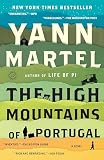
The High Mountains of Portugal

The High Mountains of Portugal

Man Booker prize winning author Yann Martel has crafted a trio of related novellas that lay bare the trauma (sometimes literally) of loss and its psychic weight that can echo across generations like a deep curse. In “High Mountains” we join the journey of three characters: a bereaved widower on a mission to find a lost African crucifix; a grieving, delusional pathologist obsessed with Agatha Christie; and an aging widower/politician who buys a chimpanzee and retreats with the animal to his family’s ancestral village. It’s in this village—in the high (non) mountains of Portugal that all three stories intersect.

Martel has created a world and tale that falls into the realm of magic realism—if you’ve read or seen his other story, “The Life of Pi”, you will have a good idea of what to expect. My jaw definitely dropped numerous times at the action that unfolded but the author tells the story with such skill that the ridiculousness of the situation only draws you in further. My full review is here.
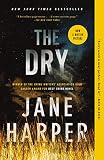
Dry

Dry

In a dying Australian farm town, tinkering on the edge of collapse due to droughts, a family is found dead in an apparent murder-suicide. An exiled man-turned-white-collar cop returns for the funeral and finds out his childhood best friend is the assumed killer of his own wife and kids.

Did his friend do it? What secrets is the cop hiding? What secrets has the town buried?
This was a page turner that kept me guessing till the end. A great quick read. My full review is here.
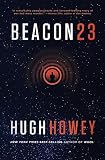
Beacon 23

Beacon 23

In "Beacon 23", Hugh Howey takes us for a ride with a PTSD'd alien-fighting grunt turned (interstellar) lighthouse keeper. Yes, Howey imagines a future in which "lighthouse beacons" are placed amidst warp speed preventing asteroid belts. The lighthouse keepers control a device that, when activated, allows ships to pass through the asteroid belts without collision. Without that device activated, any passing ship will obliterated. Couple this setting with a pending alien invasion and a possible love interest and you've got "Beacon 23"—a great story you'l devour. My full review is here.
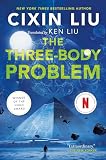
The Three-Body Problem

The Three-Body Problem

This is a trippy novel that's not easily summarized and it's easy to get lost in the more technical aspects that Cixin explores in depth (i.e., nanotechnology, AI, metaphysics, quantum mechanics etc.), particularly when listening to it in 45 minutes blocks on Audible in D.C. traffic over a month's time). The basic premise, though, is that a technologically superior alien civilization has decided to colonize earth. The story, however, unfolds amidst a narrative that jumps from the 1960's Chinese cultural revolution, to present day China, to an online VR world/game that the aliens may be using as a communication mechanism. This is a book that requires mental engagement but one which rewards the reader with a gripping story that readers will grapple with long after they've finished the novel's last pages. My full review will be here.

Ghost Fleet

Ghost Fleet

The premise of the novel is that sometime in the near future China (partnered with Russia) conducts a cyber/space/electronic warfare attack that gives them dominance across the warfare spectrum. Our fleet and air assets are near completely destroyed (with those remaining rendered useless as they are chocked full of compromised Chinese chips). With all our U.S. satellites destroyed, the United States no longer has freedom of movement on land/air/sea.

The heart of the story is how the U.S. fights back—this being a combination of insurgency (in the occupied Hawaiian island), a reconstitution of mothballed ships and aircraft, a private-public wartime industrial partnership, and a murky collaboration with Anonymous hackers. Oh, and with the rail gun—lots of focus on the rail gun. The story moves quickly and I burned through the pages as authors Singer and Cole keep the narrative moving with quick dialogue, myriad Sun-Tzu quotes, and sympathetic characters. My full review is here.
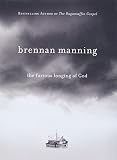
The Furious Longing of God

The Furious Longing of God

You can get through the 136 pages in one sitting if you’d like but I think it’s a book that’s best consumed in spurts with time to mull over Brennan Manning’s meditation on God’s love for us. This book likely has a message for any reader, most importantly this: “Our religion never begins with what we do for God. It always starts with what God has done for us.” My full review is here.

Strong Fathers, Strong Daughters

Strong Fathers, Strong Daughters: 10 Secrets Every Father Should Know

I first read this book back in 2015 and wrote about it here in a post. It's so important to fathers out there that I put in my yearly re-reading list (although it took me four years to read it again)!

In my second reading of this book, it proved to be just as powerful, profound and insightful. The bottom line is that you can't underestimate the role of a father in his daughters' lives. You have to fight for her, engage with her, and continually draw her close to you throughout her life (particularly during those teen years). Don't worry about what other parents do—you worry about your daughter. I'm putting a calendar reminder this summer to give this book another read! My full review is here.

Where the Light Gets In

Where the Light Gets In: Losing My Mother Only To Find Her Again

A candid, emotional memoir of a daughter's struggles, hopes, triumphs, and losses as she copes with her mother's primary progressive aphasia (a rare form of dementia). The story is about more than the disease itself but about the bond between daughters and their mothers.
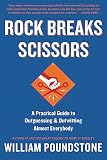
Rock Breaks Scissors

Rock Breaks Scissors

The main point I took away from this novel was that people are crummy at trying to be “random.” All of this book’s applications are founded on one simple idea. When people make arbitrary, random, or strategic choices, they fall into unconscious patterns that you can predict.

While entertaining to read, I’d say most of his writing is only useful for specific circumstances like taking multiple choice tests, office pools, rock, scissors, paper (RSP), catching fraud, and buying a home. For those circumstances it’s worthwhile to keep a copy of this book around. My full review is here.
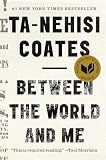
Between the World and Me

Between the World and Me

“Between the World and Me” is a love letter from a father to a son written with the urgency of a man who knows he may perish at any moment. Coates writes beautifully as he recalls his youth and experiences as a father. His memoir reflects serious inner self-examination as he seeks to create a blueprint for his son to survive and possibly even thrive in a world that Coates argues is stacked against him from a historical, institutional, and psycho-cultural perspective.

As Coates warns his son to keep his guard up, he adds, “Never forget that we were enslaved in this country longer than we have been free.” This observation reminded me of Isabel Wilkerson’s “The Warmth of Other Suns” which I wrote about it here. My full review is here.
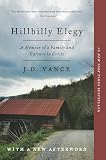
Hillbilly Elegy

Hillbilly Elegy

I read J.D. Vance's 2016 memoir "of a family and culture in crisis" in less than two days. Vance is just a flatout great writer as he tells the story of his life growing up between the Ohio and Kentucky along the redneck Rt. 23.

His basic argument is that one of the major issues plaguing Appalachian America is the people there feel hopeless and disenfranchised (and not just politically but in all facets of life). In short, they feel like their choices don't matter.

In Vance's case the only way he was able to rise above these circumstances was due to the reliable and persistent presence of a family member throughout his immediate family's tumultuous arc. Oh, that and a stint in the Marine Corps. My full review is here.
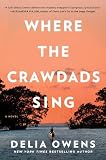
Where the Crawdads Sing

Where the Crawdads Sing

I read this beautiful lyrical book in two days—no exaggeration.

"Where the Crawdads Sing" is equal parts murder mystery, searing social indictment, love letter to naturalism, and soaring poetry. It's amazing that this is author Delia Owens first work of fiction! She writers with grace and beauty and crafts a narrative that immediately draws in the reader and keeps them turning the pages.

About the narrative—this is the story of a young girl (Kya) abandoned in the swampy wild marshes of North Carolina who not only survives, but thrives despite these dire circumstances. Along the way she falls in love more than a few times and eventually finds herself facing a set of murder charges. I'm hesitant to share much more than that as far as the story goes because it's just that good! My full review is here.
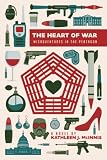
The Heart of War

The Heart of War: Misadventures in the Pentagon

All that to say, Mcinnis’ razor sharp, satirical story of a young, idealist, peacenik PhD’s foray into the Pentagon brought me back to my days inside the 5-sided torture chamber! “The Heart of War: Misadventures in the Pentagon” is a novel about one woman’s evolution? from skeptic to true (ish) believer as she discovers that life inside is nothing like she expected. One of the story’s strengths is that despite the building’s bureaucratic bloviations, the narrator Dr. Heather Reilly’s outlook never devolves into the jaded despair that seems to envelope many an officer stuck there for a three year tour. This narrative framing keeps the novel light and entertaining instead of the sad and frustrating tale it might be if a depressed, worn down, wizened colonel authored it. I’ve thought about the emotions this book made me feel for a few days now, and I think one of the strongest ones is that of exhilaration—author Kathleen Mcinnis has given a voice to the experiences, frustrations, battles, and victories to thousands of staff officers in a way that none of us on active duty are able to. My full review is here.
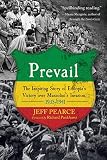
Prevail

Prevail: The Inspiring Story of Ethiopia's Victory Over Mussolini's Invasion (Ethiopia)

I can’t imagine there’s a more well-researched book out there on Ethiopia’s decades long resistance and eventual defeat of an overeager, over confident, overreaching wanna-be colonial power (i.e., Italy). Canadian author Jeff Pearce’s work is strongest as he brings to life the myriad actors, antagonists, and heroes of the saga. It’s worth noting that Pearce is a bit of a Selassie apologist but given the complicated history of Ras Tafari (yup that’s where that term came from) Makkonen’s reign, I imagine this can fall either way. My full review is here.
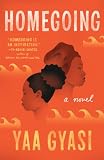
Homegoing

Homegoing (Ghana)

This masterpiece of historical fiction follows the lives of two separated half-sisters (and their six generations of descendants) beginning in the mid-1700 area of West Africa today known as Ghana. Gyasi uses their two very different paths to highlight not only the horrors of the slave trade but also the bravery and determination of the many who persevered and survived across the span of time. Ultimately, in “Homegoing”, the 25 year-old (I mean wow!) author accomplishes a breath-taking feat in creating a compelling history of slavery told through 14 sequential short stories that you likely ever forget. My full review is here.
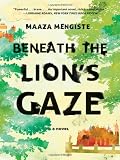
Beneath the Lion's Gaze

Beneath the Lion's Gaze (Ethiopia)

One of the only African nations to never have been colonized (the five year occupation by Italy is generally not categorized as colonization), one of its darkest periods came during the 13-year socialist-Leninist-Marxist rule of the Derg. This military junta overthrew an increasingly oblivious Haile Selassie (ending a succession of “solomonic rule” dating back to the 1200s) and set about consolidating power (aka the “Red Terror”) under the leadership of despot Mengistu Mariam. Beneath the Lion’s Gaze is a retelling of this time period through the eyes of one Ethiopian family.

The family’s patriarch is a renowned doctor named Hailu who is ordered to keep the victim of a barely-alive Derg torture victim alive—ostensibly so that she can be tortured further. As he struggles with this dilemma, his son Dawit becomes a freedom fighter who becomes known as “Mekonnen Killer of Soldiers.” Author Maaza Mengiste uses the arc of this one family’s struggles to bring to life the experience of Ethiopians who starved under Selassie, only to be persecuted and killed under the Derg and starved again under its leader Mengistu’s reign.

While Mengistu was eventually toppled, like all civil war tales, no one is left unscathed in "Beneath the Lion’s Gaze". All resistance, no matter how passive—or how righteous, bears a cost. Hailu in particular at the story’s conclusion, is broken so thoroughly by torture that he carries the “appearance of a man dragging death with him through life.” And it is this notion of the inseparable presence of death within everyday life that Mengiste best captures the reality for generations of Ethiopians. My full review is here.
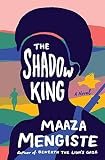
Shadow King

Shadow King (Ethiopia)

Following the conclusion of World War II, Mussolini (as the Ethiopians derisively referred to him) concocted a plan to give himself a slice of the colonial pie while simultaneously avenging his country’s late 19th century embarrassment at the Battle of Adua.

Kidane, the military leader in “The Shadow King” remarks to his men that the Italians “have come to rewrite history, to alter memory, to resurrect their dead and refashion them as heroes.”

At exiled Emperor Haile Selassie’s behest, Kidane assembles a local militia to fight against the invading forces. His wife Aster leads the women who trail the fighters, supplying them with food, bullets, and equipment. As Kidane’s forces suffer battlefield losses, Aster eventually convinces him to let her women fight. A character equal parts cruel and inspirational, Aster implores her fellow women to take their place in history and fight. Her servant, and narrator, Hirut describes Aster’s fervor: “She is one woman. She is many women. She is all the sound that exists in the world.” My full review is here.
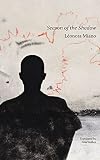
Season of the Shadow

Season of the Shadow (Cameroon)

Miana's story begins as the inhabitants of a tribal village tucked away in the interior of modern day Cameroon awaken to its huts ablaze and find that 12 of its men have vanished. This mysterious disappearance sets off a chain of events that, as one might guess, ends in tragedy. This tale's power comes as the reader is placed in the middle of a people group who's whole order and existence is thrown into havoc. Even as the reader is keenly aware as to what happened, the kidnapping is so out of place with centuries of accepted conduct and cultural norms that its tribal members can't fathom who the perpetrators might be. My full review is here.
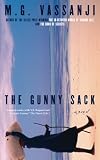
The Gunny Sack

The Gunny Sack (Tanzania)

Most of the African fiction that I’ve read has focused on the “native” experience (outside of V.S. Naipaul), so I found the “The Gunny Sack” to be an important novel as it focuses exclusively on the experience of four generations of an Indian family in Tanzania and wider East Africa beginning in the late 1800s. Vassanji relates this in-depth experience across the span of Tanzania’s colonization and eventual independence through the backward lens of the narrator Kala who parses through the contents of a gunny sack bequeathed to him by his great grandmother Ji Bai. My full review is here.
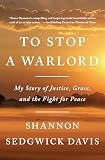
To Stop a Warlord

To Stop a Warlord: My Story of Justice, Grace, and the Fight for Peace (Uganda)

This book is the story of how one woman created a new paradigm in how NGOs/charitable organizations should/could/can confront atrocity and evil by partnering with the military. Shannon Davis is the CEO of Bridgeway Foundation and she decided to do something about Joseph Kony and his reign of terror.

The short story is that Bridgeway partnered with a private military contractor to train a special Ugandan military unit to hunt down Joseph Kony and his band of murderous, child-soldier recruiting, rape and pillaging, terrorist men. My full review is here.
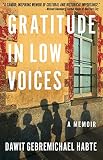
Gratitude in Low Voices

Gratitude in Low Voices (Eritrea)

Equal parts memoir, history and adventure novel, Dawit Habte’s “Gratitude in Low Voices” is the story of not only his country’s 91 year struggle for independence but also his own incredible journey from a countryside village in Eritrea to the offices of Bloomberg as a software engineer. As with many refugee stories that have come out of Africa, the western reader will be floored by the tenacity, resilience and grit that the author displays at such a young age as he smuggles himself out of Ethiopia, and finally gets refugee status to start his life over continue his life in the United States. One thing that struck me was Habte’s commentary on the dehumanizing nature of seeking asylum—where you are assumed to be starting anew on a better life despite having a family, people, and country that you call home half a world away. My full review is here.
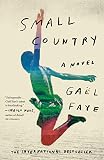
Small Country

Small Country (Burundi)

Reading Gael Faye’s “Small Country”, I was reminded of the writing of other writers such as Teju Cole, Dinaw Mengestu, Maaza Mengiste, NoViolet Bulawayo, and poets like Frank Chipasula, Atukwei Okai, and K'naan. Faye writes with a musician’s flair (and indeed he was a well known rapper/musician before becoming an author), penning lines like: “And when he laughed, happiness washed over the walls of Mamie’s small living room like a fresh lick of paint.” My full review is here.

At the end of the book, Gabriel reflects that “I used to think I was exiled from my country. But, in retracing the steps of my past, I have understood that I was exiled from my childhood. Which seems so much crueler.” This summarizes well the crux of the story, Gabriel is Rwandan-French but spends his entire childhood in neighboring Burundi until the effects of the 1994 Rwanda genocide push him even further away to France. It’s there that he considers what exactly he’s lost and finally finds the courage to return and makes a heart-breaking discovery. My full review is here.
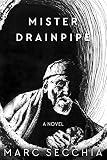
Mister Drainpipe

Mister Drainpipe (Ethiopia)

Author Marc Secchia took a hiatus from his slew of successful fantasy novels to pen this heartfelt love letter to the homeless of Addis Ababa. I tore through this book in less than two days and I’ll warn you that this story will pierce even the hardest heart and (hopefully) change the way you think and interact with the homeless and “least” in your daily life. My full review is here.

Wednesday, January 24, 2018

Kruse's Keys: Read "Beyond the Rice Fields" to Experience the Beauty, Love and Tragedy of Madagascar

It’s hard to express how much I looked forward to reading this book.  I spent three years living and working in Madagascar beginning in late 2013 (my collected writings from that time can be found here and here).  Prior to my arrival, I had scoured the libraries and internet for anything that I could find in English on Madagascar (my list of collected articles and books can be found here and here.).  Unfortunately, this was a rather small task once one gets beyond the myriad travel guides and nature-oriented literature.  
Then near the end of 2015, I came across a post from Ann Morgan, who spent a year reading a novel from EVERY COUNTRY IN THE WORLD.  In the post, she lamented the fact that not a single novel from Madagascar had ever been translated into English, but that a translator named Allison Charette had received a PEN grant to translate one and  she’d chosen “Beyond the Rice Fields.”  So I’d been literally waiting for the last two years for the book to be released and it did not disappoint.  

Malagasy author Naivo has crafting a heart-wrenching tale of love sets amidst one slave’s seemingly impossible yearning for success and upward mobility.  Impressively, the author’s expansive piece of pre-colonial historical fiction doesn’t hold back in addressing some oft-considered taboo subjects in Madagascar such as slavery and the wholesale execution of Christians under Queen Ranavalona’s reign in the 19th century. The narrative centers on Tsito, a child whose family were “forest people” and captured, then sold into slavery by the ruling Merina highlanders (called amboalambos, i.e., pig-dogs by the atandroy or antakarana--it’s unclear which tribe the author refers to when he uses the denotation ‘forest people).  He grows up with his master Rado’s family and develops a bond with Rado’s daughter Fara.  The story unfolds through dueling narratives between these two characters.  

The book reads as a mixture of hainteny (oral tale/poetry) and tantara (historical narrative) with a liberal dosing of Malagasy proverbs/adages (I counted 29 of them).  One in particular proves emblematic as Fara ponders her destiny:
Love is like rice, when you transplant it, it grows, but never in the same way.  It retains a bittersweet memory of its first soils. Every time it’s uprooted it dies a little; every time it’s replanted, it loses a piece of its soil.  But it also bears fruit (188).
Fara’s observation captures the tension and movement with Beyond the Rice Fields as the central characters and family find themselves uprooted numerous times amidst shifting factions as King Radama dies and the throne is passed to his wife Ranavalona.  Her reign marks the beginning of an increasingly fraught relationship between Christianity and political power in Madagascar, especially since the crown Prince becomes a Christian.  

While neither Fara nor Tsito are themselves Christians, they find themselves caught in the ill effects of Ranavalona’s power consolidation as she upends traditional tribal power alliances and eventually publicly executes thousands of Malagasy Christians.   Within all this chaos, however, Fara and Tsito ultimately find each other.  
In one key conversation, we hear echoes of the fampitaha song from the novel’s beginning as Fara lovingly spars with Tsito:
“And how will you love me?”  
He replies: “I will love you like my eyes, the windows of my soul; without them, I am as weak as a child, but with them, the world smiles at me.”
“Then do not love me, for I will be of no use to you in the darkness.”

“I will love you like the door to my home, protecting me from enemies and keeping the hearth warm.”
“Then do not love, for you push through me without shame to achieve your ends.”
“I will love you like the Sovereign of this realm, mistress of the our lives and destiny.” (238)
Naivo proves himself a skilled and brave writer in Beyond the Rice Fields. With the publication of his novel in English, he has illuminated a period of Malagasy history previously hidden from most of the world.  Along the way, he has brought to life the rich traditions and deep culture of a country and people that are all too often wrongly associated solely with lemurs and coups by radio DJs.  


Key Quotes:

“Sing for your highest dreams, dance for your most starstruck plans.  Then you cannot lose (120).”

Key Takeaways:
  • Unless you live in Madagascar I don't think that I can ever make you understand how important rice is to Madagascar, to its culture.  For starters, Malagasies eat rice AT EVERY MEAL. Living in its capital you see the rice fields everywhere, they are inescapable--RICE IS LIFE in Mada! 
  • Book captures a tension that exists today between the Merina highlanders, who consolidate power across Madagascar and everyone else (in the novel’s case the ‘forest people’ who refer to the Merinas as pig-dogs). While many would disagree as to the level of this tension today, I saw evidence of it, particularly between the Merina highlanders and those living on the coasts (6).
  • Torture as a whole plays a central role throughout the novel, whether in its use to break down slaves (9), or as an overall method of societal control.
  • The idea of “purification” also plays an important role in the culture and tradition of the villages and the palace.  Earlier on, we see the ‘witch doctors/seers’ practice of determining a child’s purity by putting them in the path of stampeding cattle and seeing if they live (56).  
  • Fara’s belief that “the city is my destiny” is a harbinger of doom (64)
  • Short hair done as a sign of mourning (72)
  • Keen insight into rather insidious ways that early white missionaries exercised control and ensured their livelihoods as they spread rumours that “killing a white man will give you leprosy” or “vazaha blood was a slow poison that made anyone who spilled it go deaf” (90).
  • Fampitaha singing/dancing competition is seen as elemental part of Malagasy society (117). https://www.youtube.com/watch?v=FBUxRMAZ6oM 
  • Merina referred to themselves as “People under the sky” (117).
  • Lanterns and lights are associated with childhood and celebration of children (133)
  • Annual Bathing feast described as essentially a sexual free for all, as long as the participants hide while they do it (144)
  • While the Queen starts anti-Christian actions (171), they also had the effects of galvanizing the spread of Christianity (175).
  • Tangena poison test played a huge role until the Queen’s successor outlawed it.  Anyone so accused would be required to drink the poison (derived from the toxic nuts of tangena tree.  Then they’d have to swallow three bird skins.  If they could vomit up the three bird skins without dying then they’d be declared innocent.  Evidently this was a widely accepted method of guilt determination with something like 2% of the population dying from it every year (much more during Ranavalona’s reign) (216).  
  • Under the quee, the palace/government started to confiscate everything from the people (220).  
  • Beautiful writing: “I will love you” (238)
  • Words in English as holding no sacred virtue (267)
  • More beautiful writing: “My heart is as solid as a shield” (274)
  • It becomes evident under the queen that the military generals wield the real power (342)
  • Habits of a slave described (23)
Proverbs:
  1. A slave skilled at valiha: when you ask him to play, he refuses, but as soon as you speak of work, he goes mad for the music. (9)
  2. A crying orphan, only pitied by the back of his own hand. (10)
  3. Do not cook meat without knowing its name (15).
  4. The seer who wants to make the impossible believable is not afraid to make dying men dance (17).
  5. A banana threatened with a knife with eventually be pierced (33).
  6. A lie likes to dress itself up as a story (40).
  7. A servant’s undivided piaster is the master’s esteem (48).
  8. You must not judge the stranger by his yellowish face but think of his family on the other side of the earth (58).
  9. Better a small soul respected by his friends than a great soul who perishes in vain (69).
  10. The tree that grows too tall will be thrashed by strong winds (70).
  11. The sovereign’s word is law; it enters our homes not on tiptoes, but stomping its feet (88).
  12. He who changes lords changes status (93).
  13. The City’s great houses, the first built are soonest dissatisfied (107).
  14. Hope cannot vanquish destiny (110).  
  15. Only simpletons want to be like their fathers (116).  
  16. He who shows his back hides what’s in his soul (125).
  17. He who has a white soul is like a bird of ill fate (125).
  18. If the waterfall rumbles, it is because of the rocks; if kings rule, it is because of the vahoaka (128).
  19. The poor are not friends of the affluent (171)
  20. Love is like rice, when you transplant it, it grows, but never in the same way.  It retains a bittersweet memory of its first soils. Every Time it’s uprooted it dies a little; every time it’s replanted, it loses a piece of its soil.  But it also bears fruit (188).
  21. They can rise to the top as cream does, but milk will always reveal a common ancestor (189).
  22. A meeting of dogs where they only sniff each other’s asses (199).  
  23. Those who are unified are like a rock, those who are divided are like the sand (221).
  24. Love is like the silkworm in winter: touching it makes its eyes open wide(232).
  25. Only halfwits have less ambition that their fathers (242).
  26. The soul is what makes us human (251).
  27. Everyone is in himself a noblemen (251).
  28. Destiny is a chameleon on a tree branch, it only takes a hissing child for it to change its color (318).
Songs and Hainteny:
We’ll go to the City of Thousands
To eat the laying hen
To eat the fatty zebu hump (18)

The village is rich with children
Grandmother is lucky indeed
Her home has a hundred slaves
Her home holds a hundred cattle (26)

To mediate the difficult
        As saffron does (73)

Come forth! Let them appear
        And the most beautiful will triumph
They will be judged
And the ugliest will disappear (126)

Tell me how I can keep your love:
        If I knot it into a corner of my gown
        The thread might break it and I could lose it.
        If I place it in the palm of my hand
        I’m afraid it might dissolve into dampness…
Instead, I’ll put it in my heart
Although it will make me perish
Will that not make me love you all the more? (131)

Bulls fighting within the herd
        The victor is not cheered
        The vanquished is not booed (135)

The trees of sweet-smelling wood
        Counting two, there finding three
        There on the tall mountain
        On Mount Adrigiba
They wanted to sleep
Pressed against each other
At least rejoice, oh my soul,
That you do not possess
The one you do not love (146)

A thousand words
        A hundred stories
        But all talk ends
        At the hour of confrontation (275)

I implore your forgiveness, O my earth
        I appeal to your mercy, O my earth!
        You, who cover our dear ones
        You, their final shelter
        We trample you underfoot
        But you are the water’s cradle
        And you grow the ears of rice
        And you absorb all sorrow
        O my earth (348).

Key References (for further study):

  • Fampitaha competition (12)
  • Fara name (15)
  • Kalanoro (96)--mythical creature--there’s some weird stuff on the internet about this one
  • “Paul and Virginia”  love story of star-crossed lovers in Mauritius.  You can read more about it here(123)
  • Christian holy man who was killed by the Queen--more about him here. (162)
  • Fara describes the dying away of fampitaha competitions, are these still held today? (192)
  • Mantasoa, man-made lake/Laborde built the city there is and is buried there. (193)
  • Royal decree for export rights (227) https://en.wikipedia.org/wiki/Jean_Laborde 
  • Menamasos artists society to surpass Vazahas (236) reference book
  • Zafamanelo family right to recite kabary was rescinded by the Queen(239)
  • Crown prince Radama I a christian (243)
  • Madagascar sent ambassadors to England and France in the 1800’s (247)
  • Sidikina derivation of God Save the King played when foreign rulers would visit Madagascar (259)
  • http://kruzoo.blogspot.com/2016/08/veloma-list-of-madagascar-posts.html
  • http://kruzoo.blogspot.com/2016/08/veloma-list-of-poems-written-while-in.html
  • http://kruzoo.blogspot.com/2016/08/antananarivo.restaurantlist.bestofmadagascarhediard.html
  • http://kruzoo.blogspot.com/p/mada-articles.html
  • www.brooklynbookfestival.org/authors/naivo/
  • http://ile-en-ile.org/naivo/
  • http://www.wordswithoutborders.org/article/december-2015-the-conspiracists-naivo-allison-m-charette
  • https://pen.org/introducing-the-literature-of-madagascar-on-translating-naivo/

Saturday, November 11, 2017

Kruse's Key: Read "Transit" to Understand the Tension Between Hatred and Yearning (Djibouti)

As you can probably guess there’s not exactly a ton of Djibouti fiction out there, especially en anglais.  But when it comes to Djibouti fiction, the author Waberi reigns supreme.  He’s written a lot to the extent where most of his novels have been translated from French to English.  


The translators, Dave and Nicole Ball, in particular, did a splendid job putting into English the patois of one of the narrators, an uneducated ex-soldier named Bashir.  The challenge to take french urban african slang and put it into English without making it sound like American urban slang is considerable but the Balls nailed it.

Transit interweaves Bashir’s story with that of Harbi (a member of the opposition intellectual elite) and his family.  While waiting at the Paris airport, the two men reveal their life stories as the narrative arc builds toward their intersection.  The novel’s plot is pretty well done so I won’t reveal much beyond what I mentioned thus far.

The staying power of this story comes from Waberi’s deft touch as he tackles the complexity of his country’s history and current political situation through the alternating monologues. This allows him to playfully jab at the idea of Djibouti’s democracy on one hand, calling it “that hot air of politicians who take bread from whoever giving it”, while also laud the Djiboutian people’s strength on the other with his admonition: “LET'S NOT FORGET that we never accepted the domination of the colonizers. Even when faced with a fait accompli and the law of the strongest, we resisted silently, secretly. Luckily, we had enough space to fall back on, unlike countries with greater population density like Burundi or Rwanda, where the Catholic church recorded its highest evangelization scores in the world. We could retreat into the brush, unseen and unheard. And above all, no official papers. Thus, what seemed to be the most generous acts of the administration, like the vaccination campaigns, were ignored if not massively rejected. Villages, schools, or cities—we rejected them. We preferred our rustic life.”

KEY QUOTES:
  • “Democracy, that hotair of politicians who take bread from whoever giving it.” (11)
  • “The president left with head of diplomacy to get the asshole general that used to be his true-true friend before, when they making restoration together. Together they knew how to conjugate the verb have, not the verb to be.” (12)
  • “I navigate easily between different languages, historical references, cultures, rumors from yesterday still warm today, and the oldest memories. Totally natural, I'm the product of love without borders; I'm a hyphen between two worlds.” (34)
  • “Poets approaching death commonly become prophets.” (44)
  • “LET'S NOT FORGET that we never accepted the domination of the colonizers. Even when faced with a fait accompli and the law of the strongest, we resisted silently, secretly. Luckily, we had enough space to fall back on, unlike countries with greater population density like Burundi or Rwanda, where the Catholic church recorded its highest evangelization scores in the world. We could retreat into the brush, unseen and unheard. And above all, no official papers. Thus, what seemed to be the most generous acts of the administration, like the vaccination campaigns, were ignored if not massively rejected. Villages, schools, or cities—we rejected them. We preferred our rustic life.” (54)
  • “The Angel gave the Prophet in a cave on Mount Hira. It said: “Iqrah! Recite!” From this verb comes the word Koran, recitation. At that time, reading, or recitation, was something very different from the present droning of the Word weakened by narrow minds, often bearded. Iqrah, recite and think by yourself, expand your knowledge; seek, in the bottom of your heart, the path that leads to The Unique.” (61)
  • “Africa would come to me all by herself, like a big girl. Alas, my little cactus, it was not the rebellious continent, just the Africa of news reports as they're filtered through the clear conscience of the West. Then it became the Africa of dictators with Swiss bank accounts, the Africa of rickety children and bony old men, the Africa of famine and the shameless looting of its resources, the Africa of squalid huts and gleaming white teeth, the Africa of landless people, the Africa of guerrillas and desperados.” (70)
  • “Since the beginning of time, we—that is, me and all my colleagues working in Guistir, the region of the three borders (Djibouti, Somalia, Ethiopia) that saw me born—haven't needed official documents to accompany that melody, to catch it at its birth, at the time when the cold desert night is separated from the reseda-yellow light of dawn. No member of our army of border guards, called ANG,1 has an authentic birth certificate; we were all “born circa…” Because nomadic time is not regulated by any calendar or encumbered by any archive, it does not sign the official papers demanded by the goatees of the Third Republic. Everybody was “born circa” in my time, and only the intrusion of the French colonial administration could impose such a delicate intention on us. For our own good, of course with some exceptional periods, like the English blockade under Churchill, which plunged the Territory, governed by the Vichy regime with an iron hand, into the depths of hunger and thirst. During that blockade, the people of this country tasted bitter roots and cat bouillon: the memory of that time is still tattooed on them to this day.” (98)
  • “Do not call me a mulatto, a métis. Metis was the first wife of Zeus, king of the Olympian gods. She died horribly.” (103)
  • “As I think of Him, I immediately open myself to Him, to pray serenely. To chant, with my eyes closed in ecstasy, the ninety-nine names of the very holy Prophet. That is how I regain peace of mind and body.” (111)

KEY TAKEAWAYS:
  • The section on the novel that mentions the lack of official documents rang especially true given my own experience in Comoros (p. 98).  During the beginning of my tour in Madagascar, when I was cutting travel orders for different Comorian military officers to train the US, I was dumbfounded to learn that so many them were born on 31 December. That is until one of them later shared with me that most of the older generation didn’t know the actual day they were born so they just picked a day, and most picked 31 December.  
  • One can’t underestimate the significance of France’s influence on most of its former colonies.  Its latent presence is embedded in the psyche of the countries’ citizens.  It manifests itself as both a hatred and a yearning--a hatred that France should still attempt to wield any influence but also a yearning as a place to which one could escape to a better life (yes, this is a vast oversimplification--I am just brainstorming here).

KEY PAIRING:
Jelloun's tragic Morocca tale Leaving Tangier; read my take on it here.

KEY REFERENCES:
Location: 45
The chapters in Transit are a succession of monologues by each of the characters in the novel: Bashir, a very young veteran of Djibouti's civil war; Harbi, a Djiboutian intellectual and an opponent of the regime; Harbi's French wife, Alice, and their son, Abdo-Julien; and Abdo-Julien's grandfather Awaleh.

Location: 49
One character gives us the same kind of pleasure we have in reading great tragicomic works of literature: Bashir, the poor, adolescent ex-soldier. His monologues are delivered in a slangy, comical language very much his own, a mix of naïveté and sly,

Location: 91
Waberi is one of the leading francophone writers of his generation, internationally recognized, one of those to whom the French novelist J. M. G. Le Clézio dedicated his Nobel Prize for Literature in his acceptance speech. Translated

Location: 96
for his latest novel, published in 2011, Passage des larmes (Passage of Tears),

Page: 6
people think migrants arrive naked in a new land at the end of their odyssey; yet migrants are loaded with their personal stories and heavier still with what is called collective history.

Page: 7
One day, as I was walking with my aunt along one of the avenues in our neighborhood, I passed by a military patrol. Like a chrysalis about to burst, the question popped out instantly: “Who are those people?” “The French, our colonizers.” “Why are they here?” “Because they're stronger than we are.”

Page: 8
I'm not afraid of nothing, not even foreigners (oh no! am I off my rocker or what? the foreigners, that's us now, the natives here, it's them).

Page: 11
Democracy, that hotair of politicians who take bread from whoever giving it.

Page: 12
Then, the president left with head of diplomacy to get the asshole general that used to be his true-true friend before, when they making restoration together. Together they knew how to conjugate the verb have, not the verb to be.

Page: 16
fauna; the tragic, camel-like swaying of its hips; the aquatic flora pictured on postage stamps; the desert islets like the famous Guinni Koma (also called l'île du Diable, Devil's Island by the French). I can feel its salt on my body. I am this pit like a wounded vulva between the hills. You'd think she was reading from a geography textbook. Yes, everything here is mine. The salt lakes, the bald peaks, the whimsical firmament at Lake Assal, the small forest from times long past, the limestone high plateaus, the Grand Bara and Petit Bara, the main summit culminating
at almost seven thousand feet. The bitter waters and their extraordinary salinity. The liquid heart of the gulf, its solitude crenellated with waves. Her world forever inviolable. This is my country stirring the air just like the lyre palm and the traveler tree dragging its exiles over the crust of the earth. My country running breathlessly, endlessly. My country sad and beautiful like the oilcloth of a village café in Brittany on a rainy Sunday morning. My dad and I would burst out laughing. She's stubborn and endearing. And there she goes now, changing the subject and the textbook. From geography to history. My country's history in the annals of the continent? Barely room for a lowly footnote at the bottom of a page. Seventy thousand square miles of hatred and misery, my country of ergs and acacias. She's flying off the handle now, excited as a young goat.

Page: 18
They'd laugh and joke in rhythm; they're sure good at that, bigger jokers you won't find.

Page: 23
African heads of state like so-so much Israeli bodyguards cause Israeli bodyguards they protect from military coup like rubber protect from AIDS you get me?

Page: 27
My mother, with her hair twisted together like those sentences of Monsieur Proust that no one can unravel, fears neither the sunburns that knock off foreigners with delicate skin nor the narrow little streets covered with dust. As a child I was fed on the milk of love, and reading.

Page: 31
To get back on subject. Oh yah I was saying: Wadags or not Wadags, not the problem. All that's politics, I'm telling you. In a lot of neighborhoods of the capital, in Einguela, Ambouli, Districts 1, 2, 4, Plateau, etc. Wadags, Walals, an Arabs, we all mixed, with plenty Hindis an even some Whites married to our girls, or just weirdos. And then, in the Dikhil district, between Wadags an the others it's fifty-fifty (that English, I speak it a little-little. Learned it when I worked in front of the American Embassy, I'll tell you about that later. I know how to talk English an that's that, OK?).

Page: 31
Problem is dirty tricks, corruption an politics. You know, Restoration!

Page: 34
Oum Kalsoum giving a masterly interpretation of Anta Oumri: sixty minutes of pure bliss.

Page: 34
I navigate easily between different languages, historical references, cultures, rumors from yesterday still warm today, and the oldest memories. Totally natural, I'm the product of love without borders; I'm a hyphen between two worlds.

Page: 35
Serge Gainsbourg's Dieu est un fumeur de havanes (“God is a smoker of Havanas”).

Page: 40
now it's haga* (that Djibouti summer, sun it hot lead melting on your skull, even the asphalt on the road yell mama mama I'm too-too melted). Haga, too fierce.

Page: 44
Poets approaching death commonly become prophets.

Page: 48
the same old stories of bloodshed, poisoned wells, kidnapped fiancées, raids on zebus, and vendettas between rival clans.

Page: 49
A baby face because it's only after they've reached forty-four that men here are fully entitled to be called an adult, your grandfather would have said in his gentle voice.

Page: 49
A sand-yellow territory on a sky-blue background, and all around it the four colonialists (France, Great Britain, Italy, and Ethiopia) who cut up the land of the sons of Samaale.

Page: 59
LET'S NOT FORGET that we never accepted the domination of the colonizers. Even when faced with a fait accompli and the law of the strongest, we resisted silently, secretly. Luckily, we had enough space to fall back on, unlike countries with greater population density like Burundi or Rwanda, where the Catholic church recorded its highest evangelization scores in the world. We could retreat into the brush, unseen and unheard. And above all, no official papers. Thus, what seemed to be the most generous acts of the administration, like the vaccination campaigns, were ignored if not massively rejected. Villages, schools, or cities—we rejected them. We preferred our rustic life.

Page: 59
got caught up in the game and first sent a little boy, some little orphan, to their school just out of curiosity. Then the youngest boy of the family, then the middle son, and finally the eldest, the keeper of the flock. But what could the children be doing all day? ventured the most skeptical. Faithful as the evening stars, they went to the same place every day, remaining seated, filling out little spiral notebooks with the district chief's stamp on them, and came back a few years later with a salary, without breaking their backs. Their fathers immediately opened up a store. From then on, they would rent out the donkey they used to lend. Little by little, they cut themselves off from their clan, spoke about their ancestors for no good reason, and were reluctant to give out alms. They shut themselves off from the others and saw only people like themselves, or passing foreigners like the nurse or the stationmaster, French from France or Greeks. And finally the truck driver replaced the camel driver, already threatened by the train.

Page: 61
the Angel gave the Prophet in a cave on Mount Hira. It said: “Iqrah! Recite!” From this verb comes the word Koran, recitation. At that time, reading, or recitation, was something very different from the present droning of the Word weakened by narrow minds, often bearded. Iqrah, recite and think by yourself, expand your knowledge; seek, in the bottom of your heart, the path that leads to The Unique.

Page: 69
The Théâtre des Salines is where we play for the working people of the neighborhoods.

Page: 70
Africa would come to me all by herself, like a big girl. Alas, my little cactus, it was not the rebellious continent, just the Africa of news reports as they're filtered through the clear conscience of the West. Then it became the Africa of dictators with Swiss bank accounts, the Africa of rickety children and bony old men, the Africa of famine and the shameless looting of its resources, the Africa of squalid huts and gleaming white teeth, the Africa of landless people, the Africa of guerrillas and desperados.

Page: 78
Dixit the Breton storyteller Maria Kermadec, who often concludes her ramblings with a proverb she attributes to a sailor from Cancale: “He who has words in his mouth can never get lost in the world.”

Page: 79
Abdo-Julien, that's me, stillborn in his seventeenth year, spirit wandering in the great tradition of the dibbuks you can find in The Golem, a small child returning periodically like the abikou* in the region of the Gulf of Guinea whose umbilical cord is buried next to Ilé-Ifé—an extraordinary fate, in the direct line of the shafeec* of our people. I owe everything I know to my parents. Does that surprise you?

Page: 87
And the little tree of memory, can you guess? The cactus. That's you, my little cactus.

Page: 97
The most gifted of us had the power to put the deepest song of the earth into words, wary of the small change of everyday words, a song that wells up from its belly, song of the slow crossing, a song unfolding to infinity.

Page: 98
Since the beginning of time, we—that is, me and all my colleagues working in Guistir, the region of the three borders (Djibouti, Somalia, Ethiopia) that saw me born—haven't needed official documents to accompany that melody, to catch it at its birth, at the time when the cold desert night is separated from the reseda-yellow light of dawn. No member of our army of border guards, called ANG,1 has an authentic birth certificate; we were all “born circa…” Because nomadic time is not regulated by any calendar or encumbered by any archive, it does not sign the official papers demanded by the goatees of the Third Republic. Everybody was “born circa” in my time, and only the intrusion of the French colonial administration could impose such a delicate intention on us. For our own good, of course with some exceptional periods, like the English blockade under Churchill, which plunged the Territory, governed by the Vichy regime with an iron hand, into the depths of hunger and thirst. During that blockade, the people of this country tasted bitter roots and cat bouillon: the memory of that time is still tattooed on them to this day.

Page: 100
They suffer under our sun. They die under our moon, knowing the extreme urgency of the creative act. They are from no place. They tell time. They tell destiny.

Page: 103
FALL 1892. They were exhibiting Ka'lina Amerindians from French Guyana completely naked in a Parisian park at the same time as our grandfathers in traditional dress, gathered in a flimsy hut indicating their generic name—Somalis—in the Zoological Garden of Acclimation. Take the Chemins de fer de l'Ouest, the Western Railroad, and get off at Porte Maillot station, said the poster announcing the attraction in all the French newspapers. All that memory is available with one little click.

Page: 103
“Do not call me a mulatto, a métis. Metis was the first wife of Zeus, king of the Olympian gods. She died horribly.”

Page: 111
As I think of Him, I immediately open myself to Him, to pray serenely. To chant, with my eyes closed in ecstasy, the ninety-nine names of the very holy Prophet. That is how I regain peace of mind and body.