Showing posts with label immigration. Show all posts

Saturday, November 6, 2021

Kruse's Keys: Read "American Dirt" to Challenge Your Perspective


American Dirt is a brutal, violent, and necessary novel. Author
Jeanine Cummins holds nothing back as she pulls the reader into the suffering and anguish that propels countless migrants to make the dangerous journey. A padre’s convocation to a group of them at one point encapsulate these dangers:

“If there’s any other place for you to go...go there now...If it’s only a better life you seek, seek it elsewhere...this path is only for people who have no choice, no other option, only violence and misery behind you...everything is working against you, to thwart you. Some of you will fall from the trains. Many will be maimed or injured. Many will die. Many, many of you will be kidnapped, tortured, trafficked, or ransomed. Some will be lucky enough to survive all of that and make it as far as Estados Unidos only to experience the privilege of dying alone in the desert beneath the sun, abandoned by a corrupt coyote, or shot by a narco who doesn’t like the look of you. Every single of you will be robbed. Every one. If you make it El Norte, you will arrive penniless, that’s a guarantee.”


Cummins wisely avoids the political and instead lets her narrative urge (force?) the reader to consider the migrant as an actual person instead of a statistic or political talking point. Depending on your political leanings this may make this story either a very challenging or vindicating read. Either way it’s one that you won’t forget.

See our 2020, 2019, 2018, 2017, 2016, 2015 and 2014 Reading Lists.

Key Quotes and Takeaways:

53 She tugs on the ribbon, which gives way and falls to the floor at her bare feet. Her body feels like an arrow that’s been launched from its bow but hasn’t yet found its target. She’s suspended, arcing, accountable to the laws of gravity. Lydia opens a package from Javier, her once friend and now murderer of her family

74 Instead, his consciousness, like a helium balloon fastened to his person by some taut and fragile string, momentarily floats away. Luca mentally removes himself from the trauma as his mother talks to a family friend as they try to escape Javier.

90 “Now that the thing had been spoken between them and confirmed to be true, all that was left for Lydia was autopsy. What love had been there was already slipping away.” Javier reveals who he is to Lydia.

111 “defined not so much by what she’s made of, but more by the shapes of what she’s missing.” Lydia contemplates her identity in the wake of losing nearly everything.

183 “because of the way beauty begets empathy…” the advantages of beauty.

199 The shared solidarity of the migrants is their mutual suffering, their anguish. Some share it openly, others keep it bottled up like a bomb waiting to detonate.

202 “If there’s any other place for you to go...go there now...If it’s only a better life you seek, seek it elsewhere...this path is only for people who have no choice, no other option, only violence and misery behind you...everything is working against you, to thwart you. Some of you will fall from the trains. Many will be maimed or injured. Many will die. Many, many of you will be kidnapped, tortured, trafficked, or ransomed. Some will be lucky enough to survive all of that and make it as far as Estados Unidos only to experience the privilege of dying alone in the desert beneath the sun, abandoned by a corrupt coyote, or shot by a narco who doesn’t like the look of you. Every single of you will be robbed. Every one. If you make it el norte, you will arrive penniless, that’s a guarantee.

307 Some migrants do the trip every trip multiple times a year because that’s where the work is.

Wednesday, November 15, 2017

Kruse's Keys: Read "Hawaii" to Unlock the Islands Before Your Visit

In 2009, I married my beautiful bride on Poipu Beach in Kauai.  Since that visit, the Hawaiian islands have held a special place in my heart.  During idle moments, I confess to plugging the location of Kauai into job search sites and crossing my fingers for a non-engineering job to pop up.  Since 2009 we’ve returned to Kauai several times and prior to our most recent trip this past summer I decided to finally dive into Michener’s 1000 page tale Hawaii.  


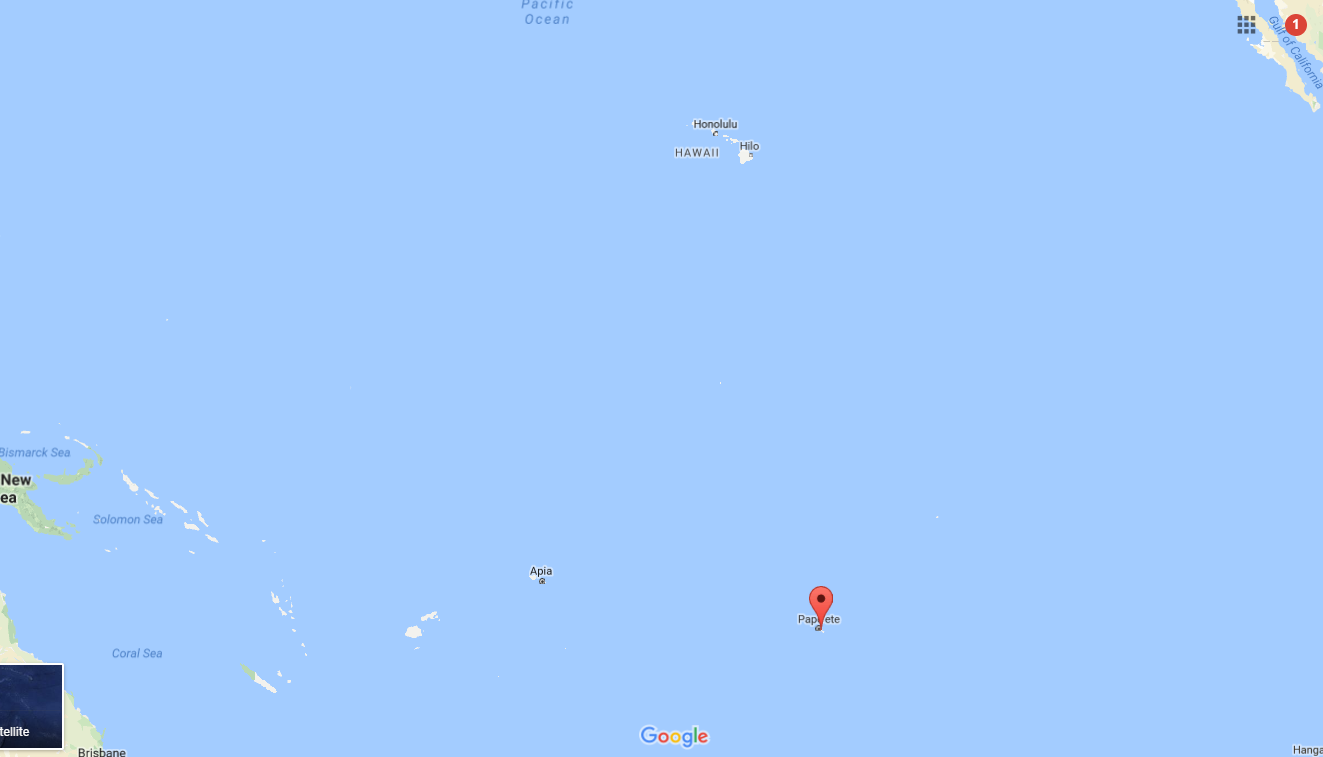
First published in 1959 (the year of Hawaiian statehood), Hawaii definitely comes across a little dated in its style but Michener nonetheless proves that he can craft an engrossing tale as he spans the physical birth of the Hawaiian islands eons ago up to it fight for statehood.  Hawaii begins its narrative with the first impossible ocean-spanning voyages of men and women from Tahiti.
2017-11-14_13-58-21.png


From there we witness the tribal fight to consolidate power throughout the islands and then see the natives first interaction with New England missionaries.  From there Michener deftly juxtaposes the lives of consecutives generations of earnest but severe missionaries with those of lusty and wayward whalers and traders.  The narrative carries on as we see the immigration of Chinese and Japanese settlers and their eventual integration into the social, economic and political life of Hawaii over the span of two World Wars and an eventual quest for statehood.  


One assumes (with even cursory research) that Michener took a multitude of historical liberties in the writing of this tome but upon finishing it I was okay with that.  Hawaii is an engrossing novel that encourages the reader to learn more about it actual history (I’ve included some links to do just that in a section below.


KEY QUOTES:
  • “In later years, it would become fashionable to say of the missionaries, "They came to the islands to do good, and they did right well." Others made jest of the missionary slogan, "They came to a nation in darkness; they left it in light," by pointing out: "Of course they left Hawaii lighter. They stole every goddamned thing that wasn't nailed down.”
  • “It is difficult to be king when the gods are changing.”
  • “no man leaves where he is and seeks a distant place unless he is in some respect a failure; but having failed in one location and having been ejected, it is possible that in the next he will be a little wiser.”
  • “Why is it, Reverend Hale, that we must always laugh at our book, but always revere yours?”
  • “Patriotism is not a matter of the skin’s color. It is a matter of the heart.”
  • “You love the Hawaiians as potential Christians, but you despise them as people. I am proud to say that I have come to exactly the opposite conclusion, and it is therefore appropriate that I should be expelled from a mission where love is not.”

KEY TAKEAWAYS:
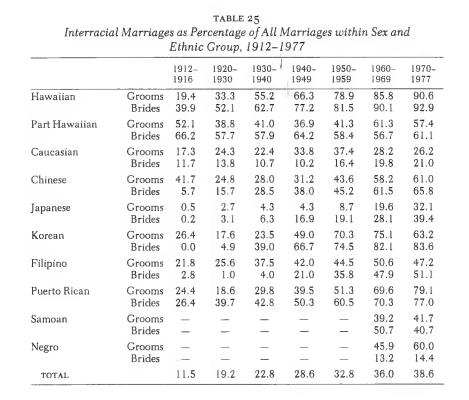
  • Differences between Chinese and Japanese assimilation. At least initially the Chinese were more willing to intermarry with the local populace.  Whereas the Japanese workers held out hope to return to Japan one day and marry someone from their village.  
2017-11-14_13-44-56.png
  • Very broad generalizations but the Chinese were the first to develop and integrate into the economy through business and trade whereas the Japanese were the first to integrate into the political scene.
  • Notably, the book doesn’t address the other large immigrant/worker populations such as the Filipinos, Koreans, and Puerto Ricans.  
  • Considerable remittances were paid back to homelands by the worker populations
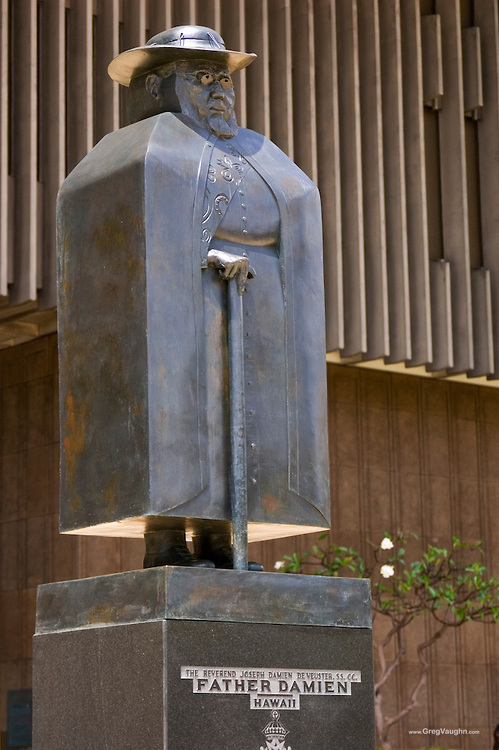
  • There was a very wide variance in missionary experience in Hawaii’s history.  An interesting part of that covered in the book was that of their ministry to lepers on the island of Molokai.  

  • The genetic makeup in Hawaii is pretty interesting--what one might think of as a typical Hawaiian is likely nothing like a pure “Hawaiian” that first inhabited the islands.
  • Statehood was never a foregone conclusion for Hawaii.  There were a lot of “sugar” senators from the continental US that didn’t want the competition--the importance of sugar can’t be understated in the arc of Hawaii’s history..  Additionally, there was a fair amount of racism prevalent that sought to keep the “uncivilized” nation-state out of the Union.  
  • The Dole pineapple that we eat today only came after generations of experimentation and trial and error.  The history of the Hawaiian pineapple alone could fill a book.
  • Palm trees from Madagascar were brought in and planted in Kauai at some point.  This is noted in the book but I haven’t been able to find any other info to verify this on the interwebs.  


KEY REFERENCES:
Those seeking more robust scholarship on Hawaii’s history and it’s immigrant experience could explore the following articles and books:


Wednesday, September 28, 2016

Leaving Tangier: Loved it Because this was a sad, tragic, beautifully written tale about loneliness, despair, hope and home (Morocco, 2006/2009)

Leaving Tangier (2009)


Loved it Because this was a sad, tragic, beautifully written tale about loneliness, despair, hope and home.  In other words, it encompasses the entire range of the human condition that you expect a great novel to cover.  Ever since living in Morocco as a fifth grader, the country has had an allure for me.  In grad school, my thesis compared state responses to Berber populations in Morocco and Algeria--I know...thrilling stuff. 


Originally published as Partir in 2006--the english translation came out in 2009.   The strength of this novel is that it doesn't hold back in its indictment of the Moroccan government's societal failures but also doesn't hold living in Europe as a golden solution to the problems of most Moroccans.  Much of the narrative focuses on a young man named Azel who wants to flee to Spain so fervently that he will eventually do... almost anything. 

Another interesting aspect of Leaving Tangier is its examination of the nebulous moral compass of its characters.  Azel in particular is disgusted with the corruption and crime inherent in his nation's society and refuses to take part of it.  But he is eventually willing to forgo his own sexuality and desires in order to flee Morocco--for Azel this is a choice that starts a slow disintegration of the very fabric of his being.  This stands in stark contrast to the voyage of his sister who works hard to maintain her identity and values...to a certain extent...of course...because in this story we see that ultimately no one can live without compromise.  

Leaving Tangier stands the test of time as I read it ten years after its publication.  It's a timely tale about the harsh reality of immigration and emigration and the depths that desperation drive one to.  And it's Jelloun's eye for tender observation and magical realism that cements the novel as a modern classic.  Indeed the novel's closing lines are a siren call for all immigrants:

He’s the immigrant without a name! This man is who I was, who your father was, who your son will be, and also, very long ago, the man who was the Prophet Mohammed, for we are all called upon to leave our homes, we all hear the siren call of the open sea, the appeal of the deep, the voices from afar that live within us, and we all feel the need to leave our native land, because our country is often not rich enough, or loving enough, or generous enough to keep us at home. So let us leave, let’s sail the seas as long as even the tiniest light still flickers in the soul of a single human being anywhere at all, be it a good soul or some lost soul possessed by evil: we will follow this ultimate flame, however wavering, however faint, for from it will perhaps spring the beauty of this world, the beauty that will bring the world’s pain and sorrow to an end.’  

*One of my Reading Around the Continent books--the full list is here.
 **See our 20162015 and 2014 Reading Lists.

My Kindle Highlights

Leaving Tangier by Tahar Ben Jelloun
You have 34 highlighted passages

Occasionally the men do allude to her, especially when the sea has tossed up the bodies of a few drowned souls. She has acquired more riches, they say, and surely owes us a favour! They have nicknamed her Toutia, a word that means nothing, but to them she is a spider that can feast on human flesh yet will sometimes warn them, in the guise of a beneficent voice, that tonight is not the night, that they must put off their voyage for a while.
this country is one huge marketplace, wheeling and dealing day and night, everybody’s for sale, all you need is a little power, something to cash in on, and it doesn’t take much, just the price of a few bottles of whisky, an evening with a whore, but for the big jobs, that can cost you, money changes hands, so if you want me to look the other way, let me know the time and place, no sweat, my brother, you want a signature, a little scribble at the bottom of the page, no problem, come see me, or if you’re too busy, send your driver, the one-eyed guy, he won’t notice a thing, and that’s it, my friends, that’s Morocco, where some folks slave like maniacs, working because they’ve decided to be
honest, those fellows, they labour in the shadows, no one sees them, no one talks about them when in fact they should get medals, because the country functions thanks to their integrity, and then there are the others, swarming everywhere, in all the ministries, because in our beloved country, corruption is the very air we breathe, yes, we stink of corruption, it’s on our faces, in our heads, buried in our hearts – in your hearts, anyway – and if you don’t believe me, ask old Crook’s Belly over there, old baldy, the armored safe, the strongbox of secrets, the one sipping a lemonade because monsieur is a good Muslim, he doesn’t drink alcohol, he goes often to Mecca, oh yes, he’s a hajji* – and I’m an astronaut! I’m in a rocket, I’m escaping into space, don’t want to live anymore on this earth, in this country, it’s all fake, everyone’s cutting some deal, well, I refuse to do that, I studied law in a nation that knows nothing of the Law even while it’s pretending to demand respect for our laws, what a joke, here you have to respect the powerful, that’s all, but for the rest, you’re on your fucking own… As for you, Mohammed Oughali, you’re nothing but a thief, a faggot – a zamel … an attaye …’ Azel was
none of his pals were in residence there. He was a past master at corruption, expertly assessing every man’s character, needs, weaknesses, neglecting no aspect of anyone’s personality, and he had a finger in every pie. You’d have thought he had a doctorate in some outlandish science. Al Afia could read only numbers. For everything else, he had loyal and competent secretaries with whom he spoke a Riffian dialect of Berber and a few words of Spanish. Everyone considered him a generous man: ‘wears his heart on his sleeve’; ‘his house is yours’; ‘the dwelling of Goodness’; and so on. To one man he would offer a trip to Mecca; to another, a plot of land, or a foreign car (stolen, obviously); to yet another, a gold watch, telling him, ‘It’s a little something nice for your wife.’ He paid the medical expenses of his men and their families and night after night he offered drinks to everyone at the bar that had gradually become his headquarters.
‘No one in power respects the message of Islam. They use it, but do not apply it. And our plan is precisely to do something different. We know what the people want: to live in dignity.’
I’ve been enriched by French culture, the culture of law, of rights, the culture of justice and respect for others. I found things in Islam that share this enlightenment, in sacred Muslim texts as well as in those of the golden age of Arab culture. I would like you to open your eyes and give meaning to your life.’ Suspecting that Azel had little interest
Noureddine’s parents had wept and refused to accept what had happened. Kenza, clothed all in white, was not allowed to attend the funeral: the women had to stay home, it was the custom.
Their recruits don’t travel by airplane, however: they choose busy times in the ports, at night, and sometimes they slip a bill or two into the policeman’s or custom official’s hand and that’s that. I know, I shouldn’t be telling you this, but it’s the truth: the Islamists’ main ally is the corruption they claim to be fighting, because it’s thanks to baksheesh that they manage to slip past the border police.
Azel did not consider them prostitutes, but simply ‘social cases.’ That was El Haj’s favourite expression, and he had a whole theory on this subject.
He wondered for the hundredth time why Moroccans were clean at home and dirty in public, and remembered what his history teacher at the LycĆ©e Al Khatib had taught him, that Morocco’s tragedy was the exodus from the countryside. Rural people flooding into the city continued to live like peasants, throwing their garbage out their front doors – in short, not changing their behaviour one jot. And it’s all the fault of the heavens, it’s the drought that forces thousands of families to leave their land to come beg in the city. That morning, there were many more stray cats than
Whenever Miguel forced a man to become involved with him, he regretted it, but he found a kind of perverse pleasure in feeling lonely and sorry for himself. He loved the ‘awkwardness’ of Moroccan men, by which he meant their sexual ambiguity.
Dear country (yes, it must be ‘Dear country,’ since the king says ‘My dear people’),
You know, from Morocco you can see Spain, but it doesn’t work like that in the opposite direction. The Spanish don’t see us, they don’t give a damn, they’ve no use for our country.
The alem did not mince words. ‘Never forget that women’s wiles are terrible: God Himself has told us so and put us on our guard. Know that Evil springs from the heart and body of woman, but that Good also knows how to take form there: think of our mothers… Above all, pay attention to the future of your daughters, here, on Christian soil. A few days ago, did not the police of this country summon a friend of mine, a virtuous man, to find out why he had beaten his disobedient eldest daughter? She had wanted to go out for the evening wearing make-up and ready for who knows what! God forbid! Do you realize that here they punish a family man for protecting his daughter’s virtue? The West is diseased, and we don’t want it to infect our children. Have you heard about those laws allowing men to marry among themselves and even to adopt children? This society is losing its mind! That is why you must be extra vigilant with your children, especially your daughters, so that they do not stray onto the paths of vice.
Like her girlfriend Achoucha, the neighbour lady Hafsa, her cousin Fatima, and hundreds of girls in her neighbourhood, Malika went off to shell shrimp in the Dutch factory down in the free zone of the port.
over a sea of limpid blue. Shelling more and more shrimp had turned her fingers completely transparent. Malika was afraid of losing them, afraid they would fall off like autumn leaves. She could bend them, but they hurt. When she went sailing with the wind, all her pain vanished. Often, in the air, she would encounter other children, each wrapped in a white cloth. They were going away somewhere, looking a little lost, but at peace. She had once been told that when children die, they become angels who go straight to paradise. Malika had just discovered that the way to paradise went past her terrace.
Whenever he was asked to describe his country, he would launch into some general observations sprinkled with a few home truths: in Morocco, you have to do as everyone else does: cut the throat of the sheep with your own hands on Aïd el-Kebir; marry a virgin; spend hours in a café backbiting people (or at best comparing the prices of the latest German automobiles); talk about TV programmes; drink no alcohol from
three days before Ramadan to three days after it; spit on the ground; try to push in front of other people; announce your opinion about everything; say ‘yes’ when you think ‘no’; remember to punctuate your sentences with makayene mouchkil (‘no problem’); and come home after having a few beers with friends to park yourself at the dinner table and stuff yourself like a pig. To round out the day, this pig will wait in bed for his wife to finish cleaning up so that he can give her a poke, but if she lingers a bit in the kitchen, he’ll wind up asleep and snoring.
the Italians were called wops, the Spaniards dagos, the Jews yids or whatever, and us, that hasn’t changed, we’re los moros, the wetback Arabs, we lumber out of the sea like ghosts or monsters! And now I’m off!’
Barcelona at the approach of dawn is a city that softens its sharp edges, becoming gentle, as generous as a dream in which all is well. The avenues are spotless. The houses are veiled in mist, which shrouds a few lights in the awakening city. Shaking off the robe of night, Barcelona welcomes the first passers-by; kiosks set out their displays, bistros arrange their tables on the sidewalks, the aromas of coffee and toast fill the air. The city wreathes itself slowly in the first glimmers of daylight. Filled with a quiet feeling of happiness, Kenza
When I told her that, my mother said, ‘You mean you think I was in love with your father? Love, what you young people call love, it’s a luxury, it comes with time or it never does.
We could have followed the example of many comrades and gone into exile in France, but the ten of us were drawn to this country where the sun shines all year round.
Tangier was like a circus full of those who live on the margins of society. I considered
So think about it, if you feel like forgetting your troubles: leave Europe without going back to Morocco – Cameroon will welcome you! These aren’t idle words, don’t forget: we are the land of promises given but above all, kept.
Miguel now realized that there was something terrifying about the loneliness of immigration, a kind of descent into a void, a tunnel of shadows that warped reality. Kenza had let herself be caught in the maze, and Azel, well, he had gone desperately wrong. Exile revealed the true dimensions of calamity.
Miguel had to face facts: no one can change the course of fate.
Azel was on the floor, his throat cut, his head in a pool of blood. The Brothers had slaughtered him like a lamb sacrificed for AĆÆd el-Kebir.
She’d felt this burning wound inside her for a long time, well before the advent of Miguel: the wound of waiting, ennui, and a future whose mirror had shattered.
Later that evening, she watched a rebroadcast of the king’s funeral, followed by scenes of allegiance being pledged to a young man, who was deeply moved by his duty to carry on the centuries-old traditions of his dynasty. It was then that Kenza felt the hour had come for her to go home at last to Morocco.
like Muslim cemeteries; they’re so much less depressing than the well-organized graveyards of other religions. Muslim cemeteries are simple, humble, and open; life shines on them with a magnificent light.
‘Go, go back home, there’s a boat waiting for you in Tarifa, you’ll see, you won’t be the only one going aboard: it’s a magic ship, and on it life will seem beautiful to you, the sun will always shine for you, so go, my weary beauty.’
‘Which one? The one in the tree or the one in the coffin?’ ‘The one in the tree. My men will bring the coffin on board. We are to deliver it to the authorities upon our arrival, but since I have no conception of time, or space either, for that matter, I can’t make any guarantees. So tell me, who is hiding inside that getup?’ ‘He calls himself Moha, but with him you’re never sure of anything. He’s the immigrant without a name! This man is who I was, who your father was, who your son will be, and also, very long ago, the man who was the Prophet Mohammed, for we are all called upon to leave our homes, we all hear the siren call of the open sea, the appeal of the deep, the voices from afar that live within us, and we all feel the need to leave our native land, because our country is often not rich enough, or loving enough, or generous enough to keep us at home. So let us leave, let’s sail the seas as long as even the tiniest light still flickers in the soul of a single human being anywhere at all, be it a good soul or some lost soul possessed by evil: we will follow this ultimate flame, however wavering, however faint, for from it will perhaps spring the beauty of this world, the beauty that will bring the world’s pain and sorrow to an end.’  
TAHAR BEN JELLOUN was born in 1944 in Fez, Morocco, and emigrated to France in 1961. A novelist, essayist, critic, and poet, he is a regular contributor to Le Monde, La Repubblica, El PaĆ­s, and Panorama. His novels include The Sacred Night (winner of the 1987 Prix Goncourt), Corruption, and The Last Friend. Ben Jelloun won the 1994 Prix Maghreb, and in 2004 he won the International IMPAC Dublin Literary Award for This Blinding Absence of Light.